
Adoption Is Not Birth Control, Arizona
A vetoed Arizona bill tried to staple adoption messaging onto contraception and STI care, because apparently the anti-abortion movement has decided condoms need a motherhood exit strategy.

Adoption is not birth control.
I regret that we apparently have to say this out loud, but here we are, because Arizona Republicans looked at contraception and STI testing and thought: you know what this needs?
Adoption pamphlets.
Gov. Katie Hobbs recently vetoed HB2040, a bill that would have required Arizona schools and colleges that discuss contraception or sexually transmitted diseases to also talk about adoption. The bill would also have required adoption information when schools dispensed contraception or provided STI testing to students, including in college and university settings.
In other words, a student could go to a campus health center for condoms or an STI test and get handed information about adoption, because nothing says “sexual healthcare” like a state-mandated reminder that your body could become a supply chain.
Let us be extremely clear at the top: adoption does not prevent pregnancy. Adoption does not treat chlamydia. Adoption does not stop ovulation, block sperm, prevent implantation, or reduce anyone’s risk of needing reproductive healthcare. Adoption is not contraception. Adoption is not abortion. Adoption is a post-birth legal arrangement.
So why insert it into conversations about contraception and STI prevention?
Because the point is not medical relevance.
The point is moral interruption.
HB2040 was not about helping students make informed choices. It was about barging into a conversation about preventing pregnancy and whispering, “But have you considered becoming a broodmare?”
A condom prevents pregnancy.
Adoption requires one.
And apparently, in Arizona, someone needed that explained with crayons.
Arizona Is Not Abstract to Me
Arizona is not some random red-blue-purple laboratory I study from a safe distance with a clipboard and a little political-science safari hat.
Arizona is where I was born. Flagstaff, specifically, because apparently I came into the world already committed to dramatic landscapes and complicated state politics. It is where I lived most of my life. It is where I became politically active. It is where I learned that Arizona politics can make you feel like you are watching democracy, a fever dream, and a man yelling about chemtrails in a grocery store parking lot all happen at the same time.
So when I write about Arizona trying to staple adoption messaging onto contraception and STI care, I am not writing about “those people over there.”
I am writing about home.
Or at least one of my homes. The prickly, sunburned, politically feral one.
And that is why Katie Hobbs matters here too. In 2022, I remember sitting there refreshing my screen during the Arizona governor’s race, praying for Hobbs to pull it off because somehow, somehow, the race was close between her and Kari Lake, one of the most insanely unqualified hacks I had seen run for governor in a while. Lake, a former television news anchor turned election-denial flamethrower, lost the 2022 governor’s race to Hobbs and then kept challenging the result in court. In June 2024, the Arizona Court of Appeals upheld a lower court ruling against Lake, finding she failed to prove her claims about mail-ballot signature verification in Maricopa County.
That race was close enough to be physically unpleasant. CBS News reported shortly after the election that Hobbs was leading by about 20,400 votes with 97% of results in, a margin of only 0.8 percentage points.
The kind of close where you stare at county returns like they are medical test results.
The kind of close where Maricopa County ballot drops become your entire personality.
The kind of close where you start bargaining with the universe like, “I will become a better person if this state does not elect the human equivalent of a comments section with eyeliner.”
So when Hobbs vetoes a bill like HB2040, it hits differently.
This is not just a procedural note in a state legislature. This is why local and state elections matter. This is why those horrible screen-refreshing nights matter. This is why votes matter, because you never know when the election that keeps your state from becoming a garbage fire rather than just a garbage can will be won by a margin of 0.8 percentage points.
I still sweat when I think about that election night.
Because sometimes the difference between “this becomes law” and “this gets punted into the sun” is one veto pen.
And in Arizona, that pen is doing some heavy lifting.
Sex Education Works When It Is Actually Sex Education
Here is the thing Arizona lawmakers might try learning, perhaps through an educational pamphlet of their own: sex education works best when it is actually sex education.
Not adoption education.
Not moral panic with a glossary.
Not “congratulations, you asked for STI testing, now please consider the miracle of infant relinquishment.”
Actual sex education.
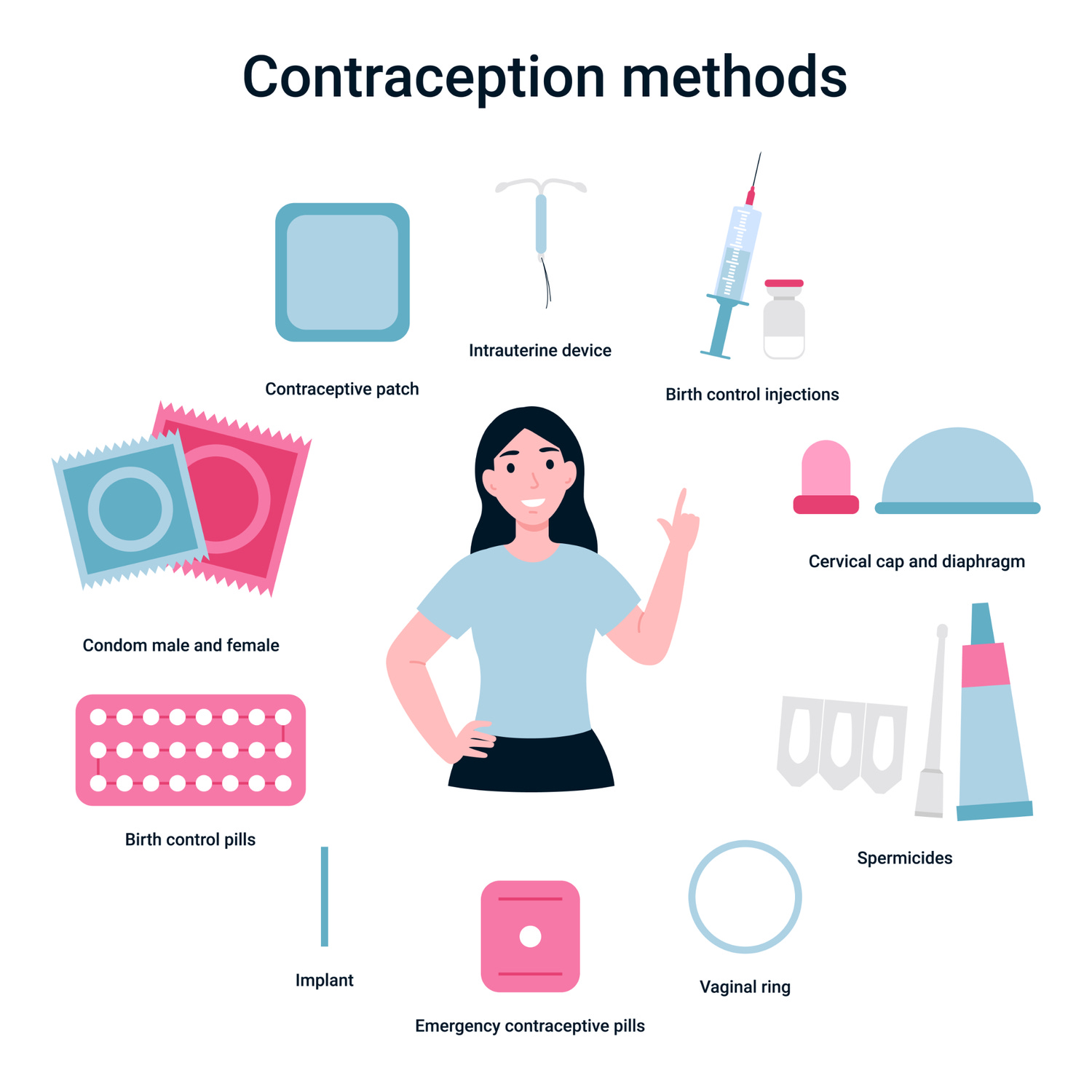
The kind that teaches contraception, condoms, consent, STI prevention, healthy relationships, pregnancy prevention, and what bodies actually do when left unsupervised by a state legislature.
The CDC says well-designed sexual health education is associated with students being more likely to delay sexual intercourse, have fewer sex partners, have fewer experiences of unprotected sex, and increase protection use, especially condoms. WHO’s 2026 fact sheet on comprehensive sexuality education says high-quality, well-implemented programs can delay sexual initiation, reduce sexual risk-taking, and increase contraceptive use, while not increasing sexual activity or encouraging earlier sexual behavior.
ACOG’s committee opinion on comprehensive sexuality education states that such programs reduce rates of sexual activity, sexual risk behaviors, sexually transmitted infections, and adolescent pregnancy, while increasing contraceptive and condom use. UNESCO’s current overview is similarly blunt: abstinence-only programs have been found ineffective in delaying sexual debut, reducing sex frequency, or reducing the number of sexual partners, while effective sexuality education must include reproductive health and contraception.
In other words, the evidence does not say, “Interrupt STI testing with adoption pamphlets.”
It does not say, “A person asking how to avoid pregnancy should be redirected toward a legal arrangement that only exists after birth.”
It does not say, “Give students less information about condoms and more moral stage directions.”
It says: teach accurate information. Teach contraception. Teach condoms. Teach consent. Teach STI prevention. Teach people how to make informed decisions before there is a pregnancy, before there is a crisis, before someone is sitting in a clinic being told their body is now subject to legislative authority.
If Arizona lawmakers actually wanted fewer unintended pregnancies, they would support comprehensive sex education and contraceptive access.
Instead, HB2040 tried to treat adoption like it belongs in the same drawer as condoms.
Adoption Does Not Prevent Pregnancy
Let’s break this down slowly, because apparently we are all trapped in Health Class Purgatory.
Contraception prevents pregnancy.
STI testing detects infections.
Abortion ends a pregnancy.
Adoption transfers legal parenthood after birth.
Adoption is not what you do instead of birth control. Adoption is what someone may consider after pregnancy prevention has already failed, pregnancy has continued, birth has occurred, and the question becomes legal parenthood.
That is not prevention.
That is aftermath.
Adoption does not stop sperm. Adoption does not prevent ovulation. Adoption does not treat gonorrhea. Adoption does not stop someone from becoming pregnant. Adoption is not Plan B. It is not a condom. It is not an IUD. It is not an antibiotic. It is not a Pap smear. It is not an STI test.
So when Arizona lawmakers tried to require adoption information in contraception and STI settings, they were not strengthening sexual health education.
They were changing the subject.
And the subject they wanted to change it to was motherhood.
That is the real function of this kind of bill. It takes a moment that should be about sexual health and bodily autonomy, then smuggles in a reminder that the state would prefer you think of yourself as a potential birth mother before anything else.
A vessel with paperwork.
You Still Have to Be Pregnant First
The anti-abortion movement loves adoption because it lets them talk about babies while skipping over the pregnant person like she is just the loading screen.
“Just choose adoption” sounds tidy if you treat pregnancy as a minor scheduling inconvenience between conception and a beautiful handoff scene in soft lighting. But pregnancy is not neutral. Pregnancy is physical risk, medical vulnerability, time, money, labor, pain, bodily transformation, workplace consequences, family consequences, and physical/mental trauma.
Adoption does not erase any of that.
Adoption does not prevent preeclampsia. Adoption does not prevent hemorrhage. Adoption does not prevent gestational diabetes, job loss, medical debt, birth trauma, postpartum depression, or maternal mortality. Adoption is not a magic eraser for the body.
And this is not abstract. The CDC’s 2023 maternal mortality data found that Black women had a maternal mortality rate of 50.3 deaths per 100,000 live births, significantly higher than rates for white women at 14.5, Hispanic women at 12.4, and Asian women at 10.7. The CDC also reported age-based differences: in 2023, maternal mortality rates were 12.5 deaths per 100,000 live births for women under 25, 18.1 for women ages 25–39, and 59.8 for women age 40 and older.
So no, adoption is not some gentle little alternative that floats above the realities of pregnancy.
It requires pregnancy.
It requires birth.
It requires someone’s body to do the work.
And any political argument that skips that part is not pro-life. It is pro-fantasy.
Adoption Does Not End a Pregnancy
Adoption and abortion answer different questions.
Abortion asks: Do I want to remain pregnant?
Adoption asks: If I give birth, do I want to legally parent this child?
Those are not the same question.
A person who does not want to be pregnant has not had their problem solved by being told they do not have to parent after birth. The pregnancy is the condition they are trying to end.
Guttmacher’s 2023 research on abortion patients found that people seeking abortions did not consider adoption an equally acceptable substitute. In the study, adoption represented “taking on, and then abdicating, the role of parent,” making it unsuitable for many patients’ pregnancy decisions. Guttmacher’s summary of the findings stated plainly that the research counters the narrative that adoption can replace abortion access.
This should not be hard to understand.
Telling someone who does not want to be pregnant that they can place a baby for adoption is like telling someone who does not want to be on fire that, after the fire is over, they can donate the ashes.
You have skipped the emergency.
Adoption Is Not a Cute Little Bow on Forced Birth
None of this means adoption is bad.
Adoption can be loving. Adoption can be chosen. Adoption can be the right decision for some people and families. There are people who choose adoption thoughtfully, lovingly, and with care. There are adoptive families formed through deep love and commitment. There are birth parents who make adoption plans because it is what they want or need.
That is not the problem.
The problem is weaponizing adoption against reproductive autonomy.
The problem is treating adoption as a moral coupon that lets lawmakers ignore the costs, both physical and financial, of pregnancy.
The problem is pretending adoption is a clean and consequence-free alternative to contraception or abortion when it is actually a complex legal, emotional, familial, and bodily decision that only exists after pregnancy and birth.
Adoption should be discussed when it is relevant. Pregnant people deserve accurate, non-coercive information about all of their options if they want it. But adoption should not be used as rhetorical air freshener for forced birth.
It is not a loophole through bodily autonomy.
It is not a way to make pregnancy disappear.
And it absolutely does not belong in the middle of a condom conversation like some unwanted little government pop-up ad.
The Brochure Is the Point
So why require adoption information in contraception and STI settings?
Because the brochure is the point.
Contraception treats sex as something people can manage responsibly without necessarily becoming parents. STI testing treats sexual health as healthcare, not moral failure. Comprehensive sex education treats young people as actual human beings capable of learning, thinking, consenting, preventing, and protecting themselves.
Adoption messaging yanks the conversation back toward pregnancy and motherhood.
It says: even here, even when you are trying not to get pregnant, even when you are just getting an STI test, even when the relevant issue is condoms or contraception or infections, the state would like to remind you of birth.
HB2040 was not education.
It was one of those ads before a YouTube video that you can’t skip.
The bill took a conversation about preventing pregnancy and shoved in a reminder of what the state would prefer you do after failing to prevent one. That is not public health. That is a haunted pamphlet.
And it is revealing because the anti-abortion movement’s entire reproductive politics relies on this constant redirection. We start with contraception, and they pivot to adoption. We start with abortion, and they pivot to babies. We start with maternal mortality, and they pivot to “life.” We start with bodily autonomy, and they pivot to “choice,” but only the choices they approve of.
The pregnant person keeps disappearing.
Which is, of course, the point.
When Bans Fail, Bring Paperwork
HB2040 also fits into Arizona’s broader post-Roe landscape.
Arizona voters approved Proposition 139 in 2024, adding abortion protections to the state constitution. In February 2026, a Maricopa County judge struck down older abortion restrictions that conflicted with those protections, including restrictions involving telemedicine for medication abortion, requirements that patients state a reason for abortion, fetal-genetic-abnormality bans, mandatory ultrasounds, a 24-hour waiting period, and a second doctor visit. Reuters reported that Judge Gregory Como found the laws infringed on patient autonomy and did not offer health benefits. AP similarly reported that the ruling stopped enforcement of older restrictions, including multiple in-person visits, mandatory ultrasounds and Rh testing, bans on telehealth abortions, and bans on mailing abortion pills.
That is the context.
Arizona voters said reproductive freedom.
The court began clearing out some old restrictions.
And Republican lawmakers kept looking for ways to push back.
This is what reproductive backlash looks like after a direct loss. If they cannot slam the front door, they fill the hallway with forms.
They try waiting periods.
They try mandatory counseling.
They try forced ultrasounds.
They try telehealth restrictions.
They try medication abortion barriers.
They try fetal-personhood language.
They try “informed consent” scripts.
They try adoption pamphlets.
When voters protect abortion rights, conservative lawmakers do not stop. They get sneakier, smaller, and more bureaucratic, like termites with letterhead.
This Is Comstock’s Weird Little Grandchild
This is where the history matters, because none of this is new.
American sexual politics has always had a paperwork fetish. If the state cannot stop you from making a reproductive decision, it will try to script the room in which you make it.
The Comstock tradition was not only about banning abortion. It was about controlling sexual knowledge: contraception, sex education, abortion information, obscenity, reproductive materials, and the ability to send or receive information through the mail. The deeper pattern is not only “ban the thing.” It is also “control what people are allowed to know about the thing.”

HB2040 belongs to that lineage.
It is sleight of hand. The state does not always show up with a ban. Sometimes it shows up with a pamphlet. Sometimes it shows up with a script. Sometimes it shows up with a waiting period. Sometimes it shows up with “resources.” Sometimes it shows up in the language of “information,” as if all information is neutral and context never matters.
But information is not neutral when the state requires one kind of message at the exact moment someone is seeking another kind of care.
If someone asks for contraception, the relevant information is contraception.
If someone asks for STI testing, the relevant information is STI testing.
If someone is pregnant and wants to discuss adoption, then adoption is relevant.
But forcing adoption into contraception and STI care is not neutral. It is not “just information.” It is narrative control.
It is cultural gaslighting with a state seal.
The State Wants the Last Word on Your Body
The problem with HB2040 was not that adoption should never be discussed.
The problem was not that pregnant people should be denied information about all their options.
The problem was not that adoption is inherently bad, shameful, or irrelevant to every reproductive conversation.
The problem was that Arizona lawmakers tried to insert adoption into contexts where the actual subject was preventing pregnancy and protecting sexual health.
That is not informed consent.
That is not comprehensive education.
That is ideological interruption.
Using adoption as a state-sponsored guilt pamphlet in contraception and STI settings is not care. It is not education. It is not public health.
It is the anti-abortion movement trying to sneak motherhood into the room before pregnancy has even happened.
And Arizona, for once, had a governor willing to say no.
This was supposed to be scheduled for 12:30PM…oops
Thank you for explaining exactly what's really happening. Their desire to control and dominate women is awful.