
Citizen Swift and the Case of the Manipulative Female Artist

At 1:11 a.m. my phone buzzed.
Now, nothing good ever begins at 1:11 a.m., but in this case, it wasn’t an emergency. It was my best friend sending me a Slate review of Taylor Swift’s new hit single “Opalite” with the message:
“The misogyny drips from every sentence.”
Now, it was 6 p.m. his time and he is occasionally a bit dramatic, but once you are sent a link with that caption, you are not not going to read it. At least not when you are me.
And here’s the complicated truth: the review was not overtly cruel. It is not frothing. It is not a deranged rant about how women shouldn’t have charts or power or opinions.
It is clever. It is culturally literate. It ultimately concedes that Swift’s single deserved its No. 1 spot.
But it does something far more interesting.
It frames her as a villain before it evaluates her as an artist.
And that framing begins with a red flag the size of a Cinemascope projection screen.
The Kane Comparison Is Not Neutral
The review opens with an extended comparison to Citizen Kane, specifically, to Charles Foster Kane’s humiliating attempt to manufacture legitimacy by forcing his wife into an opera career she was not equipped to sustain.
Kane, the egomaniac.
Kane, the man obsessed with proving something.
Kane, the architect of artificial prestige.
Before we even reach Billboard charts, Taylor Swift is placed in narrative proximity to a fictional embodiment of insecurity and illegitimate authority.
That is not just playful film reference. It is rhetorical positioning.
To cast her as Kane is to suggest that her ambition is compensatory. That her desire for chart dominance is rooted in insecurity. That her success might be manufactured rather than merited.
And that is where the misogyny flickers on.
Because when male artists obsess over records and dominance, we call them competitive. Driven. Relentless. When they orchestrate massive rollouts, they are visionary. When they control their narrative, they are auteurs.
When a woman coordinates her own success, she becomes Kane, the manipulator manufacturing applause.
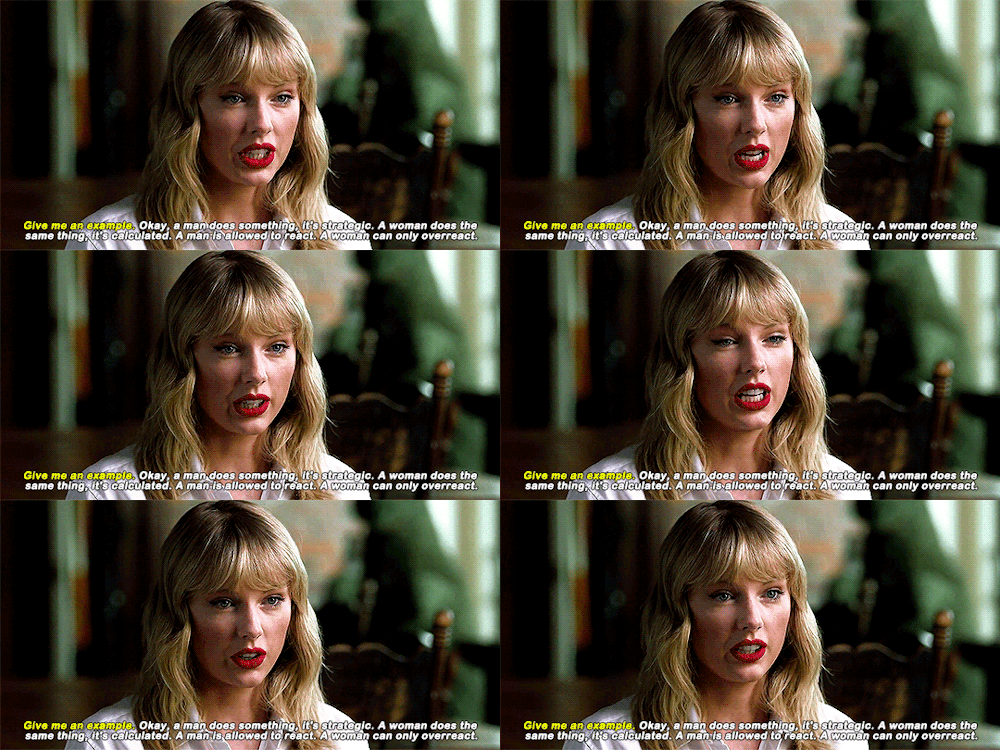
That analogy is doing ideological work.
It signals, from the first paragraph, that her competence requires suspicion.
“She Bought Herself a No. 1”
Here’s where the Slate review stops being “a little snarky, a little clever” and starts flashing those tiny red hazard lights that polite people ignore until the building is fully on fire.
Because once you’ve already cast Taylor Swift as Charles Foster Kane, the review basically can’t talk about chart strategy the way it talks about chart strategy for men. It has to keep feeding the original premise: that this success is something she manufactured, that it’s something she arranged behind the curtain, that it’s not quite real unless we put it under a microscope and squint at it suspiciously.
So the review says she “bought herself” a No. 1. And sure, technically it acknowledges the nuance in the next breath, because yes, it was her fans who purchased the various formats, and yes, physical sales still count, and yes, there’s a whole modern ecosystem of bundling, variants, shipping dates, and timing. But the phrase “bought herself” is doing exactly what it wants to do: it plants the idea that her chart victory is fundamentally transactional, not cultural. It’s not that people loved something and it rose; it’s that she made it rise.
And I want to be very clear: artists manipulating chart mechanics is not scandalous. It’s called “a rollout.” It’s called “marketing.” It’s called “being a professional in an industry that rewards people who understand the rules.”
But you don’t hear “bought himself a hit” used with the same moral squint when a male artist plays the same game. When men optimize, critics tend to treat it like competence. When women optimize, critics treat it like a personality flaw.
That difference is not subtle. It just wears a nice blazer.
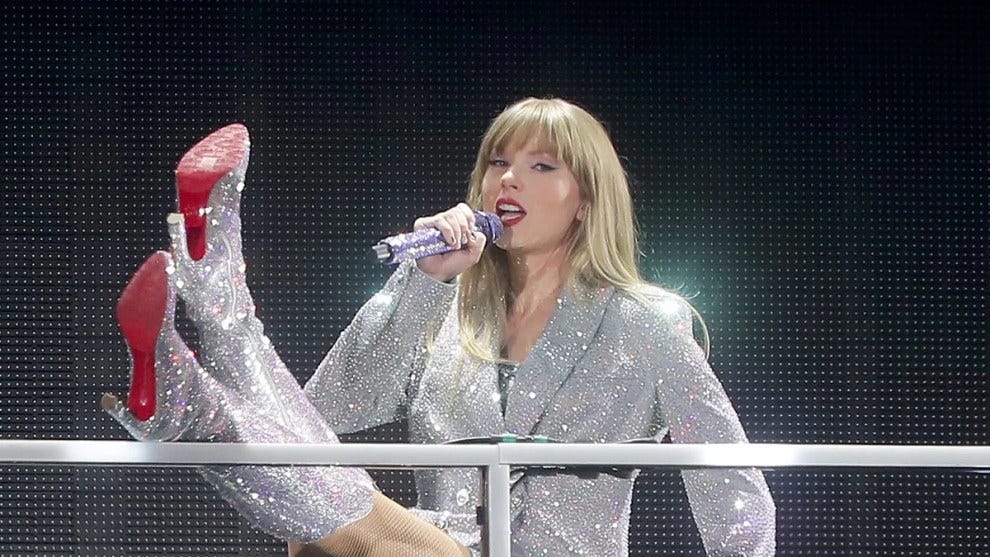
Look at how we talk about Drake1, for example, who has basically built an entire career out of understanding the streaming era so well it borders on architectural. He releases music that is openly designed to live forever on playlists and rack up repeats, and the common framing isn’t “he tricked the system.” It’s “he understands the system.” It’s strategic. It’s mastery. It’s inevitability. Drake’s streaming dominance gets discussed like weather: it’s happening, you can’t stop it, grab an umbrella.
Or take Kanye West, whose rollouts have ranged from carefully orchestrated spectacle to pure chaos, and critics have still often framed that chaos as a kind of tortured genius. When he makes the industry bend around him, it becomes part of the mythology. The narrative is rarely “this is manipulative”; it’s more like “this is visionary,” or “this is maximalist,” or “this is a man trying to turn his ego into art.”
Even Ed Sheeran, a man whose chart ubiquity has been so intense it has occasionally made entire corners of the internet consider unplugging the aux cord forever, tends to get described in terms of broad appeal and pop savvy. If there’s critique, it’s usually about blandness or sameness, but it’s not often framed as illegitimate. His success reads as the natural outcome of being palatable, prolific, and everywhere at once. The vibe is “he’s a hitmaker,” not “he’s gaming the charts.”
Now compare that to the way some criticism talks about Swift, or really any woman who becomes too powerful in pop.
Swift’s tactics become “chicanery.”
Her fanbase becomes an “army.”
Her success becomes something that needs to be cross-examined like a witness on the stand.
And here is the bigger point: this isn’t just Swift. She’s simply the most visible example because she’s the biggest lightning rod, the kind of artist who can’t sneeze without a thinkpiece forming out of the mist.
The same pattern shows up with Beyoncé, too, in a slightly different flavor. Beyoncé’s control over her image and her releases, her insistence on being the author of the moment rather than the subject of it, has often been treated as both awe-inspiring and suspicious. Her surprise drop strategy was hailed as revolutionary, but the discourse around her also slides so easily into “brand” language, as if a woman having control automatically becomes branding rather than authorship. When Beyoncé curates, we call it a brand management. When men curate, we call it a vision.
And then there’s Rihanna, who has been described for years as a kind of singles machine, a reliable hit factory, as if her ability to deliver bangers is an industrial process rather than a skill. Meanwhile, when a man dominates radio, he’s a master of the zeitgeist. When Rihanna dominates radio, she’s a product pipeline. Same outcome, wildly different tone.
The phrase “she bought herself a No. 1” is part of that same lexicon. It’s a way of narrating female success as something that must have been engineered, nudged, purchased, mobilized, managed. It’s not allowed to simply be the result of taste, culture, and demand.
Which is why the review’s language matters. Because what sounds like one snarky phrase is actually a whole worldview: the assumption that a woman’s power needs an asterisk.
The Authenticity Audit
Once you notice the audit, you start seeing it everywhere, because it’s not just a music criticism thing. It’s a cultural habit.
The audit goes like this:
A woman achieves dominance.
We do not simply say “she’s good.”
We say: “But is she real?”
Is her success organic?
Are her fans brainwashed?
Is this marketing?
Is it manipulation?
Is she gaming something?
And sure, critics do this to men sometimes, but the proportions and the language are different. With men, the skepticism usually targets artistry: “is this good?” With women, it often targets legitimacy: “is this real?” That’s a different question, and it comes with a different suspicion baked into it.
You can see it in how Madonna was framed for decades. Madonna reinvented herself constantly, controlled her imagery, understood controversy as fuel, and critics frequently described her as calculating, manipulative, a master of provocation. Meanwhile, David Bowie reinvented himself constantly, controlled his imagery, understood controversy as fuel, and critics described him as fearless, innovative, a shape-shifter turning identity into art. Same behavior. Different myth.
Or take the way people talk about Adele versus male legacy acts. Adele’s big, emotionally direct ballads have sometimes been framed as “safe,” as if mass appeal is evidence against artistic seriousness, while male acts like Bruce Springsteen who cultivate a similar broad, cross-generational audience are often described as sincere and resonant. Again, same market outcome, different moral lens.
What the Slate review does is place Swift inside that long tradition. It treats her success like something that must be explained through mechanics rather than through culture. Instead of “people liked the song and it rose,” the story becomes “she deployed strategies and her army bought it.”
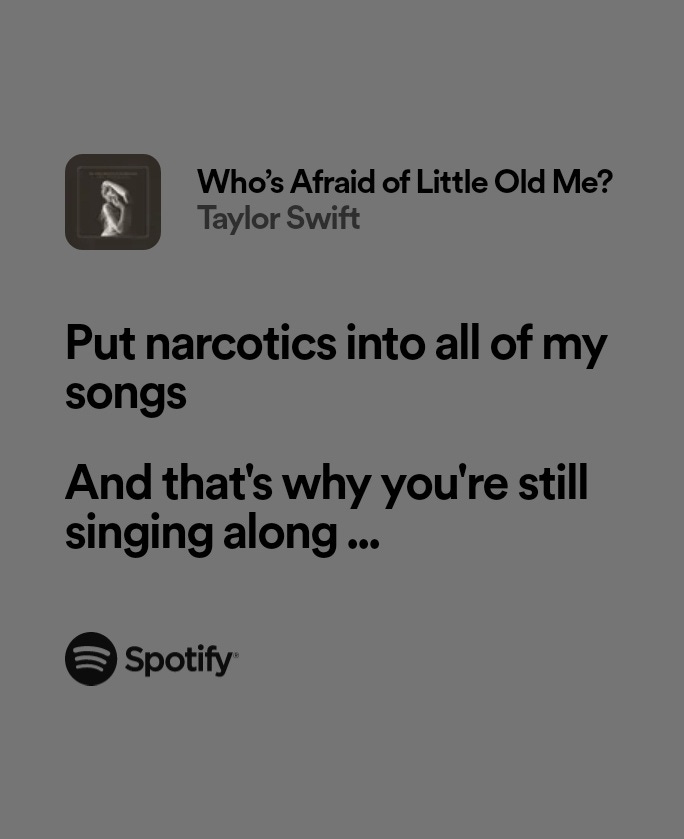
And what’s fascinating is that the review ultimately admits the song had organic staying power. It says, essentially, yes, it was hanging around the top for months, yes, radio was playing it, yes, it had genuine support. But it still begins from suspicion. It still needs to prove legitimacy before it grants it.
That’s the audit.
And it shows up most aggressively when women win with competence, because competence in women has historically been framed as unnatural, and therefore requiring explanation.
The Army and the Hysteria Reflex
The “Swiftie army” phrase is not just a throwaway line. It plugs into a long cultural tradition of treating female-coded enthusiasm as irrational and male-coded enthusiasm as normal.
Teen girls screaming at concerts has always been framed as hysteria. Beatlemania was treated like a disease. Boy band fandom was treated like a joke. Twilight readers were treated like delusional romantics. If women like something loudly, we assume they’re being manipulated. If men like something loudly, we assume they’re being discerning.
Sports fans will spend a month’s rent on tickets and jerseys and nobody writes a piece titled “Is this a real fanbase?” Tech people will camp overnight for a phone and they’re “devoted customers.” Men will build communities around niche hobbies and that’s a subculture. Women will build communities around an artist and that becomes an “army.”
The term “army” implies blind loyalty, collective irrationality, and a kind of militarized consumerism. It suggests the fans are a weapon Swift deploys rather than a community she has built through years of reciprocal engagement. It’s a linguistic move that turns audience love into something suspect.
And again: this isn’t just Swift. The same framing has followed Beyoncé’s fanbase, Nicki Minaj’s, K-pop girl groups, you name it. Female fandom becomes a force to fear or mock, not a market reality to respect.
The Quiet Threat of Competent Women
Here’s the part we don’t say out loud enough.
The most destabilizing thing about Taylor Swift is not that she is talented, or famous, or even that she is adored. It’s that she is operationally fluent. She understands the machinery of her industry and she isn’t coy about using it.
She can write. She can perform. She can brand. She can mobilize. She can plan. She can time. She can execute. She can build an ecosystem.
And when women demonstrate that kind of competence, our culture has a tendency to narrate it as manipulation, because manipulation is the story we tell ourselves when we don’t want to admit a woman is simply… powerful.
That’s why the Kane comparison is such a tell. It doesn’t just say “Swift wants to win.” It says “Swift wants to win because she needs to prove she deserves to be here.” It frames her ambition as insecurity rather than as professional drive.
It’s not “she’s strategic.”
It’s “she’s compensating.”
And once you’ve set that frame, every marketing move becomes evidence of pathology rather than skill.
It’s Not Just About Taylor Swift
If you take nothing else from this, take this:
The Slate review isn’t interesting because it critiques Swift. Swift can survive critique. She’ll wipe her tears with a Grammy and wads of cash and snuggle up with her fiancé for the night.
It’s interesting because it shows us, in real time, how our culture talks about women who master systems.
When men master systems, we call them geniuses.
When women master systems, we call them manipulators.
That’s not about one reviewer. That’s about a long tradition of gendered legitimacy.
And yes, sometimes it the misogyny does drip from the words of a review.
Not because the piece is a frothing hate letter, but because it begins by casting Swift as a villain, then spends the rest of its energy proving she belongs in the villain role, and only at the end allows itself to admit what it already knew: the song was popular, the support was real, and she understood how to get the credit for what she’d already earned.
What fascinates me most about the Slate review is the way it closes. It ends with a flourish that sounds, at first, almost exonerating:
Charles Foster Kane may insist that people will think “what I tell them to think,” but he never does win that election, or convince the world that his second wife is a “singer.” Citizen Swift, meanwhile, may have engaged in some chicanery to put “Opalite” on top, but it only prevailed because it already had the support of the people.
On the surface, this is meant to restore balance. It acknowledges that the song had genuine support. It admits that popularity cannot simply be manufactured out of thin air. It suggests that, unlike Kane, Swift’s efforts were backed by real demand.
But look closely at the framing. Swift is still Kane. She is still positioned as the manipulator, the architect of artificial legitimacy, the figure adjacent to “chicanery.” The only meaningful difference is that she is more competent than the fictional villain. She succeeds where he fails.
That is not quite an absolution. It is a recalibration.
The moral structure of the analogy never collapses. Ambition remains suspect. Strategy remains slippery. Chart literacy still hovers near trickery. The closing paragraph does not retract the suspicion; it simply says that, in this case, the scheming happened to align with genuine popularity.
And this is where the comparison to male artists matters. When male artists face backlash, it’s normally rooted in perceived moral violations.
Swift is not being analogized to Kane because of ethical scandal. She is being cast in villain proximity because she understood Billboard’s counting system and timed physical shipments.
When Drake is criticized, it is for alleged predatory behavior. When Kanye is condemned, it is for extremist ideology. When Swift is framed as Kane, it is for mastering logistics. The scale of metaphor does not match the scale of offense, because there is no offense, only competence.
What the review ultimately reveals is not that Swift is uniquely manipulative, but that we still struggle to narrate female competence without wrapping it in suspicion. She cannot simply understand the system; she must be gaming it. She cannot simply win; she must be proving something.
Charles Foster Kane never wins his election. Citizen Swift does. But in the telling, she remains cast in the role of the ambitious manipulator, just a more effective one. And that lingering instinct to frame a powerful woman as villain-adjacent, even in praise, tells us far more about our cultural reflexes than it does about any pop song at No. 1.
Wish we didn’t have to, but…
So good! How often do we see your powerful line in action:
“because there is no offense, only competence.”
Thank you!
This is why I no longer read slate magazine