
Good Women Don’t Want Sex
How Western society turned female desire into a diagnosis, a sin, a scandal, and now, apparently, a bad investment strategy

Every time some man with a podcast microphone announces that women do not need orgasms, that female arousal is suspicious, or that women’s pleasure has “no ROI,” he is not inventing anything new.
He is doing Victorian medicine with Wi-Fi.
This is the same old story in worse lighting. Western culture has spent centuries insisting that respectable women do not really want sex, then acting shocked, threatened, medically concerned, or legally activated when women prove otherwise.
The lie was never simply “women do not want sex.”
The lie was “good women do not want sex.”
That distinction matters. A lot.
Because if “good” women do not want sex, then women who do want sex become a problem. They become immoral. Diseased. Hysterical. Fallen. Perverse. Obscene. Neurotic. Damaged. Ruined. Ran through. Bad mothers. Bad wives. Bad feminists. Bad citizens. Bad investments.
Pick your century. Pick your vocabulary. The structure stays annoyingly consistent, because sexism isn’t creative.
Western societies did not simply deny women’s sexuality. They managed it. They sorted women into categories that served patriarchal power. Respectable women were imagined as pure, passive, modest, maternal, domestic, and sexually innocent. Women who expressed desire, pursued pleasure, loved other women, wanted contraception, left marriages, rejected motherhood, or claimed sexual autonomy were treated as immoral, diseased, obscene, unstable, deviant, or dangerous.
The point was not that women had no desire. The point was that women’s desire was only acceptable when it served someone else’s system: husband, church, state, family, empire, race, birthrate, or male ego.
And when women’s desire stopped serving those systems?
Suddenly everyone needed a doctor, a priest, a judge, a psychiatrist, a postal inspector, and eventually, some guy in a podcast studio explaining “female nature” between ads for supplements.
The Victorian “angel in the house” was not a person so much as a scented candle with a uterus. She existed to comfort, refine, soothe, inspire, reproduce, and morally elevate the men around her.
Victorian gender ideology made this system especially obvious. Men were imagined as physically strong but morally vulnerable, suited to public life, business, politics, empire, and all the other places where one could apparently commit financial fraud while wearing a waistcoat. Women were imagined as physically weak but morally superior, belonging to the domestic sphere as wives, mothers, spiritual guardians, and decorative evidence that a man had succeeded.
A respectable woman’s sexuality was folded into marriage and motherhood. She was not supposed to be a sexual subject. She was supposed to be a wife. A mother. A moral atmosphere. A domestic stabilizer. The place where men returned after doing capitalism and colonialism all day.
And because this system depended on the fiction that good women did not want, women who did want had to be reclassified.
Enter: the fallen woman.
Victorian culture loved the fallen woman almost as much as it feared her. She appears everywhere: paintings, sermons, novels, moral literature, prostitution panic, purity campaigns. She is seduced, ruined, discarded, punished, pitied, painted beautifully, and then turned into a warning label for everyone else.
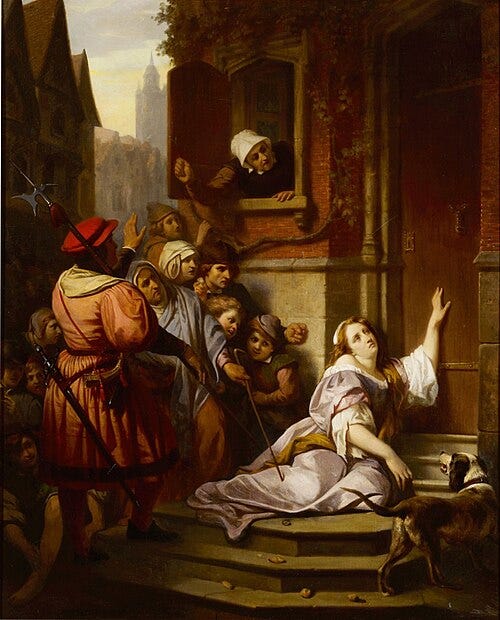
Someone had to carry the sexual knowledge, sexual danger, and sexual blame that respectable society pretended good women did not possess. If the angel proved that good women did not want, the fallen woman proved that women who did want deserved what happened to them.
Men’s desire was treated as natural, expected, sometimes regrettable, often excused. Women’s desire was treated as evidence. Evidence of class inferiority. Evidence of moral weakness. Evidence of racialized danger. Evidence of prostitution. Evidence of mental instability. Evidence of unfitness for respectable life.
This is how “purity” works as a social weapon. It does not just describe behavior. It creates borders. Good women over here. Bad women over there. Wives over here. Prostitutes over there. Mothers over here. Fallen women over there. White middle-class womanhood over here. Everyone else dragged into Victorian asylum to keep the rest of society from being fouled by their existence.
Victorian visual culture practically had a subscription plan for this. Paintings like William Holman Hunt’s The Awakening Conscience or Augustus Egg’s Past and Present turned women’s sexual transgression into melodrama, spectacle, warning, and moral instruction. Look, the pictures said. This is what happens when women leave the narrow path.
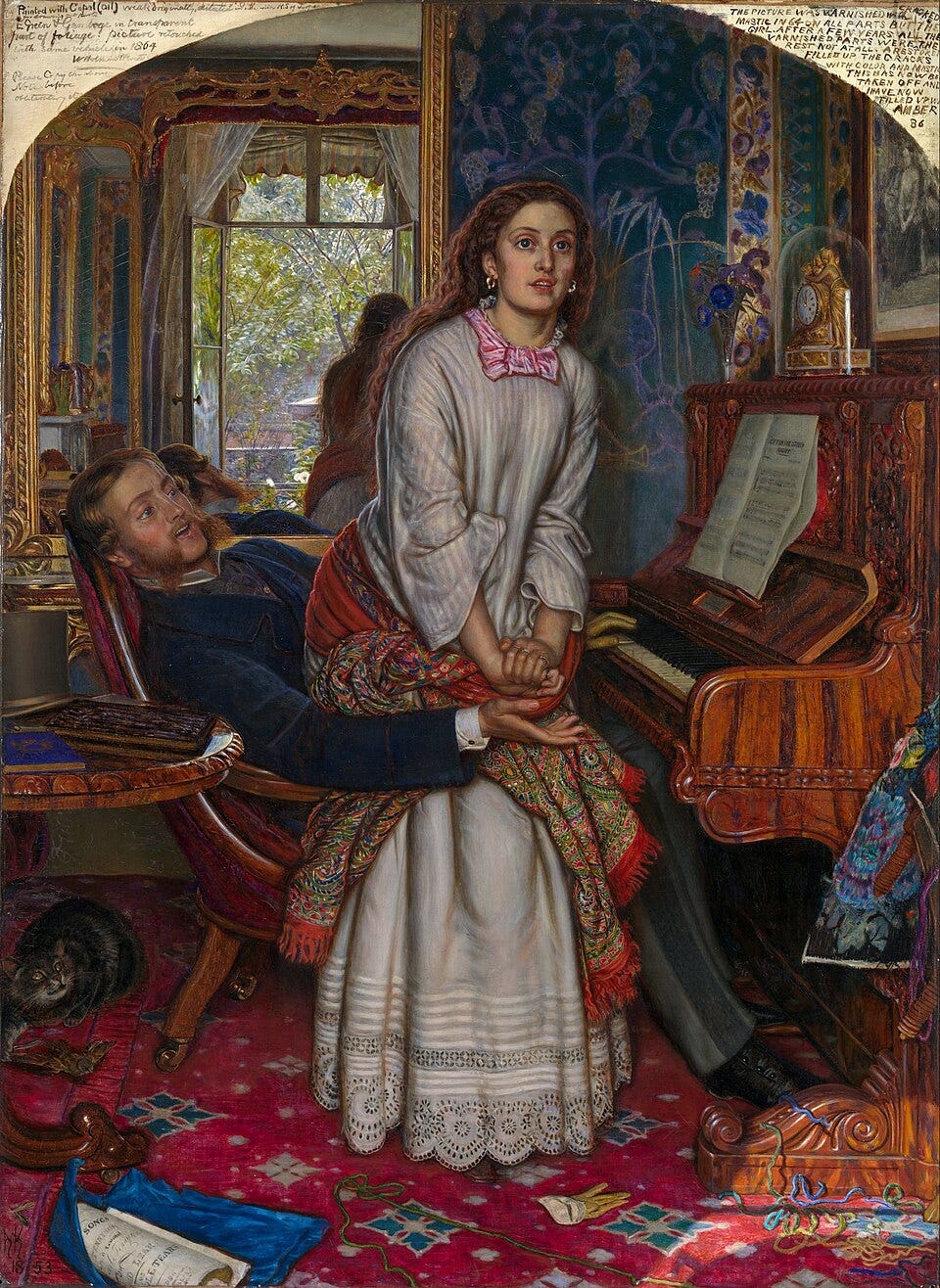
The fact that men were usually standing somewhere nearby with a bank account and full legal personhood was treated as a side issue.
Funny how that works.
When morality was not enough to contain women’s desire, medicine stepped in.
This is where the story moves from the pulpit and the parlor to the asylum, the doctor’s office, and the diagnostic manual of Things Women Do That Annoy Men.
Hysteria. Nymphomania. Erotomania. Moral insanity. Uterine disorder. Menstrual derangement. Female disease. Nervous exhaustion. Frigidity. Excess. Deficiency. Too much desire. Not enough desire. Desire for the wrong person. Anger mistaken for illness. Boredom mistaken for illness. Resistance mistaken for illness. Trauma mistaken for illness. A woman failing to perform domestic serenity convincingly enough could become a medical event.
To be clear, not every woman in an asylum was there because she wanted sex. History is not improved by making it dumber. But a culture committed to female passivity made women’s bodies, moods, sexuality, and reproductive systems very easy targets for diagnosis. If a woman’s proper role was wife, mother, and domestic angel, then any refusal or failure inside that role could be read as pathology.
Put a doctor’s coat on patriarchy and suddenly everyone pretends the cage is treatment.
If a woman wanted too much sex, she was sick. If she did not want sex with her husband, she was sick. If she read too much, argued too much, grieved too loudly, resisted too openly, or failed to appreciate the spiritual enrichment of household drudgery, medicine had a drawer full of labels.
The diagnosis was often less “what is wrong with this woman?” and more “why is this woman making everyone uncomfortable?”
This is why Charlotte Perkins Gilman’s “The Yellow Wallpaper” still hits with the force of a polite domestic haunting. The narrator is not merely ill. She is trapped inside a medical and marital system that treats her perception, creativity, and distress as problems to be managed by male authority. She is told to rest, submit, stop writing, and accept treatment from a husband-physician who knows best.
The wallpaper gets it before he does.
Women’s desire, frustration, and autonomy were not simply repressed. They were interpreted. Classified. Managed. Spoken over. When women did not fit the ideal, the system rarely asked whether the ideal was rotten. It asked what was wrong with the woman.
This medicalization mattered because it made control look neutral. A priest calling a woman sinful is obvious moral regulation. A husband calling a wife disobedient is obvious domestic power. But a doctor calling a woman hysterical? That has authority. That has Latin. That has a certificate on the wall.
And patriarchy loves nothing more than outsourcing itself to experts.
The law played its part too.
If women’s desire was dangerous, then women’s knowledge was an emergency. If women could access information about sex, contraception, abortion, marital rights, divorce, or sexual pleasure, they could make decisions. Patriarchal systems have historically treated women making decisions as if someone released raccoons into a courtroom.
“Free Love”
Victoria Woodhull understood this. Woodhull, the first woman to run for president, was scandalous for many reasons, not least because she had the audacity to discuss marriage, divorce, sex, and autonomy as if women were people with bodies and choices rather than household furniture with moral obligations.
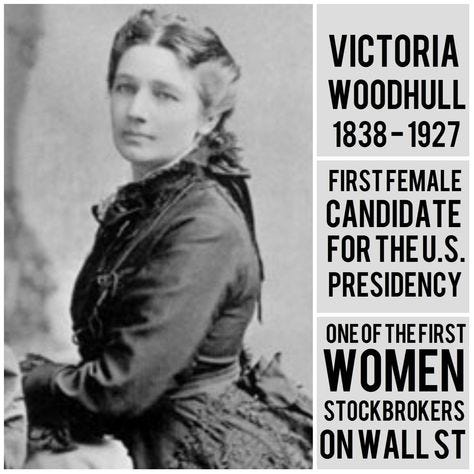
Her “free love” politics were not simply the caricature her enemies made of them. She was not just announcing a national orgy from behind a lectern, though 19th century newspapers certainly behaved as if she had personally set fire to every wedding ring in Manhattan. For Woodhull, free love meant the freedom to choose love, leave marriage, reject coercion, and insist that the state should not trap women in intimate arrangements that harmed them.
This was terrifying because marriage was not just romantic. It was legal, economic, sexual, and political. Married women’s identities had long been absorbed into their husbands under coverture. Divorce was difficult. Marital rape was not recognized as a crime in the way we understand it today. A woman’s respectability depended on sexual containment inside marriage, even if the marriage was miserable or abusive.
So when Woodhull said women should have the right to love freely, leave freely, and control their intimate lives, she was not just making a lifestyle argument. She was pulling at the wiring of the whole patriarchal house.
Naturally, Anthony Comstock arrived with a bucket of moral gasoline.
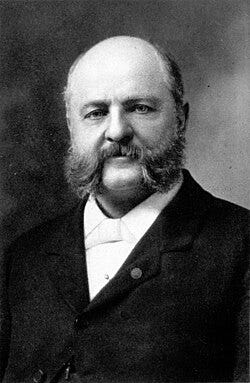
Comstock was the kind of man who looked at sexual knowledge and thought, “What if the federal government helped me be unbearable?” The Comstock Act of 1873 classified obscene materials and articles for contraception or abortion as non-mailable. In practice, Comstock-style laws restricted access to birth control information, sex education, reproductive knowledge, and sexual materials under the great flapping banner of morality.
This is important: sexual ignorance was not innocence. It was policy.
Women were told they were naturally pure, then denied the information that would let them make their own choices. Control the pamphlet. Control the envelope. Control the clinic. Control the vocabulary. Control the woman.
Comstock understood something conservatives still understand: if women can access sexual knowledge, they can make sexual decisions. And if women can make sexual decisions, the whole purity racket starts coughing blood.
The same logic shaped the treatment of lesbian desire, which gives us one of the clearest examples of desexualization as strategy.
Women’s same-sex desire was not unknown. Lawmakers knew. Doctors knew. Writers knew. Pornographers knew. Satirists knew. Please. These were Victorians, not golden retrievers.
The myth that Queen Victoria “did not believe lesbians existed” is useful because it tells us what people want to believe: that lesbianism escaped criminalization because men were too innocent or too stupid to imagine it. The reality is much more revealing. Elite men knew sex between women existed. What they feared was naming it too loudly.
Because if respectable women heard about lesbianism, they might realize it was possible.
That is the part that matters.
In 1921, British lawmakers considered criminalizing “gross indecency” between women. The proposal failed, but not because everyone suddenly discovered a deep commitment to lesbian civil liberties. Some opponents feared that public discussion of sex between women would spread knowledge of it. In other words, silence was not ignorance. It was governance.
They knew. They just preferred women not know that they knew.
This is patriarchy accidentally admitting that lesbianism had excellent word-of-mouth potential.
Boston Marriages
The history of romantic friendship complicates this further. Nineteenth-century women could sometimes form intense, affectionate, passionate relationships with other women, especially in middle- and upper-class circles. They wrote letters, exchanged gifts, used emotionally lavish language, and built deep bonds that could hide in plain sight precisely because respectable women were not supposed to be sexual.
This does not mean every romantic friendship was lesbian in the modern sense. History does not become queerer by flattening everyone’s life into our categories like a rainbow steamroller. But it does mean that the cultural denial of women’s sexuality created strange spaces of possibility. Women’s intimacy could be tolerated when it was interpreted as pure affection, spiritual companionship, or feminine emotional excess.
The closet was sometimes built out of plausible deniability and stationery.
The “mine” and “thine” of wedded folk
Is often quite confusing
And sometimes when they use the “ours”
It sounds almost amusing
But you and I may well defy
Both married folk and single
To do as well as we have done
The “mine” and “thine” to mingle.
- Poem written by Jane Addams to her “gal pal” Mary Rozet Smith
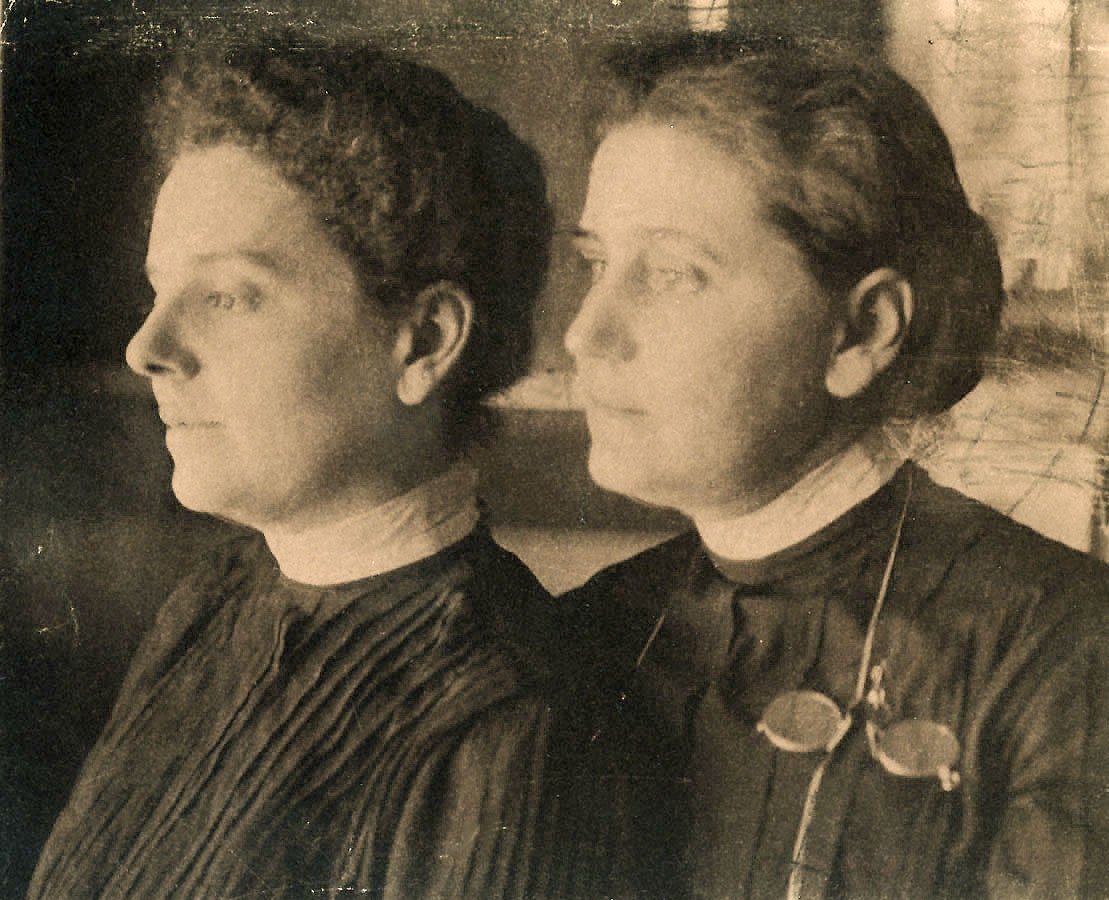
Respectable women could love each other passionately as long as everyone agreed not to call it sex.
That plausible deniability could provide cover, but it also erased. It made desire difficult to name, defend, organize around, or protect. Women’s same-sex desire could be dismissed as innocence until institutions decided it was dangerous, at which point it could become perversion, obscenity, inversion, or criminal scandal.
That is the recurring pattern: women’s desire does not exist until it needs to be punished.
By the late nineteenth century, sexology stepped in and invented the filing cabinet.
Sexologists like Krafft-Ebing and Havelock Ellis helped classify sexual practices, desires, identities, and behaviors into categories of normal and abnormal. This is one of the strange things about the modern history of sexuality: Western society did not simply stop talking about sex. It talked about sex constantly, but increasingly through experts who claimed the authority to define it.
Sex became something to classify, diagnose, rank, explain, and police. Normal. Perverse. Inverted. Degenerate. Healthy. Diseased. Masculine. Feminine. Reproductive. Sterile. Useful. Dangerous.
Sexology took desire, handed it a clipboard, and asked whether it was normal enough to be left unsupervised.
This is also when heterosexuality becomes increasingly naturalized as the default, while other forms of desire become marked as deviant identities. In earlier periods, sexual acts might be condemned as sins or crimes. In the modern period, desire itself increasingly becomes a kind of personhood to be studied. The homosexual. The invert. The nymphomaniac. The frigid woman. The pervert. The normal woman. The abnormal woman.
Once desire has labels, institutions can decide which desires are acceptable, which are curable, which are punishable, and which are better left unmentioned around respectable ladies in case they get ideas.
And respectable ladies getting ideas has always been the nightmare.
The Sexual Cold War
After World War II, this same respectability trap returned with a Cold War haircut.
Women had worked, organized, served, earned money, entered public life, and taken on new roles during the war. Then the war ended, men returned, and the culture needed women back in the home. This required messaging. A lot of messaging. Magazines, advertisements, experts, doctors, schools, churches, politicians, and pop culture all helped sell the idea that true feminine fulfillment came through marriage, motherhood, housework, and domestic devotion.
The happy housewife was not discovered. She was manufactured, marketed, medicated, and sold back to women as nature.
This is where Ferdinand Lundberg and Marynia Farnham’s Modern Woman: The Lost Sex enters the chat like a Freudian haunted doll. Published in 1947, the book argued that modern women were psychologically disordered and that feminism itself was a kind of illness. The independent woman became lost. The feminist became neurotic. The working woman became a threat to children. The woman who did not find fulfillment in domesticity became evidence of psychological failure rather than evidence that domesticity might be suffocating.
The Victorian angel came back from the dead in a shirtwaist dress and started taking Miltown.
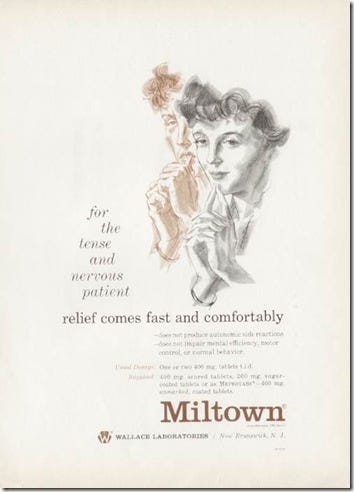
The midcentury expert class looked at women trapped in domestic monotony and decided the problem was women. Not the confinement. Not the lack of economic power. Not the political containment. Not the sexual scripts that treated women as wives first and people second. Not the cultural demand that women find ecstasy in vacuuming near a casserole.
No, no. The problem was that women were maladjusted.
Betty Friedan famously called this “the problem that has no name,” but part of the horror is that the problem actually had too many names: neurosis, frigidity, dissatisfaction, maladjustment, immaturity, penis envy, bad motherhood, feminist pathology. Women were unhappy inside a system designed to make them small, and the system responded by diagnosing the unhappiness.
This is what happens when a culture confuses obedience with health.
Making it Modern
It is also why modern manosphere claims about women’s sexual pleasure are not merely annoying little internet droppings. They are part of a very old lineage.
When a dating coach says women do not need orgasms, he is reviving the idea that women’s pleasure is irrelevant unless it serves men. When he says female arousal is suspicious or that you do not want a woman to get “too wet,” he is reviving the fear of visible female desire. When he says a woman’s “body count” damages her value, he is dragging the fallen woman narrative into a podcast studio and teaching it about crypto-currency.
The Victorian doctor called women hysterical. The Cold War psychiatrist called them neurotic. The manosphere calls them ran through and thinks it invented gender theory.
These men love to present themselves as brutally honest realists, but they are mostly recycling older anxieties with worse lighting. “High-value men.” “Sexual marketplace value.” “Pair bonding.” “Female nature.” “Body count.” “No ROI.” It all sounds modern because the branding has been updated, but the skeleton is old.

Women’s desire is still treated as a problem when it belongs to women.
Female pleasure is immaterial when it would require male reciprocity. Female sexual experience is damaging when it threatens male ownership. Female refusal becomes a social crisis when men feel denied access. Female arousal becomes suspicious when it suggests women are not passive objects. Female sexual knowledge becomes dangerous when it gives women choices. Female autonomy becomes civilizational collapse when the whole civilization has been using women as unpaid infrastructure.
The manosphere pretends female pleasure does not matter because female pleasure forces reciprocity.
If women’s pleasure matters, then women are not just sexual resources. They are sexual subjects. They can want, judge, compare, refuse, desire, leave, laugh, tell their friends, write reviews, and decide that the gentleman who thinks cunnilingus has no ROI is not worth a calendar invite.
That is the part patriarchy hates.
The modern rhetoric around women’s pleasure also runs straight into the orgasm gap, which is not exactly a ringing endorsement of heterosexual sexual scripts. Research repeatedly shows that heterosexual women orgasm less frequently than heterosexual men, and one major reason is the cultural assumption that “sex” means penetration, while the activities more likely to lead to orgasm for many women get demoted to “foreplay,” a word that has done a lot of damage for something that sounds like it belongs in a golf manual.
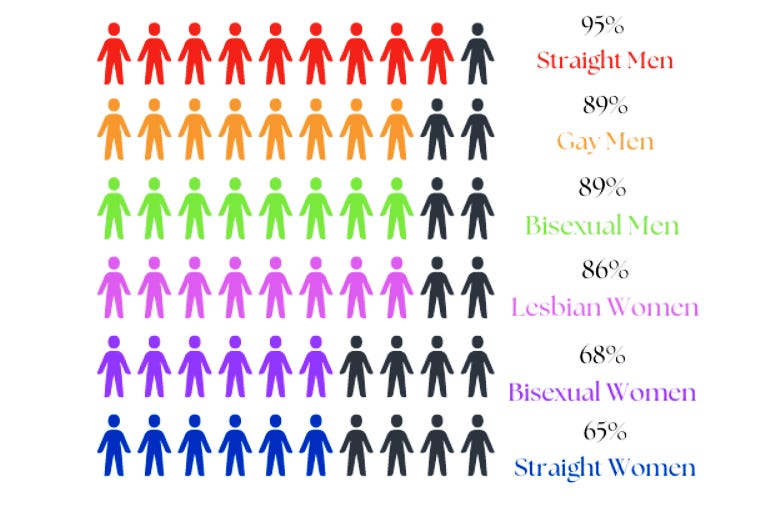
So when modern male influencers claim women’s orgasms do not matter, they are not neutrally describing biology. They are defending a sexual script that already fails women and then calling the failure natural.
“Women don’t need orgasms biologically” is what happens when a man learns reproduction exists and decides pleasure is liberal propaganda.
This is why the “too wet” claim is so revealing. It is not just bad sex advice. It is fear of women’s bodies doing something that belongs to them. Arousal is acceptable only when it flatters male ego, not when it suggests a woman is having an independent experience.1 Desire is acceptable only when it is contained, directed, and useful. Too much visible pleasure makes the woman too much of a person.
And that has always been the issue.
Western culture has never been confused about women’s sexuality in some innocent way. It has been deeply invested in sorting it. Good women are pure. Bad women want. Wives are respectable. Prostitutes are polluted. Lesbians are impossible until they are obscene.2 Feminists are neurotic. Women who want contraception are corrupt. Women who want pleasure are selfish. Women who refuse bad sex are destroying civilization. Women who know too much are dangerous.
The categories change. The scam remains.
Define “good women” as sexually passive.
Define desiring women as deviant.
Give that deviance a moral, medical, legal, psychological, or pseudo-scientific label.
Use that label to justify control.
Repeat whenever women gain autonomy.
The lie was never simply “women do not want sex.” The lie was “good women do not want sex unless that desire serves a husband, family, state, church, empire, birthrate, or male ego.”
A woman who does not want sex can be called frigid. A woman who does can be called immoral. A woman who wants sex but not pregnancy can be called corrupt. A woman who wants women can be called impossible, obscene, or better left unmentioned. A woman who wants pleasure can be called selfish. A woman who wants autonomy can be called dangerous.
And that is the scam.
Western culture did not desexualize women because women lacked desire.
It desexualized women because women’s desire makes patriarchy nervous.
And frankly, it should.
Ladies, you heard it here, if a man doesn’t think your orgasm is a good investment…take your toys and go home.3 He’s not worth it.
Recommended Reading
“The Cult of True Womanhood: 1820–1860”, Barbara Welter
Prostitution and Victorian Society: Women, Class, and the State, Judith R. Walkowitz
The Female Malady: Women, Madness, and English Culture, 1830–1980, Elaine Showalter
Nymphomania: A History, Carol Groneman
“The Principles of Social Freedom”, Victoria Woodhull
Between Women: Friendship, Desire, and Marriage in Victorian England, Sharon Marcus
“Lesbianism and the Criminal Law in England and Wales”, Open University
Modern Woman: The Lost Sex, Ferdinand Lundberg and Marynia F. Farnham
“The Evolution of the Manosphere Across the Web”, Manoel Horta Ribeiro et al.
That said I find it very flattering when a woman I’m sleeping with gets wet, so I don’t see why these men are not flattered. Probably because it doesn’t happen for them at all and they are feeling insecure.
Or written by men, for men, in porn that for some reason has never realized that cutting your fingernails short is foreplay for lesbians.
If I was an affiliate with Bellesa here is where I’d put the link, but sadly I am not.
A fantastic read, thank you! The systems of oppression never, ever change and I appreciate every time someone reminds us of that.
Good old Madonna-Whore complex