
It’s Not About Babies. It’s About Which Babies.
On pronatalism, eugenics, and the Republican obsession with producing the “right” kind of future.

“If Republicans want more babies it doesn’t make sense to create maternity deserts and make maternal and infant mortality go up because of unclear laws.”
This was a comment I once received on a TikTok I made about the impact of Title IX funding being stripped and creating maternity deserts for reproductive healthcare. To their credit, I don’t think this was meant to be a bad faith question. They were genuinely confused by the contradiction between the stated pro-baby position of the GOP and the horrifying on the ground facts.
I had to explain to that dear confused reader that the issue is not simply making more babies.
It is making the right kind of babies.
When you realize that maternal and infant mortality disproportionately rise among women of color and women living in poverty, that maternity deserts disproportionately affect those same communities, and that all of this is unfolding alongside a growing panic on the American right about demographic change, declining white birth rates, immigration, and the possibility of white people becoming a minority population, the contradiction becomes much easier to understand.
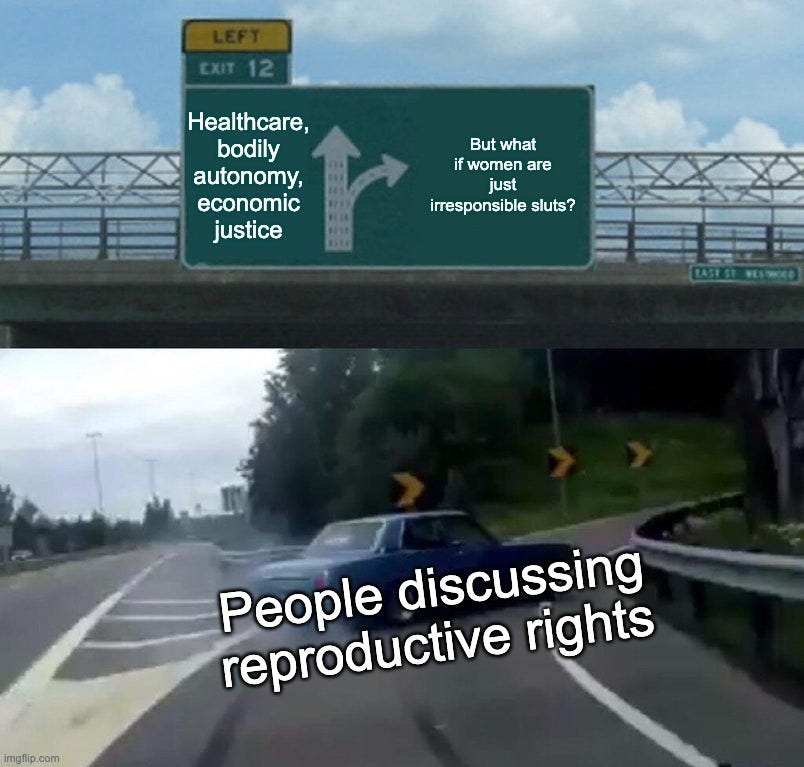
Of course, part of the project is also about punishing the “wrong” women. The “sexually irresponsible” women. The feminists. The women who had careers instead of babies. The women who wanted abortions. The women who had children under the wrong circumstances. The women who failed to perform motherhood correctly according to the increasingly deranged Pinterest board of patriarchal respectability.
But that is mostly a garnish.
The main course is demographic anxiety.
One of the most frustrating conversations in American politics right now revolves around pronatalism, which is a very fancy word for “have more babies because civilization is apparently being held together by your uterus and a podcast microphone.” Conservatives tell us they are worried about declining birth rates. They warn of a looming fertility crisis. They lament that Americans are not having enough children. They celebrate motherhood as a sacred duty and insist that society should value family formation.
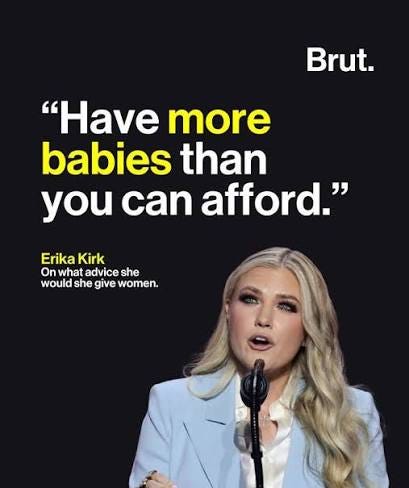
Then many of those same political actors support policies that contribute to maternity ward closures, the expansion of maternity deserts, physician flight from states with abortion restrictions, and legal confusion that leaves doctors afraid to provide medically necessary care until patients are actively dying.
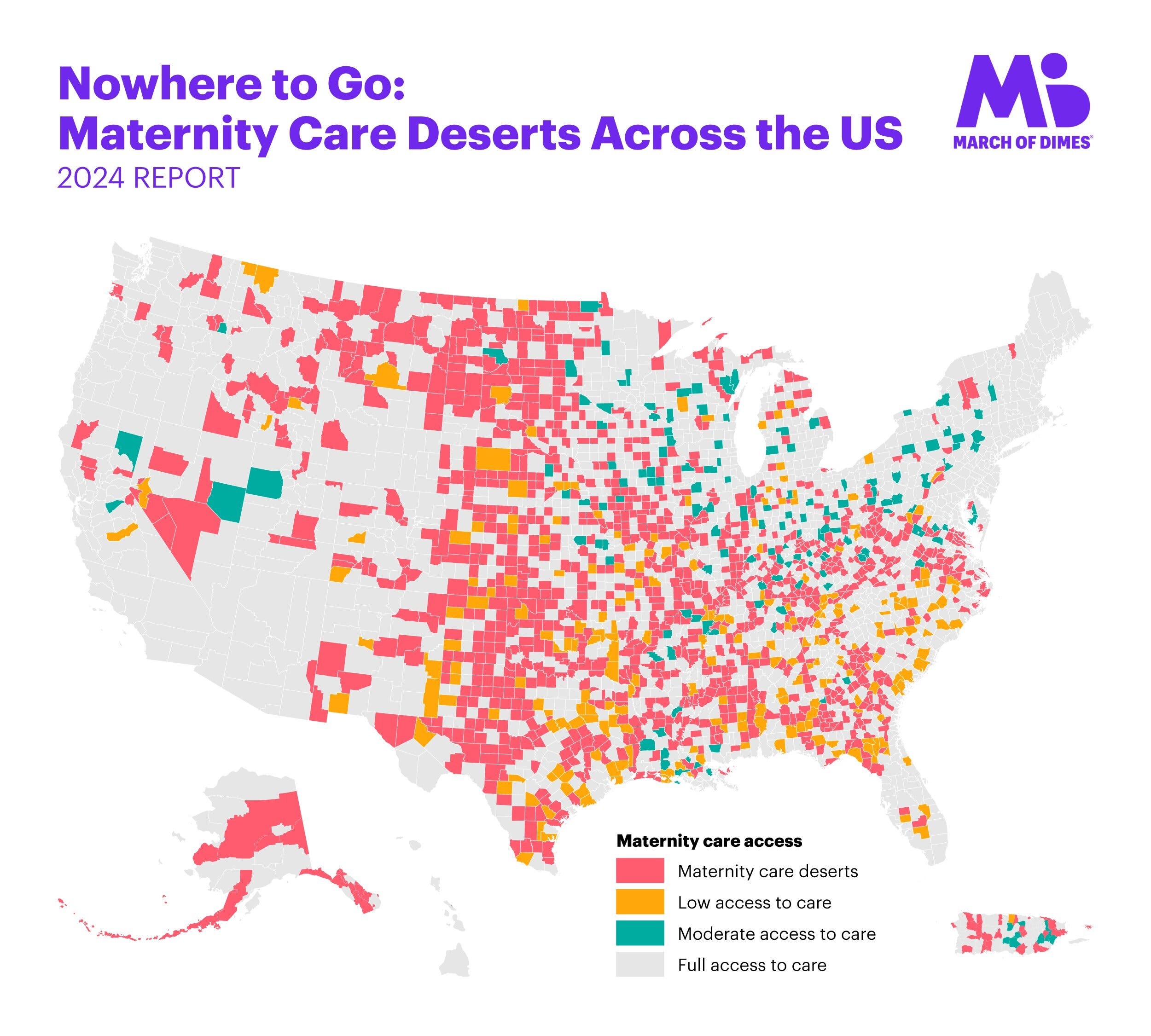
This should be a scandal.
Instead, we are supposed to pretend these things are unrelated. We are supposed to believe that a movement deeply concerned with babies somehow has very little interest in ensuring pregnant people survive pregnancy. We are supposed to believe that politicians alarmed by falling birth rates are simply unfortunate bystanders to policies that make childbirth more dangerous.
Or perhaps we are asking the wrong question.
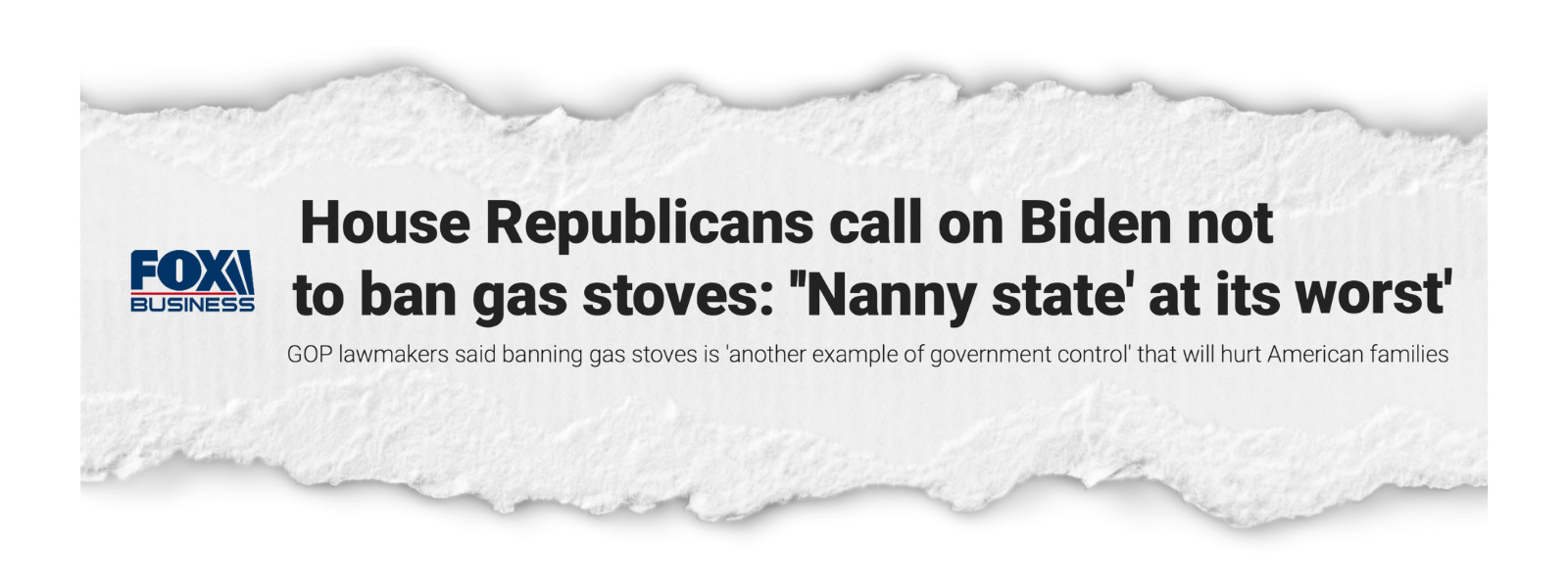
Because if the goal were healthy pregnancies and healthy children, maternity care would be treated as critical infrastructure. The closure of obstetric wards would be treated as an emergency. The shortage of maternal healthcare providers would trigger actual political panic. Maternal mortality would be addressed with the kind of urgency usually reserved for banks, billionaires, and men who believe gas stoves are the final stand of Western masculinity.
But that is not what is happening.
What we have instead is a political movement obsessed with reproduction and remarkably uninterested in reproductive healthcare.
That distinction matters.
A woman hemorrhaging in an emergency room does not become safer because a politician gave a speech about family values. A woman driving two hours to reach an obstetrician does not gain healthcare access because some think tank fellow published a trembling little essay about declining fertility rates in the West. A woman with a wanted pregnancy that has become medically dangerous does not benefit from being told that motherhood is sacred while the state forces her doctors to consult lawyers before treating her.
The rhetoric celebrates motherhood.
The policies fail those carrying children.
That is not an accident of messaging. That is the worldview peeking through the curtains.
The pregnant woman is not treated as a full human being with needs, fears, rights, complications, pain, and a life outside the pregnancy. She becomes a vessel. A demographic statistic. A cultural symbol. A means to an end. The pregnancy matters. The pregnant person becomes negotiable.
And this is where the modern Republican obsession with birth rates begins to look less like concern for “life” and more like concern for population management.
One of the strangest habits in modern political discourse is the insistence that we should never take conservatives at their word. When conservative politicians, media personalities, activists, and think tank goblins spend years warning about demographic change, declining white birth rates, immigration, and the loss of “real America,” we are apparently supposed to nod politely and pretend they are talking about something else.
They are not.
The contemporary pronatalist movement did not emerge in a vacuum. It emerged alongside an increasingly explicit panic about who is having children and who is not. Listen carefully to the rhetoric. America is in decline. Western civilization is under threat. ‘Native-born’ Americans are not reproducing. Immigrants are changing the character of the nation. Traditional families are disappearing. The future belongs to those who have children.
These statements are often presented as neutral observations. They are anything but.
The concern is rarely framed as a humanitarian one. It is not primarily about making pregnancy safer. It is not about reducing maternal mortality. It is not about ensuring that every child enters a world with healthcare, housing, food, childcare, and educational opportunity. Instead, the conversation repeatedly circles back to demographics.
Who is reproducing.
Who is not.
Who is arriving.
Who is replacing whom.
The language is sometimes subtle. Increasingly, it is not.
Stephen Miller, Washington D.C. Nazi-Cryptid, did not stumble into white nationalist politics by accident, trip over a copy of The Camp of the Saints, and land face-first in immigration policy. The modern right’s demographic panic is not hidden in a locked drawer. It is on television. It is in speeches. It is in think tank white papers. It is in social media posts about “replacement.” It is in the constant, sweaty insistence that immigration is not merely a policy issue but an existential threat to the nation’s identity.
This is why the pronatalist project begins to make more sense once you stop pretending it is only about population size.
Because if the concern were simply population decline, immigration would be an obvious solution. Countries facing declining birth rates have historically supplemented population growth through immigration. But many of the loudest voices warning about falling birth rates are also the loudest voices warning about immigrants.
That is because population growth is not actually the concern.
Demographic composition is.
The nightmare scenario in this rhetoric is not a country with too few people. It is a country with the wrong people.
Once you understand that, the movement’s priorities become easier to interpret. A movement genuinely concerned about population growth would celebrate every healthy birth.1 A movement concerned with preserving a particular racial, religious, and gendered social order will inevitably become preoccupied with which families are reproducing and which are not.2
This distinction explains why discussions about falling birth rates so often appear alongside hostility toward immigrants, multiculturalism, feminism, reproductive autonomy, LGBTQ families, and women who commit the unforgivable sin of having interior lives. All of those anxieties are connected. The ideal future being imagined is not simply one with more children. It is one with more children born into a specific vision of family, culture, religion, race, and gender hierarchy.
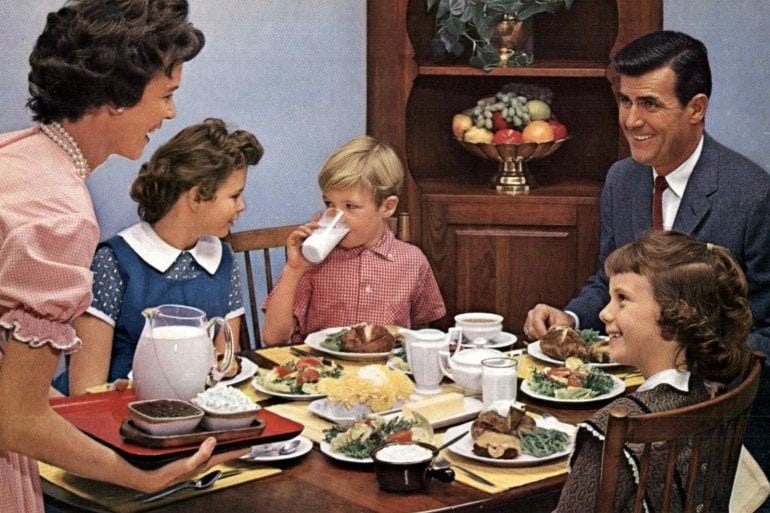
The babies matter, but they are also symbols. What is really being defended is a particular story about who America belongs to.
And that story has consequences.
Because the women most harmed by these policies are not randomly distributed across society.
Black women face dramatically higher maternal mortality rates than white women. Women living in poverty experience worse maternal health outcomes. Rural women often face severe shortages of obstetric providers. Women without financial resources are less able to travel for specialized care, seek second opinions, relocate, or force a broken healthcare system to treat them as people with options.
None of this is hidden. Researchers, physicians, public health advocates, and reproductive justice organizers have been documenting these disparities for years.
Everyone involved knows this.

Which means that when policymakers continue supporting measures that worsen these outcomes despite years of warnings, the resulting disparities stop looking accidental. At minimum, they become acceptable.
And that distinction matters.
Political priorities are often revealed less by what leaders claim to value than by what suffering they are willing to tolerate. The women most likely to suffer under this system are overwhelmingly the women with the fewest resources. The women most likely to die are overwhelmingly the women already facing systemic barriers to healthcare. The women most likely to find themselves trapped between restrictive laws and inadequate medical infrastructure are women who lack wealth, mobility, and political influence.
That is not a random pattern.
It is a structural one.
And that is where this conversation inevitably runs into America’s long, ugly tradition of sorting mothers into categories.
American culture has never treated motherhood as a universal good. It has always divided mothers into worthy and unworthy, respectable and irresponsible, sacred and suspicious, useful and disposable. Some mothers are imagined as the future of the nation. Other mothers are treated as evidence that the nation is collapsing.
Middle-class married mothers are held up as symbols of virtue. Poor mothers are scrutinized for every choice. Single mothers are blamed for social decline. Black mothers are subjected to stereotypes that have persisted for generations. Immigrant mothers are alternately depicted as demographic threats or drains on public resources. Women receiving public assistance are treated as if they personally broke the federal budget by asking for groceries.
The message is remarkably consistent.
Motherhood itself is not what earns social approval.
The right kind of motherhood does.
The ideal mother celebrated by modern conservative politics is married, heterosexual, sexually respectable, self-sacrificing, preferably Christian, preferably middle-class, and politically compliant. She understands that motherhood is her highest calling and asks for very little in return. She is not really a person so much as a decorative support beam in the house of patriarchy.
Real mothers are much more complicated.
They get divorced. They have careers. They struggle financially. They raise children alone. They are queer. They seek abortions. They reject traditional gender roles. They need childcare. They need healthcare. They need money. They sometimes regret motherhood. They sometimes love their children desperately and still want a life that belongs to them.
And this is where the punishment element enters the story.
Because reproductive politics has never been solely about producing children. It has also been about regulating female behavior. The “good woman” receives approval. The “bad woman” receives consequences. The woman who reproduces correctly is celebrated. The woman who seeks autonomy is blamed. The woman who conforms is protected. The woman who refuses is disciplined.
This is why many of the same people who claim motherhood is society’s highest calling seem so hostile toward actual mothers once those mothers require support. Paid family leave? Suddenly motherhood is your private choice. Affordable childcare? Why are you letting strangers raise your children? Medicaid expansion? Personal responsibility, sweetheart. Food assistance? Maybe stop having kids you cannot afford.
The symbolic mother is useful because she reinforces a worldview. The actual mother is inconvenient because she has needs.
The symbolic mother asks nothing from the state except the right to submit beautifully. The actual mother might demand healthcare, wages, childcare, protection from violence, or the freedom to decide whether pregnancy is something she can survive.
That is the real threat.
A woman who controls her own reproduction controls her own future. She can decide whether to have children, when to have them, with whom to have them, how many to have, and whether motherhood fits into her life at all. That level of autonomy disrupts a political movement built around the belief that social stability depends on women performing particular roles.
Which is why reproductive autonomy occupies such a central place in contemporary conservative politics. It is not merely a healthcare issue. It is not merely a religious issue. It is not merely a moral issue. It is a challenge to an entire system of gender expectations.
And when that challenge intersects with demographic panic, the result is a politics that is not simply sexist, but eugenic in its logic.
People hear “eugenics” and imagine something cleanly confined to the past, as if eugenics packed up its little suitcase after World War II and politely left American politics forever.
It did not.
Eugenic thinking has always been broader than forced sterilization, though forced sterilization is certainly one of its most brutal expressions.
And in the United States, forced sterilization was not some obscure fringe horror carried out by a few rogue doctors in a basement full of bad vibes and worse paperwork. It was law. Beginning in the early twentieth century, states passed eugenic sterilization statutes aimed at people deemed “unfit” to reproduce, which usually meant disabled people, poor people, incarcerated people, institutionalized people, people of color, immigrants, unmarried mothers, and anyone else the state decided represented a threat to the nation’s imaginary genetic future. In 1927, the Supreme Court upheld Virginia’s sterilization law in Buck v. Bell, allowing the state to sterilize Carrie Buck, a poor young woman institutionalized after being raped, because officials claimed she came from a line of “feebleminded” women. Justice Oliver Wendell Holmes gave the project one of its most chilling legal blessings with the line, “Three generations of imbeciles are enough.” After that, forced sterilization expanded across the country. More than 60,000 Americans were sterilized under these laws. California alone sterilized more than 20,000 people.3
This was not the state making a one-time mistake. This was reproductive control as public policy, dressed up in the language of science, efficiency, morality, and social improvement. The point was never simply medicine. The point was deciding whose reproduction counted as a public good and whose reproduction counted as a public threat.
That is the logic I am talking about here.
At its core, eugenics is about assigning different values to different populations. It asks which people should be encouraged to reproduce, which people should be discouraged, which families deserve investment, and which deaths are acceptable.
Modern eugenics does not always arrive wearing a lab coat and carrying a clipboard. Sometimes it arrives as healthcare neglect. Sometimes it arrives as budget cuts. Sometimes it arrives as moral panic about birth rates. Sometimes it arrives as a maternity desert. Sometimes it arrives as a politician insisting that “we” need more babies while supporting policies that make pregnancy more dangerous for poor women and women of color.
You do not need a formal sterilization program for a society to reveal which populations it values.
Sometimes all you need is an underfunded healthcare system, an abortion ban, and a willingness to let certain women die.
That is why the contradiction is not really a contradiction.
A political movement claims to be deeply concerned about birth rates while tolerating maternity deserts, physician shortages, rising maternal mortality, rising infant mortality, and a healthcare system that leaves pregnant women increasingly vulnerable. At some point, we have to stop describing these outcomes as policy incoherence and start asking what they reveal.
The mistake many people make is assuming that pronatalism is fundamentally about increasing the number of babies.
But when you look at the rhetoric, the policies, and the populations most affected by those policies, a different picture emerges.
The concern is not simply population decline. The concern is demographic change.
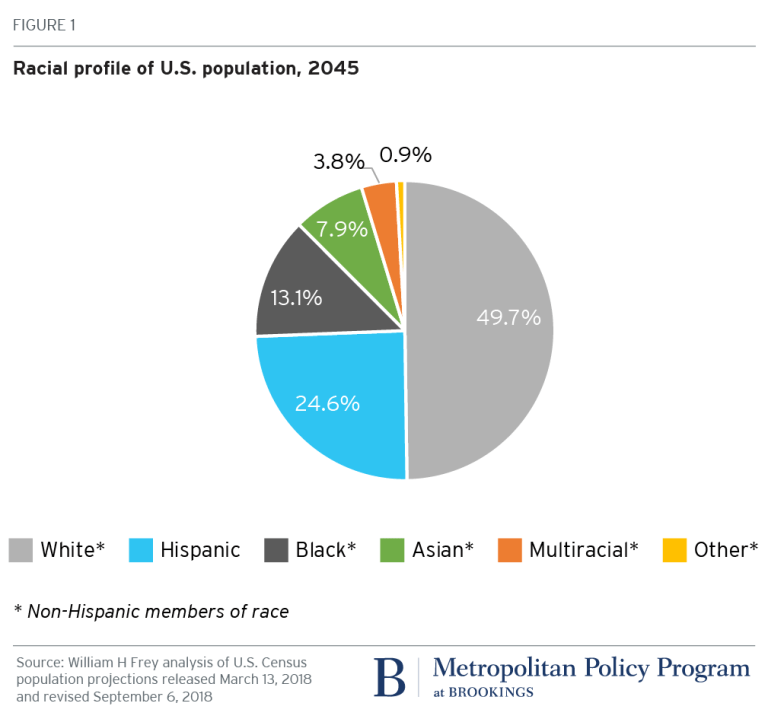
The concern is not simply motherhood. The concern is controlling motherhood.
The concern is not simply babies. The concern is which babies.
That is why demographic panic appears so frequently alongside hostility toward immigration. That is why discussions about falling birth rates often focus on feminism rather than healthcare. That is why reproductive autonomy is treated as a cultural threat. That is why policies that make pregnancy more dangerous remain politically acceptable.
The movement is not imagining an abstract future filled with healthy, thriving children. It is imagining a particular future populated by particular kinds of families. And once that becomes the objective, everything else starts to make sense.
The maternity desert stops looking like a policy failure. The disproportionate harm to poor women stops looking accidental. The disproportionate harm to women of color stops looking incidental. The obsession with regulating female sexuality stops looking disconnected.
They become different expressions of the same project.
A project concerned with preserving a particular social order. A project concerned with deciding who should reproduce, under what circumstances, and for whose benefit. A project willing to celebrate motherhood while sacrificing mothers.
So when someone asks, “If Republicans want more babies, why are they creating maternity deserts?”
The answer may be simpler than it first appears.
Because the objective was never babies.
It was always a particular vision of society.
The babies are merely the mechanism through which that vision reproduces itself.
I still wouldn’t want to live in an intersectional, non-racist version of the The Handmaid’s Tale though, just to be clear.
Look up the “Cross of Honour of the German Mother”
Important and horrifying to note that California’s prolific sterilization program inspired the Nazis.
Another area where the right is clearly using eugenic ideology is MAHA. They demonize autism because it is not “normal” and everything from vaccines and Tylenol supposedly causes it. All medicine should be “natural” because the idea behind it is that if you are not strong enough to survive on your own, then you weren’t good enough anyway and deserve to die.
I don't want to be misunderstood here, but you're doing God's work with these. Work so necessary and so important. My next essay: Nazis learnt from Americans half of their Holocaust tricks.
Done: https://ochlapczyca.substack.com/p/nazis-learnt-from-americans-how-to