
Pride During a Backlash Era
Why Pride was never proof that the fight was over

For a while, many Americans convinced themselves that LGBTQ history had reached its final chapter.
It was, in many ways, the queer version of Francis Fukuyama’s famous “End of History” thesis.1 Writing in the final days of the Cold War, Fukuyama argued that liberal democracy had effectively won the great ideological struggle of the modern era. History would continue, of course, but the big questions had supposedly been settled. The future might contain disagreements, crises, and conflicts, but the destination had been reached.
A similar story emerged around LGBTQ rights.
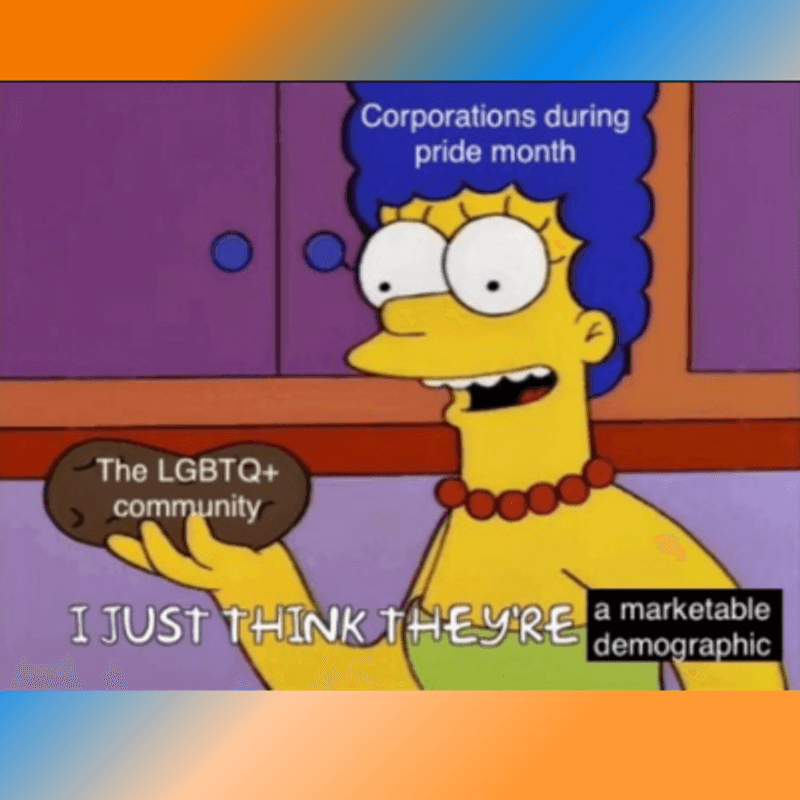
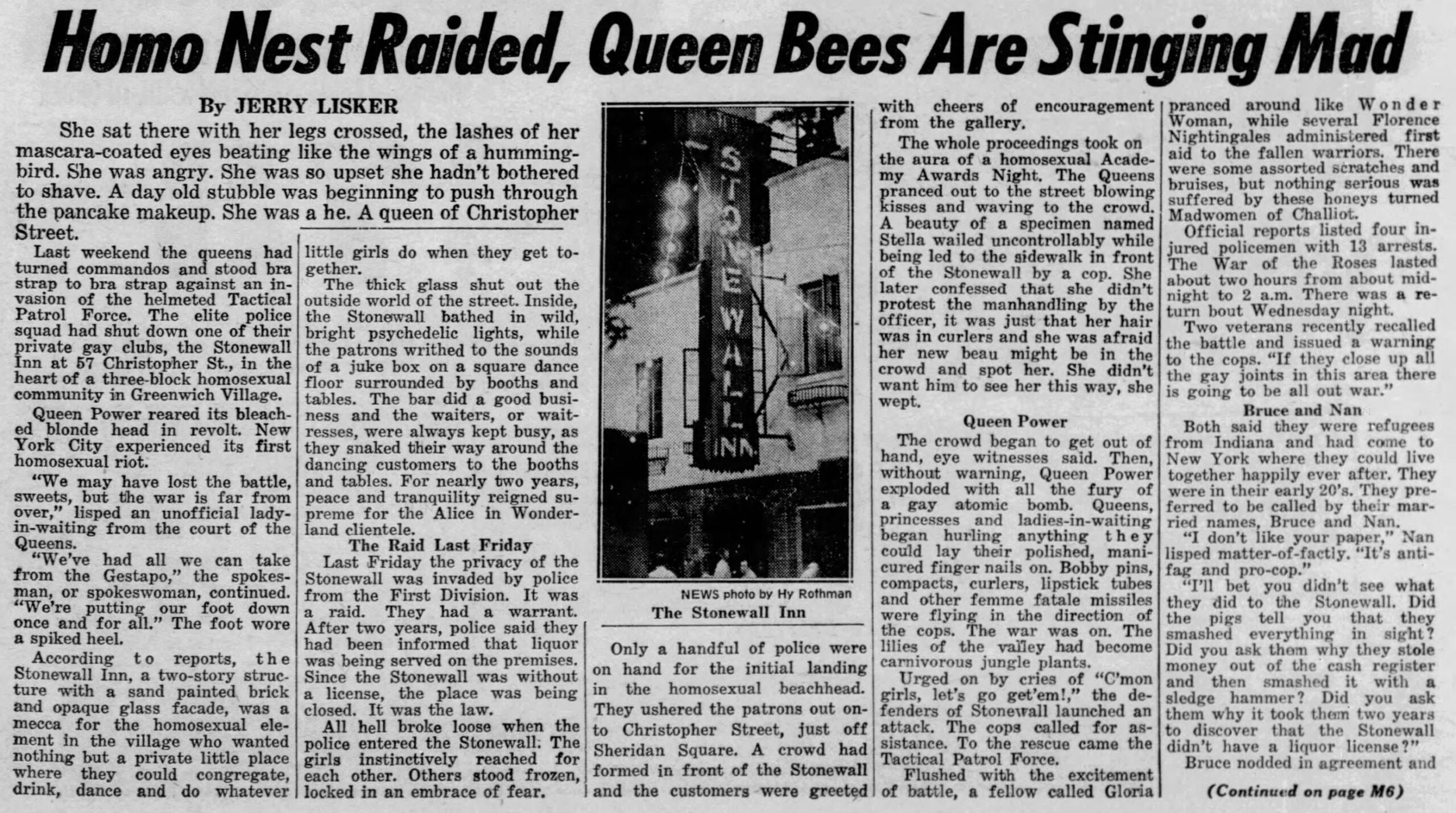
There was Stonewall. There was the AIDS crisis. There was activism. There was progress. There was marriage equality. Rainbow logos appeared on corporate websites every June. Politicians began showing up at Pride events. Major television shows featured queer characters without triggering national scandal. The culture had changed.
Roll credits.
The problem with declaring history over is that history has a nasty habit of continuing.
Fukuyama’s thesis looked considerably less convincing after terrorism, financial collapse, democratic backsliding, authoritarian resurgence, and the general tendency of human beings to repeatedly reinvent old problems with updated branding.2 Liberal democracy did not triumph so much as discover that victory is rarely permanent and history does not recognize finish lines.
LGBTQ history turns out to have the same problem.
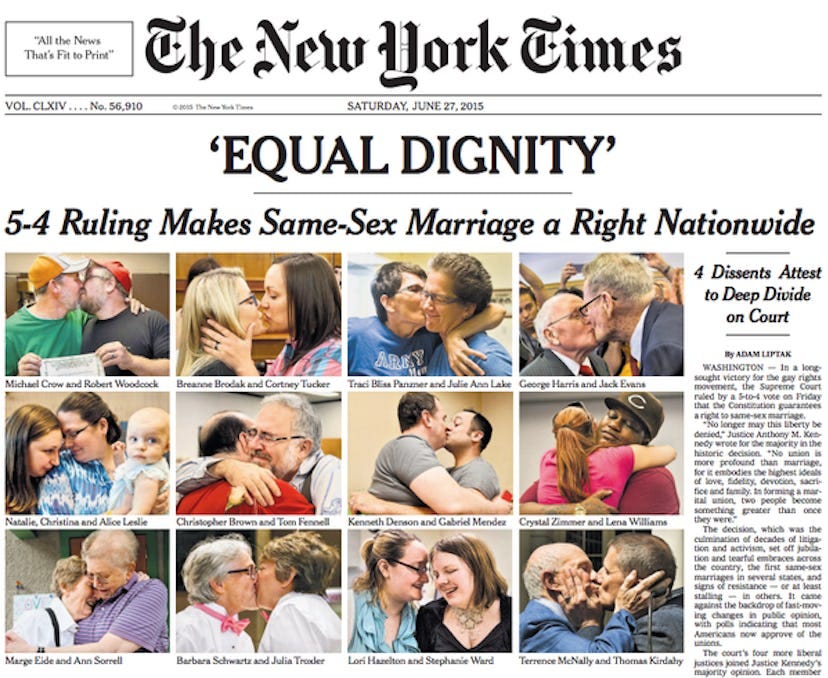
Many people interpreted marriage equality as the final chapter of queer history when it was really the end of one chapter and the beginning of another.
That misunderstanding helps explain why Pride feels different in 2026. Across the United States and around the world, Pride Month arrives amid lawsuits against Pride events, attacks on transgender rights, school curriculum battles, book bans, and politicians who seem to have built entire careers around being personally offended by the existence of pronouns.
For some people, this feels like history moving backwards.
But that’s only true if you believe queer history was a straight line.
It wasn’t.
One of the strangest things about how Americans tell LGBTQ history is that we’ve transformed it into a story of inevitable progress. Stonewall becomes the beginning. Marriage equality becomes the ending. Everything in between becomes a series of obstacles on the road toward an inevitable destination. It is a version of history that assumes social change moves in one direction and that every victory permanently resolves the conflicts that came before it.
Historians tend to get nervous around stories that neat. To wildly paraphrase William Shakespeare: The course of civil rights never did run smooth.
The reality is that Pride did not emerge because queer people were accepted. Pride emerged because they weren’t.
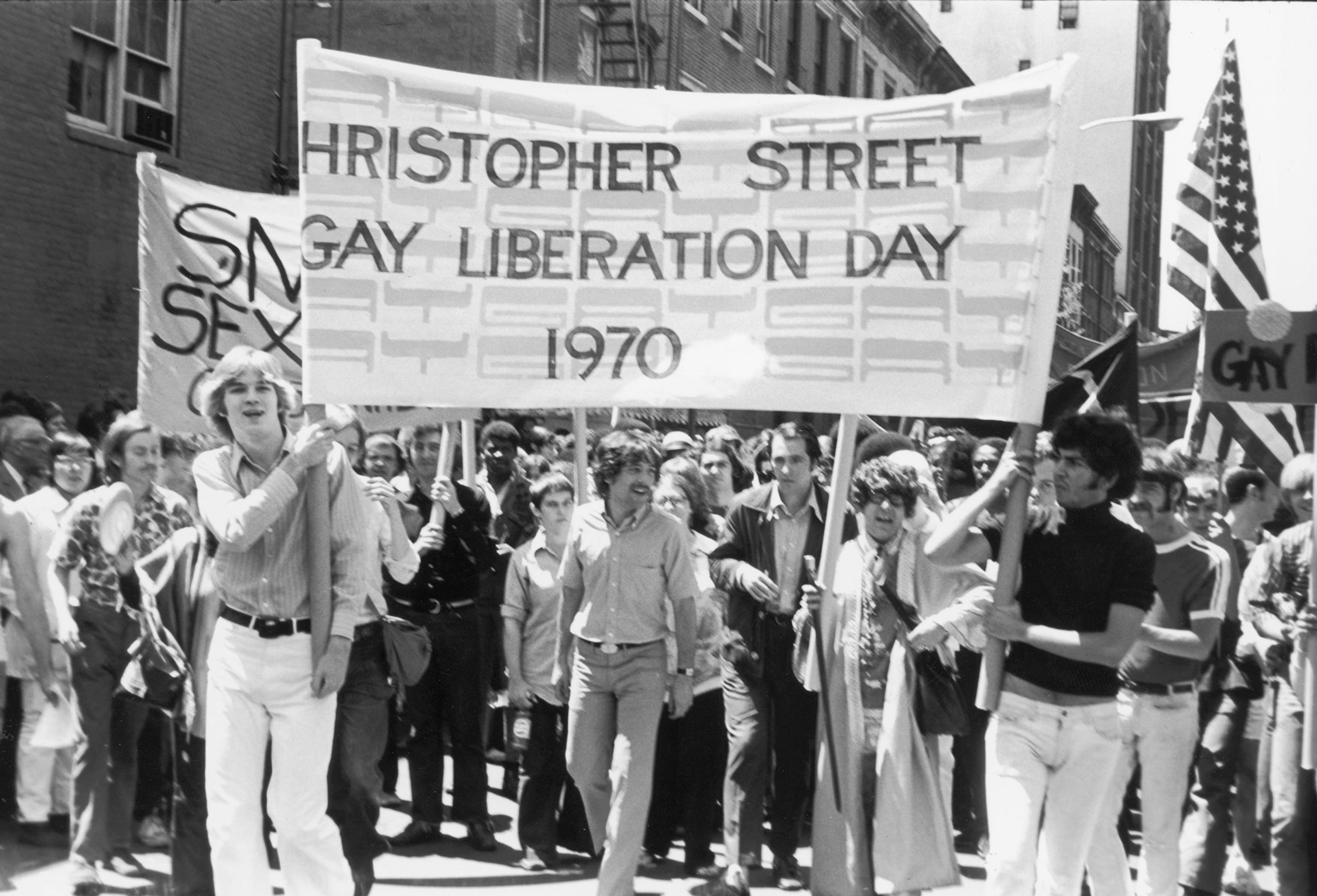
The first Pride marches were held in 1970 to commemorate the Stonewall uprising, itself a response to police raids, harassment, arrests, and the routine criminalization of LGBTQ life. The people marching through New York, Los Angeles, Chicago, and other cities were not celebrating victory. They were not thanking society for finally recognizing their humanity. They were not marking the successful completion of a civil rights campaign.
They were refusing invisibility.
That distinction matters because modern conversations about Pride often assume that Pride was originally a celebration that somehow drifted into politics. Every June, someone asks why Pride can’t “just be a celebration.” Every June, someone complains that Pride has become too political. Every June, someone acts as though the political dimensions of Pride are a recent corruption of what was once an uncomplicated festival dedicated to rainbow flags and corporate sponsorships.
Historically speaking, that’s nonsense.
Pride was always political because queer existence was always political.
The act of gathering publicly as LGBTQ people was political. The act of refusing shame was political. The act of being visible in a society that often preferred queer people remain hidden was political. Pride was not a celebration that occasionally became a protest. The celebration was the protest.
And that historical reality helps explain something many people continue to misunderstand about social change.
Visibility and backlash have always traveled together.
One of the assumptions embedded in the queer “End of History” narrative is that visibility naturally produces acceptance. Once enough people know LGBTQ individuals, encounter LGBTQ stories, and see LGBTQ representation in public life, opposition should gradually fade away.
Sometimes that happens.
But history suggests something more complicated.
The historian and theorist Susan Stryker has written extensively about the ways transgender people become symbolic sites where societies attempt to stabilize gender categories during periods of social change. When traditional understandings of gender begin to feel unstable, trans people often become targets for broader anxieties about identity, order, and social transformation.
What makes Stryker’s insight so useful is that it helps explain why the contemporary anti-trans movement emerged when it did.
Trans people did not suddenly appear in the last decade. They did not emerge from social media. They were not invented by universities. They have existed throughout history, even if the language used to describe them has changed.
What changed was visibility.
More people came out. More stories became public. More people knew a trans coworker, student, neighbor, family member, athlete, writer, or public figure. More people became impossible to ignore.
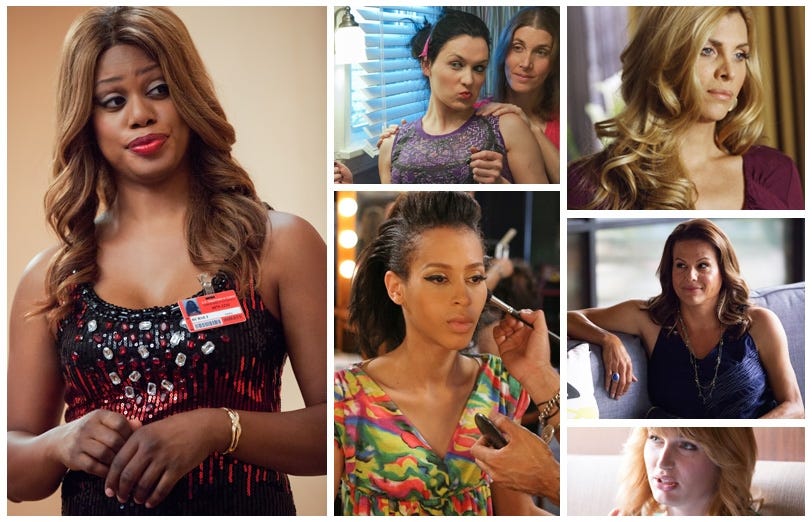
And visibility destabilizes systems that rely on invisibility.
The anti-trans movement is often presented as a response to some sudden social transformation, but in many ways it resembles earlier moments of backlash in LGBTQ history. The backlash did not occur because trans people appeared. It occurred because trans people became visible enough that opponents could no longer pretend they weren’t there.
This is one of the great paradoxes of social change. Backlash is frequently interpreted as evidence that progress has failed when, in reality, backlash often emerges because progress has succeeded.
The backlash is not proof that visibility failed.
The backlash is often proof that visibility worked.
Understanding this also helps explain why anti-LGBTQ politics sounds so repetitive.
Somebody is always threatening the family.
The identities change. The targets rotate. The panic survives.
The feminist scholar Sara Ahmed argues that political narratives repeatedly construct “the family” as something vulnerable, fragile, and perpetually under siege. Queers become cast as threats not only to individual families but to the broader reproduction of social order itself.
Once you notice this pattern, it becomes impossible to unsee.
In the 1970s, Anita Bryant warned that gay people threatened children.
In the 1980s, the AIDS crisis became a vehicle for broader fears about morality and social collapse.
In the 1990s and early 2000s, opponents insisted same-sex marriage would destroy marriage itself, a claim that remains one of the more impressive examples of political logic eating itself alive.
In the 2010s, bathrooms became the battlefield.
In the 2020s, drag queens, trans athletes, pronouns, libraries, and school curricula joined the list.
The emotional architecture remains remarkably consistent.
The family is under attack.
The children are in danger.
Civilization is collapsing.
Again.
The remarkable thing is not that these panics continue to emerge. The remarkable thing is how little creativity goes into them.
As a historian, there are moments when reading contemporary political rhetoric feels like discovering that someone has been photocopying the same moral panic for fifty years and occasionally changing the font. The names change. The slogans change. The villains rotate in and out of the story. But the underlying narrative remains stubbornly familiar.
This is one reason why legal victories, while important, never tell the whole story.
Marriage equality mattered. Anti-discrimination protections matter. Representation matters. None of these achievements should be minimized. But one of the problems with the queer “End of History” narrative is that it confused inclusion with liberation.
The political theorist Cathy Cohen has spent decades arguing that inclusion within existing institutions is not the same thing as transformation. Winning access to an institution does not automatically dismantle the structures that produced exclusion in the first place. Legal victories can improve lives dramatically while leaving deeper assumptions about gender, sexuality, race, class, and power intact.
In retrospect, marriage equality became something larger than a legal victory. It became a symbolic endpoint. Many people treated it as proof that the major battles had been won.
Like Fukuyama’s thesis, this mistake came from confusing a major victory with the conclusion of the story.
History rarely works that way.
The institutions change.
The conflict adapts.
The panic finds a new target.
The anti-trans movement did not emerge because older anxieties disappeared. It emerged because those anxieties found a new vessel.
And that brings us to perhaps the most powerful force shaping our current political moment: nostalgia.
If the queer “End of History” imagined a future of inevitable progress, the contemporary backlash is powered by a fantasy of returning to an idealized past.
Nostalgia tells a simple story. There was once a proper family. A proper man. A proper woman. A proper America. Everything worked until modern society came along and ruined it.
The problem is that history keeps refusing to cooperate.
The backlash is not trying to preserve history.
It is trying to preserve a specific story about history.
Those are not the same thing.
The nostalgic vision of the 1950s depends on forgetting queer people existed in the 1950s. It depends on forgetting that women challenged gender roles long before social media. It depends on forgetting that families have always taken multiple forms and that gender nonconformity did not suddenly emerge when somebody invented TikTok.
The past was always messier than nostalgia allows.
Queer visibility keeps reminding people of that fact.
And perhaps that is why Pride feels different right now.
Not because the movement has failed.
Not because history is moving backwards.
Not because progress was an illusion.
Pride feels different because many people mistook visibility for victory.
They assumed Pride emerged after acceptance.
Historically, Pride emerged because acceptance did not exist.
The first Pride marchers were not celebrating a world that welcomed them. They were creating one. They understood something that the queer “End of History” narrative forgot: visibility is not a finish line. It is an ongoing act of resistance.
Every backlash campaign, every attempt to remove books from shelves, every effort to erase identities from public life, every panic about drag queens, pronouns, or Pride events ultimately revolves around the same demand.
Be less visible.
Be quieter.
Take up less space.
Go back into the closet, even if nobody calls it that anymore.
Pride exists because generations of LGBTQ people rejected that bargain.
It exists because they understood that invisibility was never safety. It was simply a different form of vulnerability.
People often ask why Pride still exists.
Pride exists because people refused to disappear.
It exists because every generation encounters someone who insists they should be quieter, smaller, less public, less themselves.
And if Pride feels different this year, perhaps that’s because history is reminding us what Pride was for in the first place.
Not to celebrate the end of the struggle.
But to make sure the people writing the next chapter know we are still here.
Only I would find a way to turn a post about Pride into a chance to talk about Francis Fukuyama.
If, somehow, Fukuyama is reading this I know that you later said you had been premature in your analysis and I get it. I’m not unilaterally saying “Fukuyama was wrong, point and laugh!”
Glad to see this. My first Pride was in San Diego in 1976. People afraid to march or be visible watched from 2nd story windows along the route. No politicians, no corporations, lots of hecklers on the route.
Things are better in general now, still depends on where you live.
Am grateful to be married to my wife of 33 years, particularly as we navigate her dementia journey. It does help in medical situations.
But it doesn’t mean we don’t experience any homophobia.
I’ve been out for 51 years. I am grateful for the progress, but it is easy to lose if we don’t keep working.
I think that Shakespeare was right and the course of civil rights never did run smooth.
As you state - Pride emerged because we weren’t accepted. I think the need for it being there will remain until we are that visible, all the time, everywhere, and that (if) we become “normal” And, even then, there are groups/individuals, that used to hold their opinions to themselves who are now fully visible, encouraged by the turn of events and slick and sick propaganda. At least we can see the enemy, and perhaps (perhaps) educate them.. And (TG) there politicians out there who are in powerful roles and on our side.
Our story is ours and this beautiful tale is/was always for the long haul. We have strength and being visible brings more!