
Sir, This Is a Bus: A Brief History of Male Entitlement in Public

There I was at eight o’clock at night, tired, cold, and spiritually prepared to go home, watch television1, and fall asleep in the deeply unglamorous way God intended, when one man decided that public transit was no longer a shared civic arrangement but a stage for his own personal nonsense.
He got on the bus without paying. There was also, as I recall it, a whole situation involving pizza. Not pizza in the abstract, but pizza as a supporting actor in a drama that absolutely did not need one. The driver told him to get off. He refused to get off. The rest of us sat there, trapped in what I can only describe as the most irritating one-act play in the English language, waiting for this deeply stupid standoff to end.
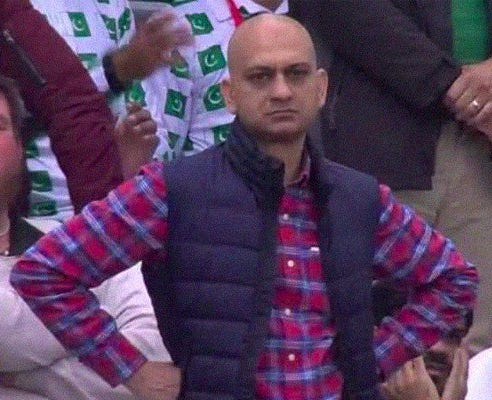
And because the universe occasionally likes to season ordinary evenings with a pinch of absurdity, it did not end quickly.
Now, what I wanted to say to this man, with all the weary sincerity of someone who had hit her limit, was: for Christ’s sake, it is eight p.m. I would like to go home, watch TV, and go to sleep. Could you please make this, I’m sure, very principled stand another time?
That is what I wanted to say.
What I actually did was sit there silently and think it, because women are trained, often very sensibly, not to escalate with an already angry man in an enclosed space. I also did not get off the bus, because getting off would have required walking past him, and I was not particularly interested in starring in a second, more dangerous drama titled Strange Man Redirects His Rage at Random Woman on Her Way Home.
So I stayed put. Everyone stayed put. And we all waited sixteen minutes for a police officer to arrive and tell him exactly what the bus driver had already told him: get off the bus.
Sixteen minutes. Sixteen entire minutes because one man had decided that his feelings, his defiance, or his relationship to basic public rules were now more important than everyone else’s evening.
And the thing is, this was not even the first time I had encountered a man who seemed to believe that his emotions should affect the schedule of a bus.
Because there was also the other guy about six weeks ago on my way to campus. The one who held up an entire bus because he wanted to tell the driver that he didn’t appreciate his tone when he’d instructed the man on some point of bus rules.
His tone.
Not some gross injustice. Not an actual emergency. His tone.
These are not isolated incidents. This is a genre. A genre in which one man decides that his annoyance, embarrassment, wounded pride, or general inability to hear the word no has now become a matter of public concern.
Once you start looking at it that way, the bus stops being just a bus. It becomes a tiny, rolling kingdom. A perfect little case study in power, entitlement, grievance, and the deeply cursed social tradition of treating male discomfort like breaking news.
Because this is not really about buses.
It is about the long history of men who think their feelings stop traffic.
The Bus as a Tiny Kingdom
Public transit is one of the last places in modern life where society asks us to participate in the radical little experiment of acknowledging that other people exist.
That is the bargain.
You get on the bus. You pay your fare. You obey the rules. You try not to make your personal issues everybody else’s logistical nightmare. You do not listen to music without headphones. The driver drives. The passengers passenger. We all mutually agree not to become the problem.
Most people understand this. Some, apparently, do not.
And what fascinates me about these incidents is that the man making the scene almost always seems to imagine himself as the protagonist of a principled drama. In his own mind, he is not delaying a bus full of tired strangers. He is standing up for something. He is asserting himself. He is refusing to be disrespected. He is, perhaps, the Rosa Parks of being told to follow standard transit procedure.
Unfortunately for the rest of us, the lived experience of this grand act of self-assertion is much less cinematic.
For the passengers, it is just dead time and tension.
It is checking the clock.
It is mentally recalculating when you are going to get home or if you are going to be late to work or class or miss your train.
It is wondering whether this is going to become a story you tell later as a ridiculous inconvenience or the opening paragraph of something much worse.
That is one of the things that often gets lost when people talk about public entitlement as though it is just a personality quirk. It is not just that one guy is annoying. It is that his annoyance becomes everyone else’s problem. His mood enters the infrastructure. His ego becomes part of the route.
And that is not random. That is social training.
A Brief History of Men Treating Their Feelings Like Governance
For centuries, men were treated as the default actors in public life. They were the legal heads of households, the property holders, the voters, the civic authorities, the people whose voices had weight attached to them. Their judgments mattered. Their status mattered. Their grievances mattered.
Meanwhile, women were trained into a different political education entirely. We were taught deference, flexibility, self-management, and emotional containment. Smooth things over. Do not make a fuss. Adapt. Endure. Be pleasant. Be careful. Be smaller.
This is one of patriarchy’s nastiest tricks. It does not only distribute formal power unevenly. It distributes emotional permission unevenly too.
Some men are taught, over and over again, that if they feel slighted, that feeling is meaningful. It should be registered. It should be responded to. It should be apologized for. Their discomfort is not just discomfort. It is treated as evidence that something is wrong with the world around them.
A surprising amount of history boils down to this: society treating male irritation like an official document.
That does not mean every rude man on a bus is consciously reenacting nineteenth-century patriarchal household authority. It does mean he is moving through a world built by those assumptions. A world that has long told men that their dignity has public value and that being denied, corrected, or inconvenienced may constitute a form of disrespect.
Which brings us, beautifully, absurdly, to the sentence: I didn’t appreciate his tone.
Tone, or, I Was Wrong but I’d Like to Make It Your Fault
The man who held up a bus because he needed the driver to know that he did not appreciate his tone is, I regret to inform you, a near-perfect artifact.
Because “tone” is one of those words that often appears when someone has lost on substance but would still like to feel morally victorious.
Not always. Sometimes tone genuinely matters. Sometimes people are cruel, threatening, or abusive. But very often, especially in conflicts like this, “I didn’t appreciate your tone” means something more like: I did not like being corrected, and I would now like to make your delivery the issue instead of my behavior.
It is a beautiful little escape hatch for the ego.
And it is also deeply political.
Women, queer people, workers, and marginalized people have spent centuries being told that the content of what they say matters less than the manner in which they say it. Too loud, too sharp, too emotional, too blunt, too cold, too angry, too shrill. Entire hierarchies have been maintained through the policing of tone. If the less powerful are always required to speak gently, then the more powerful never have to seriously engage with what is being said.
Service workers live inside this trap constantly. A bus driver, cashier, waitress, nurse, receptionist, teacher, or call center employee is expected not merely to do the job but to do it with the correct emotional lighting. Firm enough to maintain order, soft enough not to offend. Authority without visible irritation. Boundaries without edge. Correction as a spa treatment.
Apparently the bus driver was meant to enforce transit policy2 with the soothing aura of a meditation app.
And this is where entitlement gets especially revealing. Because some people do not just want service. They want deference. They want the person enforcing the rules to do so in a tone that reassures them they are still, somehow, the center of the interaction.
He was not denied liberty. He was denied concierge-level emotional handling.
Women Learn Risk Management, Men Learn Public Performance
What really got me about the pizza bus guy was not just that he held up the bus. It was that I knew exactly what I wanted to say and also exactly why I was not going to say it.
I wanted to tell him to knock it off. I wanted to point out that it was eight at night and some of us would very much like to go home before the heat death of the universe. I wanted to ask him, with what I think would have been admirable restraint, to conduct his deeply principled stand against bus policy at literally any other moment.
But I did not say that.
Not because I was not angry.
Not because I was not right.
Not because I had nothing to say.
I did not say it because women are taught, often for very good reason, not to provoke an already angry man in a confined space.
And I did not get off the bus either, because getting off meant walking past him.
That is the whole architecture right there.
He got to have a public emotional event. The rest of us got assigned threat assessment.
His role in the evening was grievance. Ours was logistics.
That is such a familiar gendered split that many women will recognize it instantly. Men like this are often allowed to externalize their discomfort. They get loud. They get difficult. They perform outrage. They force the environment to respond to them.
Women are taught the opposite. Internalize. Calculate. Adjust. Stay alert. Do not become the next target. Do not make yourself memorable to the wrong man. Think three steps ahead. Keep the peace where possible. Get home safe.
This is not passivity. It is risk management.
It is not agreement. It is strategy.
It is not that women do not know exactly what should be said in these moments. It is that we also know what it can cost to say it.
That is why these incidents are more than irritating. They are revealing. They show us who gets to turn their feelings outward and who must quietly absorb the consequences.
Public male entitlement often works like this: one man exports his emotions, and everyone else imports the cost.
The Hidden Workforce of Male Entitlement
One of the most annoying things about public entitlement is that it creates a hidden workforce.
Someone has to enforce the rule.
Someone has to de-escalate.
Someone has to wait.
Someone has to miss a connection.
Someone has to recalculate a walk home.
Someone has to decide whether getting off the bus is safer than staying on it.
Someone has to absorb the delay, the discomfort, the uncertainty, the possibility that this gets worse before it gets better.
In this case, the bus driver had to do the impossible balancing act service workers know too well: enforce the policy, keep the passengers safe, avoid escalation, stay professional, and somehow also not injure the delicate feelings of the man actively derailing the route.
Then the passengers had to sit there and wait while one person’s ego temporarily annexed public infrastructure.
Then the police had to show up to repeat the original instruction.
And after all that, the grand conclusion of this epic struggle between Man and Bus and Society was exactly the same as it would have been sixteen minutes earlier: get off the bus.
That is what makes these little public dramas feel almost elegant in their stupidity. No new principle has been established. No truth has been discovered. The whole spectacle exists simply to prove that one man can, for a brief period, force the system to orbit him.
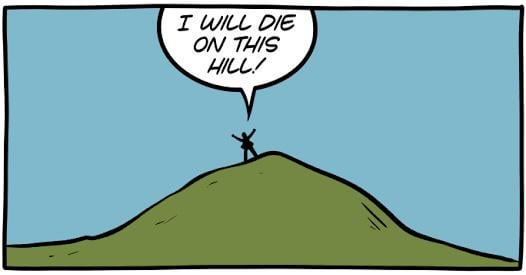
A tiny tyrant in a tiny kingdom.
The Tiny Tyrant Tradition
The man on the bus is not a king, senator, bishop, or CEO. But for sixteen deeply stupid minutes, he was acting out the same old logic: my grievance matters more than the collective. My feelings outrank the schedule. Your time is less important than my pride. Normal operations will now pause for my dissatisfaction.
That is patriarchy in miniature.
Not always the law. Not always a sermon. Not always a speech from a podium. Sometimes it is just a daily rehearsal of dominance through inconvenience and disruption.
You see it everywhere once you start looking.
The man screaming at a cashier because a coupon expired.
The man demanding that a female barista smile.
The man who reacts to being corrected by a woman as though he has suffered a diplomatic insult.
The man who treats any boundary as humiliation.
The man who cannot simply lose one small interaction and move on with his day.
He must become the event.
And this is why these bus stories matter, ridiculous as they are. If you want to understand how power works, you cannot only study presidents, judges, and lawmakers. You also have to study habits. Rituals. Expectations. Who gets indulged. Who gets policed. Who gets to take up space. Who gets to make a scene. Who gets punished for responding.
Power survives not only in institutions, but in ordinary performances. In the thousand tiny moments where one person’s ego is allowed to become everyone else’s problem.
Sir, This Is a Bus
One of the most exhausting things about patriarchy is that it rarely arrives announcing itself as ideology. Sometimes it just gets on the bus, doesn’t pay, carries unsecured pizza, and expects a vehicle full of strangers to reorganize their evening around its feelings.
And the rest of us, especially women, are left doing the quiet work of staying calm, staying alert, staying strategic, and staying safe.
And yes, it was only sixteen minutes. In the grand scheme of things that doesn’t feel like that big of a deal. I got off at my stop, hit the Tesco Express3 for the milk I need for coffee tomorrow and made my way home.
But it wasn’t just sixteen minutes. It was a tremor in my hand because no one could be sure it wouldn’t escalate. It was the fear of making eye contact so he wouldn’t think I wanted to start something. It was the knowledge that one man’s bad mood could up-end something as basic as taking the bus home from the train station in a predictable manner.
And if your bruised ego can stop public transit, that is not a quirky little personality flaw.
That is a social structure.
Rewatching The Pitt because I have no self-control.
And when I say “transit policy” I am not talking about Rosa Parks being told to sit in the back of the bus. I am talking about “Sir, please, you cannot bring an open container of hot soup onto the bus along with a wild meerkat.”
The only store still open at 8:30 pm, because I apparently live in the town Footloose was based on.
"A tiny tyrant in a tiny kingdom." So well observed and written.
It’s times like these that one could use a nice, strong taser.