
The Children Are Apparently in Danger Again
How anti-LGBTQ activists have spent fifty years recycling the same moral panic.

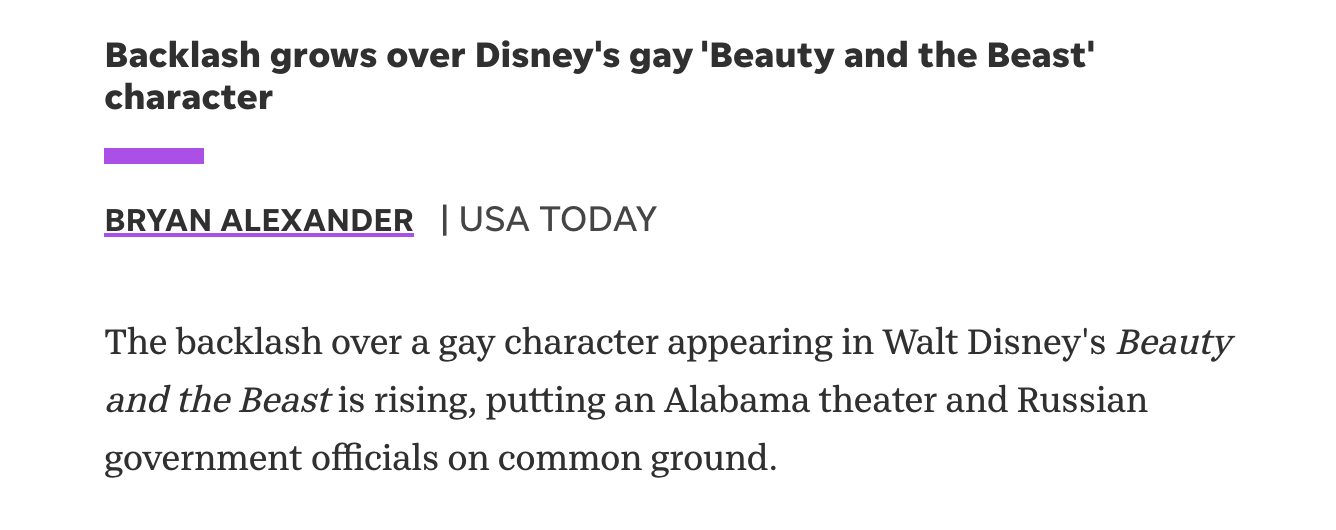
Every June, like clockwork, somebody discovers that LGBTQ+ people exist and reacts as though they have uncovered a previously unknown biohazard beneath an elementary school.
A politician warns that children are under threat. A pundit complains that Pride has gone too far. Someone on social media starts talking about “groomers.” Someone else insists they have no problem with gay people, they just don’t want sexuality “pushed on children.”
The details change. The emotional script does not.
If you’ve been watching these arguments long enough, they start to feel less like political positions and more like community theater. New costumes. Same dialogue. Same panic. Same final act.
Because one of the oldest tricks in anti-LGBTQ politics is the claim that queer people represent a threat to children.
Not that children might disagree with traditional gender roles.
Not that children might encounter different kinds of families.
Not even that children might learn LGBTQ people exist.
A threat.
And once you notice the pattern, it becomes impossible to unsee.
The modern version of this panic often centers around words like “grooming,” drag queens, trans people, Pride events, or school libraries. Its supporters frequently present it as a new crisis created by a uniquely dangerous cultural moment.
The problem is that the historical record is sitting in the corner rolling its eyes.
Because we’ve been here before.
Repeatedly.
And the people making these arguments are often recycling rhetoric old enough to collect Social Security.
The blueprint for much of modern anti-LGBTQ politics was established in 1977 through Anita Bryant’s “Save Our Children” campaign. Bryant, then a singer and spokesperson for Florida Citrus, became one of the most visible faces of organized anti-gay activism in the United States. The campaign emerged in response to something that sounds remarkably mundane by modern standards: a local anti-discrimination ordinance in Dade County, Florida. The law simply prohibited discrimination based on sexual orientation in housing, employment, and public accommodations.
But opponents did not argue primarily about employment law.
They did not launch a technical debate about municipal governance.
They went directly for children.
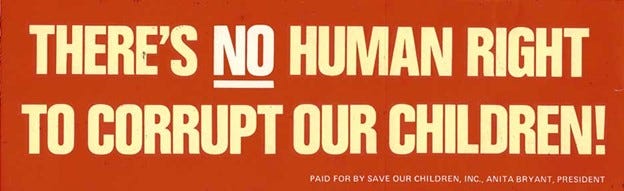
Bryant repeatedly claimed that gay people were recruiting young people into homosexuality. Newspaper advertisements associated with the campaign declared that because homosexuals could not reproduce, they had to “recruit” children to survive. The campaign portrayed gay people as predators, corrupters, and threats to families.
Sound familiar?
It should.
The terminology has changed, but the emotional structure remains startlingly intact.
Today the accusation is often “grooming.”
In 1977 it was “recruitment.”
Different word.
Same monster.
The remarkable thing about the “Save Our Children” campaign is not merely that it succeeded in repealing the ordinance. It is that it created a political formula that proved astonishingly durable. The campaign helped inspire similar efforts across the country and became part of the broader rise of the Christian Right and the Moral Majority.
Once anti-LGBTQ activists discovered they could frame discrimination as child protection, the strategy became difficult to abandon.
Why argue that a minority group deserves fewer rights when you can claim you’re rescuing children?
Nobody wants to be the villain.
People are far more comfortable imagining themselves as protectors.
The next major battleground appeared in schools.
The Briggs Initiative in California sought to ban gay and lesbian teachers from public schools. Again, the concern was not simply that LGBTQ adults existed. The concern was that they existed near children.
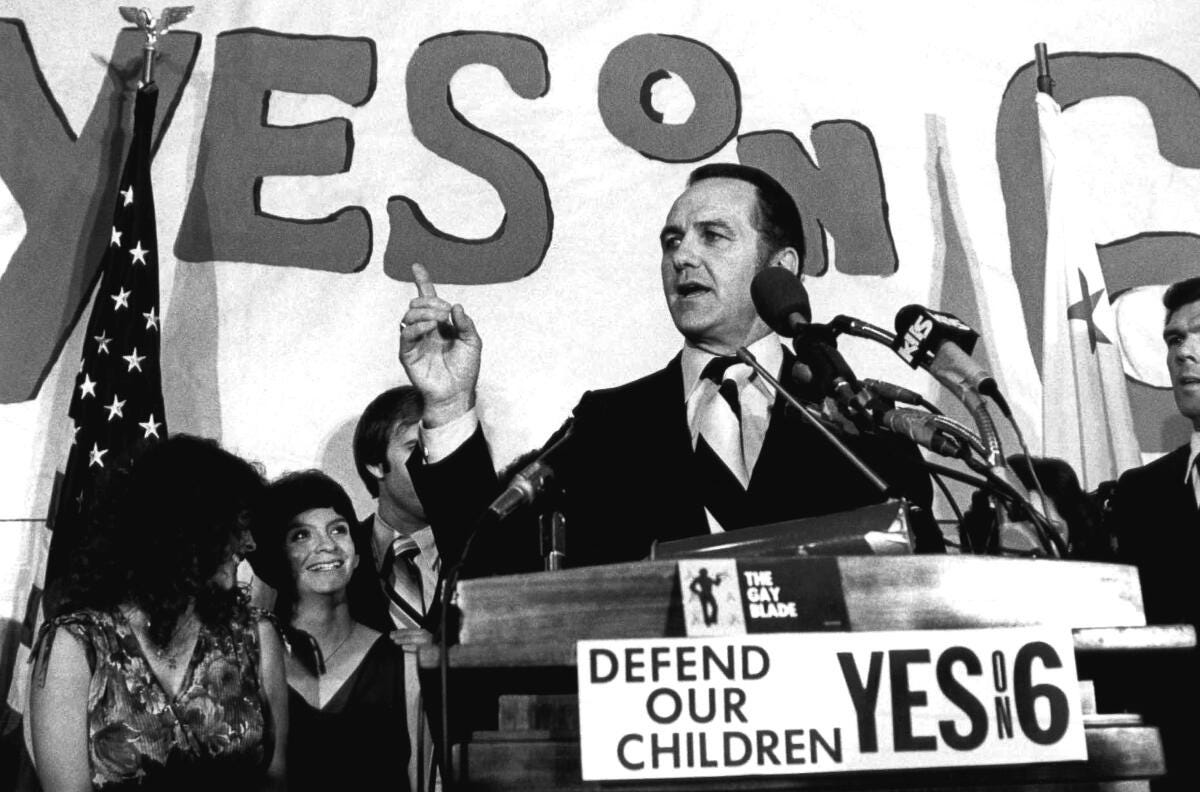
The logic was revealing.
Queer people were not treated as citizens who happened to be teachers.
They were treated as risks.
Their mere presence became suspect.
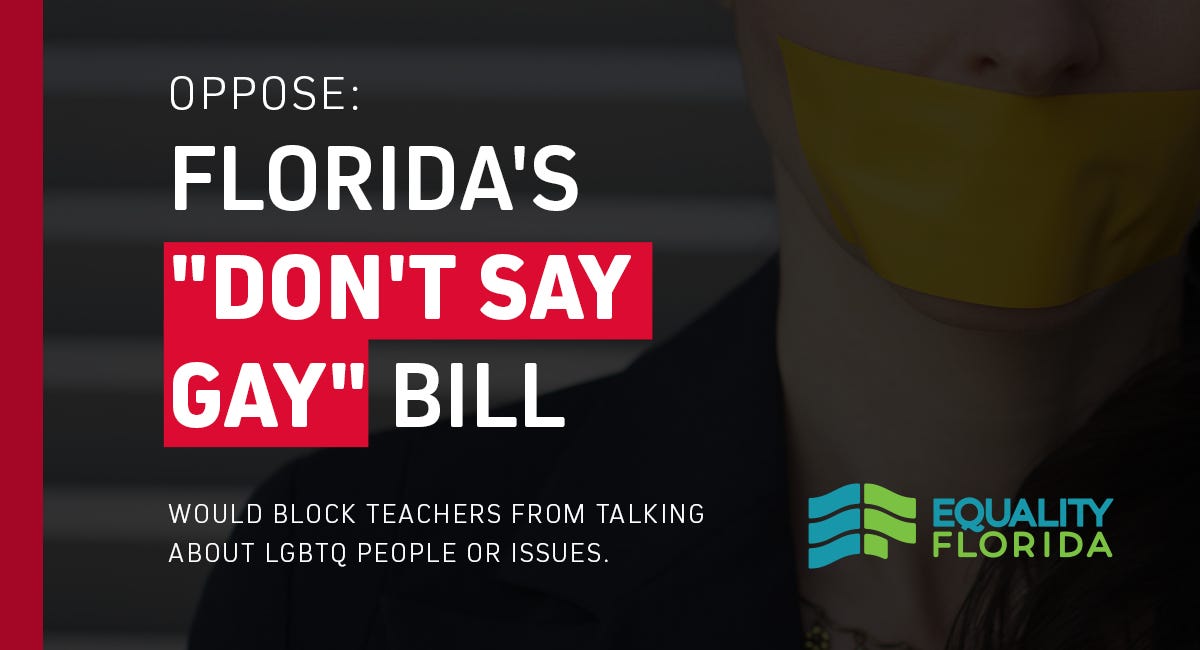
The same anxiety runs through contemporary fights over books, curricula, classroom discussions, and school policies. The details are different because the cultural landscape is different. But the underlying fear remains remarkably stable: if children encounter LGBTQ people, identities, or stories, something dangerous will happen.
Notice how rarely anyone can explain exactly what that dangerous thing is.
The threat remains intentionally vague.
Vague threats are politically useful.
They allow people to project whatever fear is currently fashionable.
During the AIDS crisis, for example, anti-LGBTQ rhetoric shifted slightly. The dominant panic was no longer only recruitment. It became contamination.
Gay people were framed as threats to public health, public morality, and social order. Once again, a minority population became a symbolic danger that supposedly threatened society itself.
The specifics changed.
The social function did not.
The sociologist Stanley Cohen famously described how societies periodically create “folk devils” who become symbols of larger fears and anxieties. LGBTQ people have repeatedly occupied this role in American political culture. Rather than discussing economic instability, changing social norms, or broader cultural transformations, moral panics reduce complex anxieties into a single visible target.
A drag queen becomes responsible for social decline.
A teacher becomes responsible for cultural collapse.
A trans teenager becomes responsible for the destruction of civilization.
It would almost be funny if the consequences were not so real.
This is where queer theory becomes unexpectedly useful, even for people who normally break out in hives when they hear the phrase.
The scholar Sara Ahmed argues that political movements often position “the family” as something permanently under siege. In these narratives, outsiders become threats to the reproduction of both family and nation. Queers, immigrants, feminists, and other supposedly disruptive groups are cast as dangers to the social order itself.
In other words, the family becomes a fortress and a fortress always needs someone to attack it.
Without a threat, the panic loses its purpose.
This helps explain why anti-LGBTQ movements repeatedly return to children.
Children symbolize the future.
Whoever claims ownership over the future gains enormous moral authority in the present.
If you can convince people that a minority group threatens children, you no longer have to justify discrimination. The discrimination becomes self-defense.
That is why these campaigns often sound so dramatic.
The language is rarely:
“We disagree with this lifestyle.”
Instead it becomes:
“The children are in danger.”
“The family is under attack.”
“Civilization is collapsing.”
The scale of the threat is always inflated because the panic depends on urgency.
After all, nobody launches a national movement because they mildly dislike a library book.
And this is where Pride Month enters the picture.
Every year critics ask why Pride still exists.
Why does it need to be public?
Why does it need to be visible?
Why can’t people just keep it private?
The answer is hidden inside the backlash itself.
Because visibility has always been the thing that provokes the panic.
Not queer existence.
Queer visibility.
A gay person quietly existing somewhere is often tolerable.
A gay teacher being visible becomes controversial.
A trans person quietly living their life is one thing.
A trans person appearing in public discourse becomes a crisis.
Pride is offensive to some people for the same reason earlier activists were offensive.
Visibility disrupts the fantasy that LGBTQ people are rare, isolated, secretive, or distant. It reminds people that queer people are neighbors, coworkers, teachers, parents, siblings, and friends.
And historically, that visibility has been one of the most effective tools LGBTQ movements have ever possessed.
One of the reasons the anti-gay campaigns of the late 1970s ultimately failed in the long run is because millions of Americans eventually realized they already knew LGBTQ people.
The monster under the bed turned out to be someone’s aunt.
Or brother.
Or coworker.
Or favorite teacher.
Reality has a nasty habit of ruining moral panics.
Which brings us back to the present.
The children Anita Bryant claimed to be protecting in 1977 are now old enough to be grandparents.
The civilization supposedly hanging by a thread somehow survived gay teachers, gay neighbors, gay parents, Pride parades, same-sex marriage, rainbow merchandise, and every other apocalypse conservatives confidently predicted.
And yet every June we hear the same warning.
This time the children are really in danger. This time the family is really under attack. This time civilization is really about to collapse.
After nearly fifty years, the most remarkable thing is not that the panic still exists.
It’s that people keep pretending it’s new.
It's just exhausting that this has to happen every year. I remember AB, she scared the crap out of baby-queer me back then since my parents agreed with her. Loudly
Thanks for providing some new language to push back on homophobes. They have some new ideas this year that need to be dog-piled in the comments when they pop up - so other baby queers hopefully can be less afraid.
Happy Pride! 💜🏳️🌈🏳️⚧️
🙄🤦🏼♀️ the fear mongering propaganda is so tired