
The Past Is Not Dead. It’s Under Active Renovation.
Why every fight about history is really a fight about power.

A few days ago, the Smithsonian American Women’s History Museum launched a project called Unhidden Heroines. Using augmented reality, visitors standing on the National Mall can point their phones at locations around Washington and see historical women whose stories are largely absent from the physical landscape around them.
It is an ingenious use of technology. It is also a quietly devastating commentary on American public memory.
If you spend an afternoon walking the National Mall, you will encounter presidents, generals, founding fathers, wars, and monuments to political power in all its various forms. You can stand beneath Abraham Lincoln. You can gaze up at the Washington Monument. You can move from memorial to memorial tracing a familiar narrative about the people who built, defended, and shaped the nation.
And yet it is surprisingly easy to leave with the impression that America was built almost entirely by men.
This, naturally, comes as something of a surprise to the women who were actually there and the historians who study them.
The timing of the Smithsonian project is particularly striking because it arrives amid an increasingly bitter political struggle over museums, monuments, exhibits, school curricula, and public history. Across the country, politicians, activists, educators, and judges are fighting over how slavery should be discussed, how Indigenous history should be taught, whether certain books belong in schools, and what stories museums should tell about the American past.
At first glance, these debates can seem unrelated. What does an augmented reality exhibit about women have to do with disputes over slavery, race, or national identity?
Quite a lot, as it turns out.
Both controversies are ultimately asking the same question:
Who gets to be remembered as part of America?
That question sits at the center of nearly every modern conflict over history. We often imagine that history is simply a collection of facts waiting patiently to be discovered and preserved. In reality, there is an important difference between history and memory. The past happened. Memory is what survives.
That distinction matters because public memory is not a mirror reflecting the past. It is a construction project.1
Every monument represents a choice. Every museum exhibit represents a choice. Every historical marker, preserved building, documentary, and textbook represents a choice. Someone decides which stories deserve preservation, which deserve emphasis, and which can safely remain in the background.
The National Mall itself demonstrates this process. Most Americans experience it as a natural landscape, almost beyond politics. Yet every monument standing on the Mall exists because someone successfully argued that a particular person, event, or idea deserved physical representation in the symbolic heart of the nation.
The landscape tells a story.

Imagine arriving from another planet and touring Washington with no prior knowledge of American history. You would quickly learn that presidents are important. Military leaders are important. Wars are important. Political leadership and state power appear to be the primary engines of historical change.
What you would learn much less about are the women who organized reform movements, fought for voting rights, built schools, transformed public health, challenged segregation, reshaped workplaces, and expanded the boundaries of citizenship itself.
The issue is not that these women were absent from history.
The issue is that they were largely absent from commemoration.
For much of American history, women occupied an unusual place in the national imagination. Americans were perfectly comfortable representing women as symbols. Liberty appears atop domes and monuments. Justice stands in courthouses across the country. Columbia once served as a national personification of the United States itself.
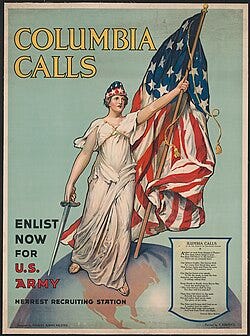
Female figures were everywhere.
Actual women were harder to find.
The distinction is revealing. Symbols do not demand recognition for political achievements. Symbols do not complicate national myths. Symbols cannot ask uncomfortable questions about who receives credit for building a nation.
Real women can.
That is why the Smithsonian project matters. The women appearing through augmented reality are not new discoveries rescued from obscurity. Historians have long known about figures like Abigail Adams, Ida B. Wells, Frances Perkins, Pauli Murray, Dolores Huerta, and countless others. Their contributions were never hidden from the historical record.
What was often missing was public recognition.
This raises a larger question. If these women were always there, how did they become so difficult to see?
The answer challenges one of our favorite assumptions about history.
We like to imagine that history functions as a meritocracy. The most important people naturally rise to the top. The most significant events become the stories we tell. Given enough time, truly consequential figures are remembered while less important ones fade away.
It is an appealing idea.
It is also largely nonsense.
The historian Michel-Rolph Trouillot argued that historical silences are produced rather than accidental. At every stage of creating public memory, decisions are made about what gets recorded, preserved, archived, funded, displayed, taught, and commemorated. Some voices become louder. Others become quieter. Some disappear altogether.
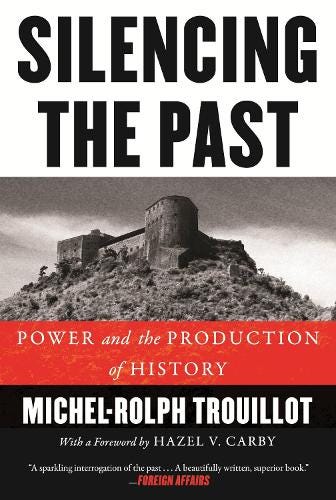
Think about how many opportunities there are for people to vanish from the historical record. Someone must create documents. Someone must preserve them. Someone must decide which archives deserve funding. Someone must build museums. Someone must design exhibits. Someone must write textbooks. Someone must fund it all.
Power exists at every stage.
This helps explain why women so often appeared in history as supporting characters rather than protagonists. For centuries, the institutions responsible for producing and preserving knowledge were overwhelmingly controlled by men. Men dominated political office, universities, archives, publishing, and education. The result was not necessarily a coordinated effort to erase women. More often, it reflected a system that treated men’s activities as inherently historical while viewing women’s activities as personal, domestic, or secondary.
Politics counted as history.
War counted as history.
Diplomacy counted as history.
The labor of raising families, sustaining communities, organizing reform campaigns, building social networks, and caring for the vulnerable often did not.
This is one reason women’s history emerged as a field in the first place. Historians did not suddenly discover that women existed. They began asking different questions.
Instead of focusing exclusively on presidents and legislators, they examined activists, teachers, labor organizers, nurses, journalists, reformers, and ordinary women whose lives rarely appeared in traditional narratives. The remarkable thing was not how difficult these women were to find.
The remarkable thing was that they had been there all along.
Once historians started looking, they found women everywhere.
Women organized abolitionist societies. Women built labor movements. Women pushed for public health reform. Women challenged segregation. Women fought for suffrage. Women expanded educational opportunities. Women transformed social welfare systems.
The story had always existed.
The spotlight simply pointed somewhere else.
This helps explain why contemporary debates about history have become so emotionally charged. What is often described as a battle over facts is usually a battle over emphasis.
Nobody disputes that women existed.
Nobody disputes that slavery existed.
Nobody disputes that Indigenous nations existed.
The conflict emerges when those stories move from the margins toward the center.
Because when the cast of history expands, the story changes.
A nation supposedly built by a handful of extraordinary men becomes a nation shaped by millions of people whose names never appeared on monuments. Political change begins to look less like the work of great individuals and more like the result of collective struggle, activism, labor, and social movements.
Not everyone finds that version of history comforting.
Which brings us to the memory wars.
One of the strangest features of modern political discourse is the number of people who insist that history has suddenly become political. Museums are political now. Schools are political now. Libraries are political now. History itself, we’re told, has been corrupted by ideology.
Yet the moment you examine the claim closely, it collapses.
History has always been political.
The decision to build a monument is political. The decision to preserve a battlefield is political. The decision to omit slavery from a museum exhibit is political. The decision to include it is political.2
The difference is not that politics suddenly entered history.
The difference is that more people are now arguing about whose politics should shape public memory.
For generations, many Americans encountered a version of national history that emphasized presidents, military leaders, industrialists, and political institutions. That narrative was not entirely wrong. Those people mattered.
The problem was that it was incomplete.
Women became supporting characters. Indigenous people often appeared only when Europeans encountered them. Enslaved people were frequently discussed as objects rather than historical actors. Workers appeared when they rioted and disappeared when they organized. LGBTQ people often vanished entirely.
The resulting narrative felt natural because it was familiar.
But familiar and natural are not the same thing.
This is where nostalgia enters the story.
We often think of nostalgia as harmless affection for the past. It arrives wrapped in vintage photographs, old television shows, family stories, and promises of simpler times. Yet nostalgia is not history. Nostalgia is editing.
To be nostalgic for a period is not to remember everything about it. It is to select certain features, elevate them above everything else, and present the resulting picture as representative of the whole.

The American founding offers a perfect example.
Popular memory often presents the Revolutionary generation as a collection of brilliant statesmen gathered together to create liberty, democracy, and a new nation. The story is filled with powdered wigs, stirring speeches, and extraordinary men debating timeless principles beneath the glow of Enlightenment reason.
The problem is not that this story is false.
The problem is that it is incomplete.
The nostalgic version of the founding often has remarkably little to say about the women who sustained households, businesses, and communities during the Revolution. It tends to minimize the role of enslaved people whose labor underwrote much of the colonial economy. Indigenous nations frequently appear only at the margins despite the fact that the Revolution dramatically altered their futures. The contradictions between liberty and slavery are often treated as unfortunate footnotes rather than central tensions within the founding itself.
The result is not history.
It is a highlight reel.
And highlight reels are powerful because they transform selective memory into common sense.
The same process that leaves women out of monuments often leaves them out of nostalgic narratives. The same people who insist that feminism disrupted a natural social order frequently describe historical narratives centered on women as ideological distortions. The familiar story becomes the natural story. The natural story becomes the true story.
Anyone who points out what was left out is accused of rewriting history.
But history is always being rewritten. That is not a flaw in scholarship. It is the purpose of scholarship.
Historians revise interpretations because new evidence emerges, because new questions are asked, and because people previously excluded from the narrative become visible. The alternative would be freezing historical interpretation permanently in place.
That is not history.
That is dogma.
And this is why the fight matters.
Public memory does not merely reflect society. It helps shape it.
Historical narratives influence what feels normal, what feels possible, and what feels legitimate. If women disappear from public memory, gender equality can appear like a modern invention rather than part of a long historical struggle. If slavery is minimized, racial inequality can seem accidental rather than historical. If queer people vanish from the story, LGBTQ rights can be portrayed as entirely new claims rather than part of a longer fight for citizenship and recognition.
The stories we tell about the past shape what we believe is possible in the present.
This is why arguments about museums inevitably become arguments about education, voting rights, reproductive healthcare, race, gender, and citizenship. These debates may appear unrelated, but they are all connected by a deeper question:
Who belongs in the national story?
The Smithsonian’s Unhidden Heroines project works because it makes an absence visible. The women appearing through augmented reality are not ghosts rescued from oblivion by modern technology. They are evidence. Evidence that there is a difference between what happened and what was commemorated.
And once you notice that difference, it becomes difficult to stop noticing it.
You begin to see the gaps everywhere.
The United States is approaching its 250th birthday. Americans have and will continue to spend enormous amounts of time arguing about the nation’s past, celebrating parts of it, condemning parts of it, and debating what kind of country they believe themselves to be.
That process is not unusual. Nations are constantly renegotiating their memories and identities.
The danger emerges when we mistake inherited narratives for complete ones.
The women highlighted by the Smithsonian were never missing from history. Their absence from the commemorative landscape was not evidence of insignificance. It was evidence of selection.
The same is true of countless others whose stories have been marginalized, minimized, or excluded from public memory.
History is full of ghosts.
Not because they disappeared, but because memory is always selective.
Every generation inherits a version of the past. The responsibility of historians, educators, museums, and citizens is not to preserve that version unchanged. It is to examine how it was constructed, whose interests it served, and whose voices were left out.
Because the real question facing America is not whether history should change.
History has always changed.
The real question is whether our understanding of the past will become larger or smaller.
Whether the national story will grow more complex or more simplistic.
Whether more people will be allowed to see themselves reflected in it, or fewer.
The fight over museums, monuments, and memory is not really a fight about what happened.
It is a fight about who gets to matter when we tell the story.
And that story, like the nation itself, remains under active renovation.
I thought a community history and memory course for a few semesters. We had some very wonderful discussions on this. My students ended up designing a what they thought would be the ideal new face of Mount Rushmore one semester and it was HYSTERICAL.
It’s also accurate, which is more important to historians. But it is political.
My first year teaching AP world history I created a lesson called, “Where the women at?” Highlighting this point. They were there the whole time but from 1200-1600 there’s like 4 women mentioned in the course materials. They start to pop up more later but the point was we were taught not to take note of the lack of women and just accept it as normal.
Female figures everywhere, actual women harder to find. That is it!
I write about somatic healing and healing justice lineages, and the same erasure runs through that history. The women who built the actual foundations of what we now call trauma therapy, Judith Herman, Pat Ogden, Bonnie Bainbridge Cohen, are known inside the field, in training weekends, in supervision. The public face of the same work is almost entirely men. Not because the women weren’t there. Because commemoration has always had a politics.
Trouillot is exactly right that silences are produced, not accidental. Someone decided what counted as historical at every stage. The body that built something and the name attached to it in public memory are two different archives, and we keep treating the second one as if it’s neutral.