
The Smithsonian’s Real Crime Was Refusing to Provide Emotional Support for Nationalism
America’s museums are being punished for doing history instead of reassuring the country that it has always been the hero.

Apparently, the Smithsonian’s greatest institutional failure was not getting American history wrong.
It was failing to tell America that it is a very good country, everyone is proud of it, and none of the difficult things were really its fault.
On July 4, as the United States marked 250 years since the signing of the Declaration of Independence, the White House released a 162-page report titled Saving America’s Story.1 The report accused the Smithsonian’s National Museum of American History of abandoning “straightforward historical education and scholarship” in favour of “extreme political activism” and “thinly veiled anti-Americanism.”
Its evidence was that the museum has interpreted American history through subjects including race, gender, sexuality, colonialism, immigration, economic inequality, environmental change, and struggles over national identity.
You know.
History.
The report is the latest escalation in a campaign that began long before the semiquincentennial fireworks. In March 2025, Donald Trump signed an executive order targeting what his administration called “improper,” “divisive,” and “anti-American ideology” at the Smithsonian and other federal cultural institutions. The White House subsequently initiated a review of Smithsonian exhibits, educational materials, digital content, and plans for America250, demanding greater alignment with the administration’s vision of American exceptionalism.
The July report is the result of that process.
It portrays the National Museum of American History as an institution captured by political radicals who have transformed a once-patriotic museum into a vehicle for criticism, identity politics, and social justice. It objects to exhibits that complicate the nation’s founding mythology, treat marginalized people as historical actors, or ask visitors to consider how power has shaped American life.
The complaint is not really that the museum has become political. The version of history that the White House is explicitly political in nature.
The complaint is that it has stopped being emotionally supportive.

The White House wants public history to perform a particular kind of affective labour. It wants museums to inspire admiration, gratitude, unity, confidence, and affection for the nation. It wants visitors to leave feeling reassured that America has always been fundamentally good, that its injustices were temporary deviations, and that every movement for equality proves the system eventually worked exactly as intended.
When exhibitions produce discomfort, grief, anger, or scepticism instead, the administration treats that emotional outcome as evidence of ideological corruption.
A History “Worthy of Our Affections”
One of the most revealing ideas in the White House report is that the Smithsonian should present an American story “worthy of our affections.”
That might sound harmless. Even pleasant.
Who objects to affection?
But historians do not begin with a required emotional conclusion and work backward toward the evidence. We do not decide in advance that the story must be inspiring, uplifting, reassuring, or worthy of anyone’s love. We examine the evidence, construct interpretations, and explain what the past reveals.2
Sometimes the result inspires admiration.
Sometimes it produces disgust.
Sometimes the same historical subject deserves both.
A national museum should not have to prove that the country is worthy of affection any more than a medical museum should have to prove that the human body is tasteful. Its purpose is not emotional validation. Its purpose is preservation, interpretation, and public understanding.
Demanding that a museum produce an affectionate national story before the research and interpretation have even begun is not scholarship.
It is commissioning a conclusion and asking curators to decorate it with artefacts.
The difference between the White House’s approach and the Smithsonian’s can be seen in the National Museum of American History’s principal America250 exhibition, In Pursuit of Life, Liberty & Happiness. The exhibition presents 250 objects across the museum’s three floors and is grounded in the idea that “the pursuit of our rights has always demanded action.” It traces how Americans have struggled to define and claim the promises of the Declaration of Independence rather than treating those promises as fully realized in 1776.
That is not anti-American.
It is an honest description of American history.
The Declaration proclaimed equality within a society structured by slavery, dispossession, patriarchy, class hierarchy, and political exclusion. It declared that governments derived their power from the consent of the governed while most people living within the new country had no meaningful role in governing it.
Those contradictions do not invalidate the Declaration’s ideals.
They do explain much of the history that followed.
Rights expanded because people organized, resisted, escaped, sued, marched, published, struck, petitioned, disobeyed, and sometimes died demanding that the country honour principles it had already claimed for itself.
Freedom was not delivered intact in 1776.
It was fought over.
A museum that explains that struggle is not attacking the nation. It is explaining how the nation changed to uphold the foundational promises it made when it was created.
But that explanation interferes with the emotional comfort of a triumphalist story. It suggests that the country was not always the hero of every battle for American freedom. Quite often, the hero was the person forcing the country to surrender power it had no intention of sharing.
That is where public history becomes politically dangerous.
Neutrality Is Apparently When Nobody Feels Bad
The White House report relies on a familiar fiction: that older forms of national history were neutral, while newer exhibits addressing race, gender, sexuality, colonialism, or economic inequality are political.
But history that celebrates presidents, wars, territorial expansion, industrialists, military victories, and founding documents is also political.
History that describes western expansion without centering Indigenous dispossession is political.
History that presents industrial growth without discussing labour exploitation is political.
History that discusses American democracy without asking who could vote, own property, testify in court, control their wages, enter professions, marry freely, or make decisions about their own bodies is political.
History that places white men at the centre of the national narrative and everyone else at its decorative edges is intensely political.
It simply spent so long masquerading as the default that many people stopped recognizing it as an argument.
When marginalized people appear only as symbols of progress, national history remains comfortable. They can be displayed as evidence that America overcame its unfortunate mistakes.
The trouble begins when they are treated as historical actors.
Then visitors must confront the fact that Black Americans did not simply receive civil rights. They organized against governments, courts, police departments, employers, schools, and white communities that actively denied them.
Indigenous peoples did not simply experience “change.” They survived invasion, land theft, broken treaties, forced assimilation, child removal, and attacks on sovereignty.
Workers did not simply benefit from industrial growth. They fought employers and governments over wages, hours, safety, and the right to organize.
Queer Americans did not simply become more visible over time. They survived criminalization, medical abuse, censorship, police violence, discrimination, and state neglect.
And women did not slowly receive equality because the country gradually remembered its values.
Women fought the country for rights the country now likes to claim as proof of its greatness.
Women Are Welcome in Patriotic History Until They Start Talking
Women have always been welcome in national history when they can be used as symbols of sacrifice, service, purity, domestic stability, or patriotic devotion.
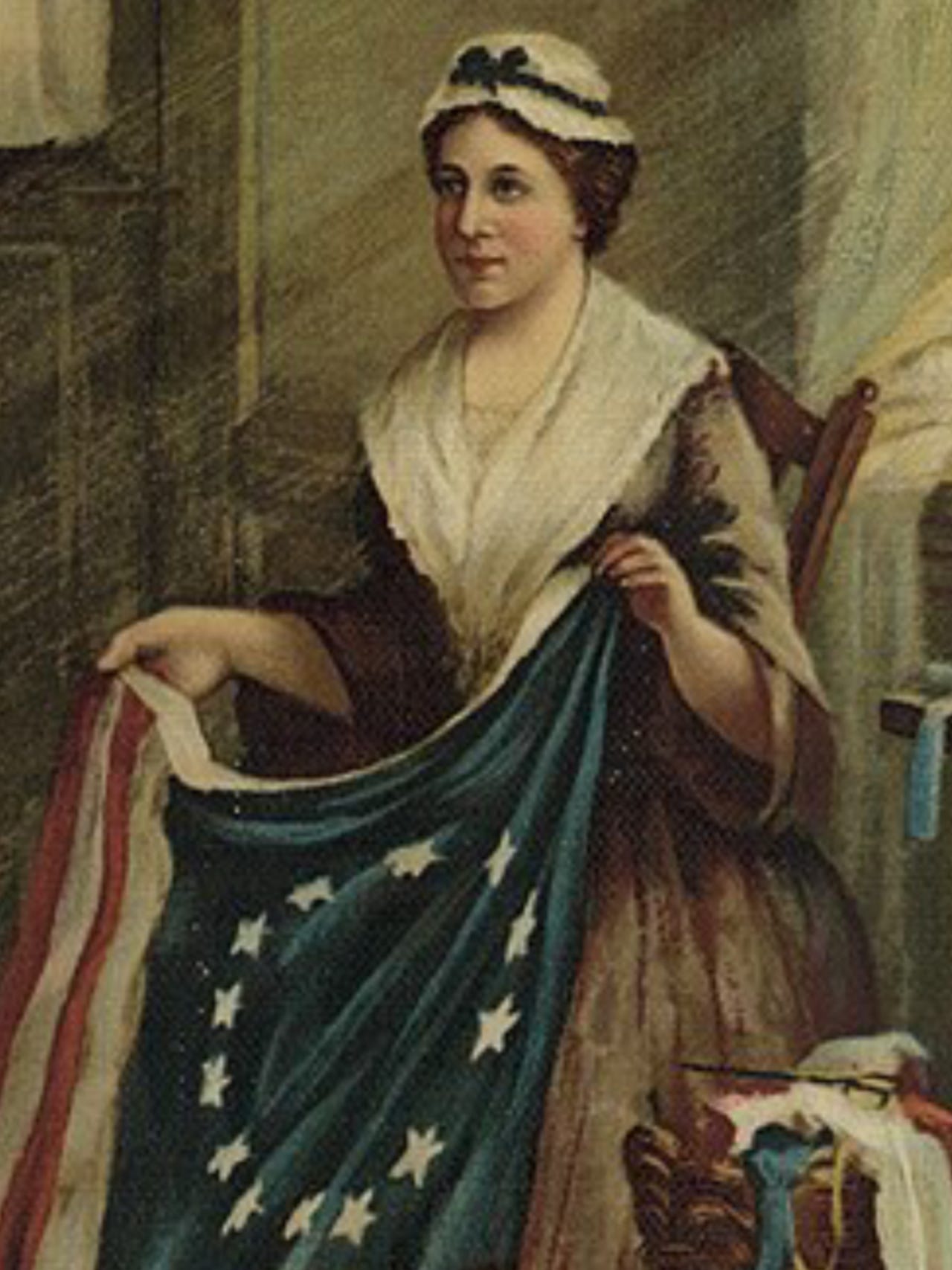
They can sew the flag.
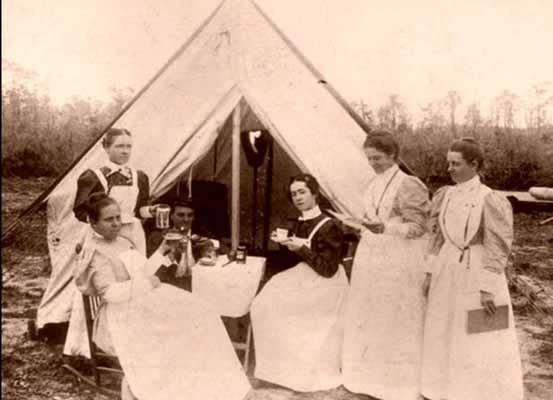
Nurse the soldier.
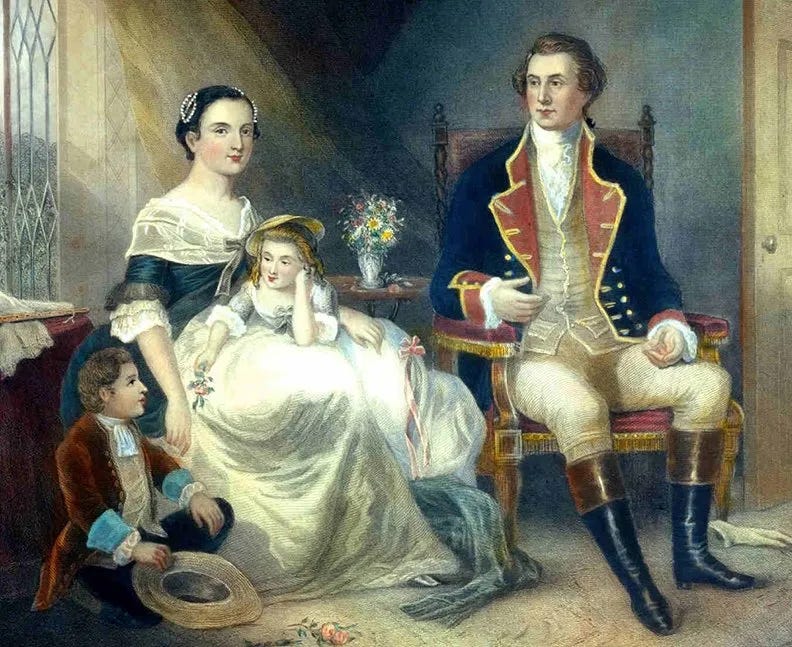
Raise the citizen.
Keep the home fires burning.
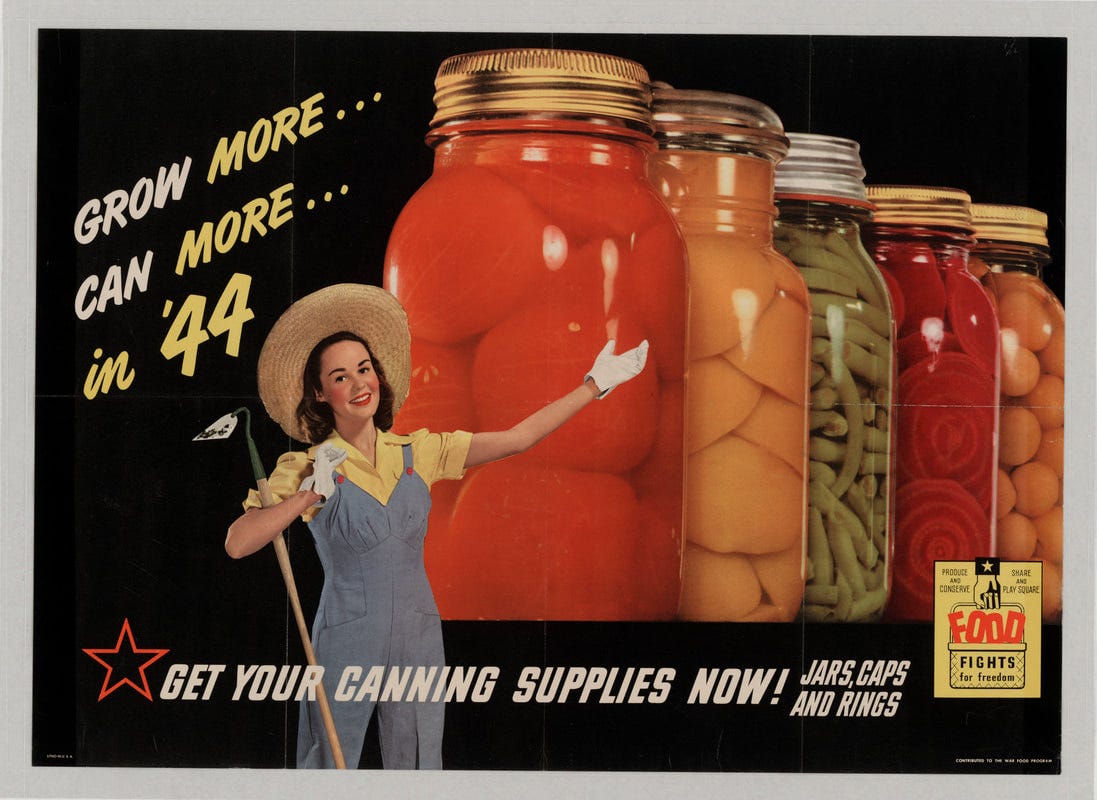
Work in the factory during wartime, provided they politely hand the job back when the men return.
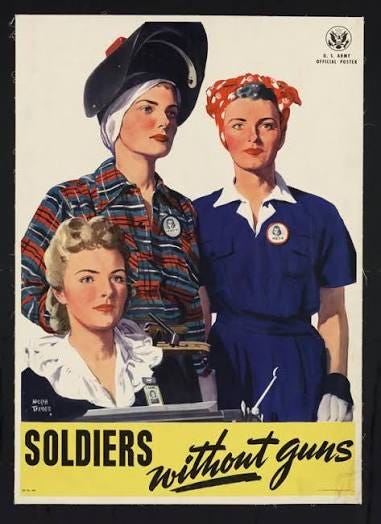
They can embody the nation, mourn for the nation, reproduce the nation, and sacrifice themselves for the nation.
What they cannot do, at least not without creating trouble, is explain what the nation cost them.
Once women are treated as full historical actors rather than supportive scenery, the familiar national story begins to wobble.
The history of American freedom must then include coverture, under which married women lost independent legal identities. It must include women’s exclusion from voting, higher education, professions, financial autonomy, and political authority. It must include domestic labour treated as natural feminine obligation rather than work.
It must include enslaved women whose labour and reproductive capacity were converted into wealth, Indigenous women facing displacement and family separation, immigrant women exploited in factories and domestic service, and poor women criminalized for surviving outside respectable family structures.
It must include sexual violence, forced sterilization, reproductive coercion, medical experimentation, queer persecution, and the long history of institutions deciding that women could not be trusted to govern their own bodies.
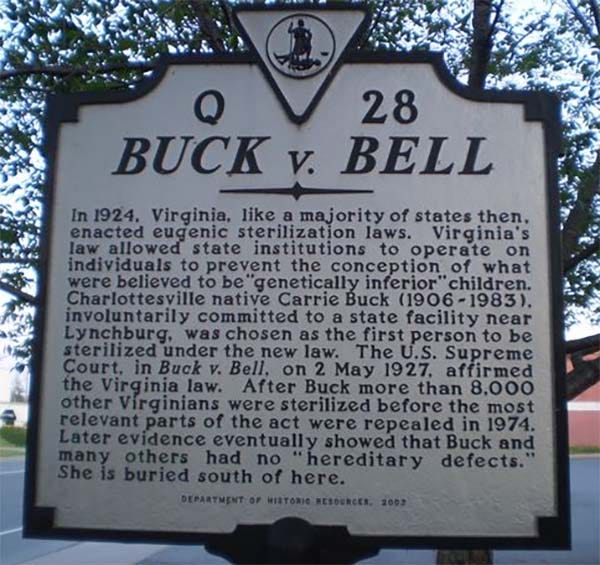
Most dangerously, it must include resistance.
The old patriotic story can accommodate Betsy Ross sewing a flag because she contributes to the nation without challenging the structure of the narrative.
It has more difficulty with women demanding suffrage while a supposedly democratic government arrests and force-feeds them.
It has more difficulty with Black women explaining that race and gender cannot be separated.
It has more difficulty with labour organizers exposing the economic value extracted from women’s bodies.
It has more difficulty with feminists arguing that marriage, sex, motherhood, medicine, and domestic life are political institutions rather than private arrangements existing outside power.
Women are welcome in patriotic history until they start talking about patriarchy.
Then their history becomes “divisive.”
Their analysis becomes “ideology.”
Their anger becomes proof that they hate the country.
The logic has barely changed since the anti-suffrage movement associated women’s political participation with socialism, anarchy, racial equality, family collapse, and national decline. Women’s independence has repeatedly been framed not merely as a challenge to men, but as a threat to social order itself.
That history matters now because the administration is making the same conceptual move.
It is treating the examination of gendered power as an attack on America.
When women’s history becomes anti-American, the problem is not the history.
The problem is the version of America being defended.
The Nation Is Always the Hero in Its Own Customer-Service Survey
The current attack on the Smithsonian is part of a larger attempt to transform America250 from a commemoration into a loyalty ritual.
Trump’s July 4 event on the National Mall mixed patriotic celebration with campaign-style rhetoric, attacks on political opponents, warnings about communism, demands for tighter voting restrictions, and calls for proof-of-citizenship requirements. Several Democratic-led states declined to participate in official programming, performers withdrew, and Reuters/Ipsos polling found widespread concern that the anniversary had become overly political.
There is a certain grim neatness to celebrating the Declaration of Independence by advocating a narrower electorate while accusing museums of politicizing history.
The official America250 narrative increasingly appears to want the nation’s birthday without any awkward discussion of who was excluded from the original party.
It wants the struggle for equality to appear in the story only after it has been safely converted into evidence of national progress.
The government can then celebrate abolition without dwelling on the generations of Americans who defended slavery. It can celebrate women’s suffrage without discussing the government that arrested suffragists. It can celebrate civil rights without confronting the state and local institutions that enforced segregation. It can celebrate queer visibility without acknowledging the laws, police forces, churches, schools, and medical authorities that persecuted queer people.3
In this version of history, marginalized people suffer vaguely, resist nobly, and eventually receive justice from an America that remains the protagonist throughout.
The nation is always the hero in its own customer-service survey.
George Washington Can Survive the Truth
The fight over the President’s House site in Philadelphia demonstrates what this emotional editing looks like in practice.
The site, located near Independence Hall, includes interpretation of the people enslaved by George Washington, including Oney Judge, who escaped from the Washington household in 1796 and resisted attempts to recapture her.
After the Trump administration issued its order against “divisive ideology,” the National Park Service removed slavery-related panels from the site. A court initially required their restoration, but a federal appeals court later permitted the administration to remove them again.
The presence of enslaved people in that interpretation does not erase Washington.
It does not deny his role in the Revolution.
It does not remove the presidency, the Constitution, the military victories, or the political precedents.
It simply refuses to present him as a frictionless national father.
Apparently, even that is too much.
The argument for removing this history depends on the assumption that visitors cannot acknowledge Washington’s political achievements while also confronting his enslavement of human beings. But holding those facts together is not unfair to Washington.
It is the minimum requirement of historical literacy.
George Washington can survive the truth.
Nationalism cannot.
That distinction is becoming increasingly important as museums, parks, archives, and cultural organizations face political pressure and funding losses. This does not always look like formal censorship. Sometimes it looks like a grant application quietly rewritten to reward patriotism, an exhibition panel removed for “balance,” or a museum deciding that a queer-history program is no longer financially survivable.
The language is administrative.
The result is political.
Authoritarianism Has Feelings Too
Authoritarian governments understand that controlling the future requires controlling the stories people tell about the past—and the emotions those stories are allowed to produce.
They do not always begin by closing museums or burning books. Sometimes they begin by establishing an approved emotional relationship to history.
Pride is permitted. Admiration is encouraged. Gratitude is rewarded. Grief may be tolerated if it resolves into patriotic unity. Anger directed at marginalized people can be cultivated. Anger directed at the nation’s institutions becomes dangerous.
The dividing line is not factual accuracy but emotional usefulness. Facts that strengthen national pride can remain. Facts that produce solidarity with the excluded, suspicion of authority, anger about injustice, or recognition of structural inequality become “divisive.”
This is why authoritarian nationalism presents itself as a campaign against negativity. It accuses scholars of tearing the country down or refusing to acknowledge progress.

But history is not required to maintain the nation’s self-esteem. A country does not become weaker because visitors learn that its institutions inflicted harm. It becomes weaker when those institutions must suppress the evidence to preserve their legitimacy.
The American Historical Association and Smithsonian leadership have rejected the report’s premise, defending the independence of historical interpretation and the commitment to evidence-based scholarship. Their defence matters because the dispute is no longer about a few exhibit labels. It is about who gets to determine the emotional purpose of public history.
Museums are not national therapy offices. They do not exist to reassure the country that it is handsome, misunderstood, and doing its best. They exist to preserve evidence, interpret it honestly, and show how the world we inherited was made.
Sometimes that story inspires pride. Sometimes it produces anger, grief, shame, admiration, or relief—often all at once. That is not a failure of public history. It is evidence that the past contained actual human beings rather than patriotic action figures.
A government that demands affection from history is not defending scholarship. It is demanding obedience from the archive. The Smithsonian’s real crime was refusing to provide emotional support for nationalism, treating the United States not as a sacred object requiring reassurance but as a historical subject that can be examined, questioned, and held accountable.
That is exactly what a museum should do—and exactly what authoritarians cannot tolerate.
You can look it up, I’m not linking to that garbage.
Ethical historians do this anyway.
It’s a neat trick how ignoring all that in the past allows them cover to pretend they aren’t still doing it today.