

There is a particular kind of “feminist” argument that arrives wearing sensible shoes, carrying a clipboard, and insisting it is only here to protect women.
It says womanhood is biological.
It says women are oppressed because of our bodies.
It says rape, forced childbirth, medical control, reproductive coercion, domestic violence, and economic dependency all prove that “female bodies” are the root of patriarchal oppression.
And on the surface, I understand why that argument feels satisfying. It has the blunt-force clarity of a brick through a window. Women’s bodies have been controlled, violated, regulated, legislated, pathologized, fetishized, and treated as public infrastructure for centuries. The womb has been drafted into nationalism. The vagina has been treated as evidence. The uterus has been turned into a congressional hearing with worse lighting.
But here is where the argument falls apart.
Our bodies are not the source of our oppression.
Patriarchy is.
Bodies are the site where power is enacted. They are not the reason power exists.
What is Patriarchy?
Before we go any further, we have to establish what we mean by gender and male supremacy, because “patriarchy” does not mean every person assigned male at birth is automatically handed the keys to the kingdom, a podcast microphone, and a complimentary copy of Jordan Peterson’s published works.
Patriarchy is not just “men exist.” Patriarchy is a political and social system that organizes power through gender hierarchy. And that hierarchy has rules. Rigid ones. Men are supposed to be dominant, heterosexual, sexually assertive, emotionally constipated, physically strong, economically productive, and allergic to throw pillows. The entire “high value man” internet swamp makes this very clear. If a man fails to perform masculinity correctly, the little microphone goblins have a vocabulary ready for him: “beta,” “cuck,” “soyboy,” and whatever other terms they have recently scraped off the bottom of a supplements ad. I cannot keep up with their bullshit taxonomy and frankly I refuse to try.
I already have a chronic migraine problem and my GP would not recommend I add new triggers to my daily life.
The point is that patriarchy does not simply confer full male supremacy on every body marked male. It rewards the people who successfully perform and uphold its preferred version of masculinity. Men who are too feminine, too queer, too emotional, too poor, too disabled, too racially marginalized, too sexually nonconforming, or too unwilling to play Alpha Male Dinner Theater are disciplined too. They are mocked, feminized, degraded, excluded, or violently punished because patriarchy is not only invested in men over women. It is invested in a very specific construction of manhood over everything else.
That matters because it exposes the lie at the center of biological essentialism. If sex alone determined social power, then every person assigned male would occupy patriarchy in the same way. They do not. Patriarchy does not merely look at bodies and distribute power accordingly. It interprets bodies through gender norms, then rewards or punishes people based on how well they serve the hierarchy.
So no, patriarchy is not biology wearing a name tag. It is a system of power that takes biology, invents meanings around it, ranks those meanings, and then pretends the whole thing came from nature instead of centuries of law, violence, religion, economics, and men with microphones.
That distinction matters. In fact, it matters so much that entire branches of feminist theory, queer theory, disability theory, Black feminism, trans studies, and medical history have spent decades trying to get us to stop treating bodies as destiny and start asking who benefits from making them look that way.
Because patriarchy has always had a favorite trick: point to biology, call it nature, and then build a prison around it.
Women are too emotional for politics. Too weak for leadership. Too fertile for autonomy. Too maternal for ambition. Too hormonal for authority. Too sexually dangerous to be free. Too reproductively useful to belong to themselves.
That is biological essentialism. It is the ancient little scam at the center of patriarchy’s gift shop.
And TERF ideology does not escape that logic.
It refurbishes it and calls it feminism.
Biological Essentialism but Make it Feminist?
The TERF argument begins with a true thing and then drives it directly into a ditch. Yes, women’s bodies have been used as excuses for oppression. Yes, reproductive capacity has been weaponized. Yes, rape, forced birth, and medical misogyny happen to bodies. The word is to. These things are done to bodies by systems of power. They do not emerge from bodies like some cursed biological fog.
A mine does not create capitalism because capitalists extract from it. Land does not create colonialism because empires seize it. A body does not create patriarchy because patriarchal systems discipline, categorize, and control it.
Patriarchy exploits bodies because bodies are where law, medicine, family, religion, labor, sexuality, and violence all meet for their horrible little staff meeting.
Michel Foucault gives us one of the clearest ways to think about this. Modern power, he argues, increasingly works not simply by killing or prohibiting, but by regulating life: bodies, health, reproduction, sexuality, habitation, living conditions, and the whole space of existence. It qualifies, measures, appraises, hierarchizes, and distributes people around norms.
In other words, patriarchy does not just say “no.” It says “normal.”
Normal woman. Normal body. Normal sex. Normal family. Normal mother. Normal girl. Normal wife. Normal reproductive citizen. Normal patriotic uterus. Normal little gender soldier, reporting for duty.
And once power gets to define “normal,” it also gets to define who is abnormal, dangerous, fraudulent, excessive, perverse, invasive, artificial, monstrous, or not really a woman.
Which brings us to the TERFs.
A feminism that defines womanhood primarily through biology does not dismantle the machine.
TERF ideology looks at the way patriarchy reduces cis women to reproductive anatomy and says, essentially, “Yes, but what if we made that sacred?”
No.
That is not liberation. That is a renovated cage with better branding.
What is Gender?
Judith Butler’s Gender Trouble remains useful here, not because Butler is saying bodies or biology do not exist, which is the strawman version people drag around in debates like this, but because Butler asks how feminism can rely on “women” as a stable political subject without reproducing exclusions inside feminism itself. Butler asks whether grounding feminist theory in a supposedly coherent subject called “women” can paradoxically undercut feminist goals, especially when that category is stabilized through exclusions and normative assumptions.
That question is not academic hair-splitting. It is the entire problem.
Who gets to count as “women”?
Who is made legible?
Who is treated as derivative, false, fraudulent, dangerous, or politically inconvenient?
Who gets shoved out of feminism so that feminism can pretend its subject is clean, coherent, and biologically obvious?
The TERF answer is: women are adult human females.
The queer feminist answer is: why are you so invested in sounding like a livestock registry?
Because “female” is not neutral when it is being used as a political border. It is not just descriptive. It becomes administrative. It becomes a passport checkpoint. It becomes a bouncer with a clipboard outside the category of womanhood. It becomes the language through which bodies are inspected, sorted, and ranked.
And patriarchy loves a sorting tray.
It loves deciding that some bodies are proper and others are failed. It loves deciding that some women are natural and others are artificial. It loves deciding that some people are too much body and others are not the right kind of body. It loves turning biology into bureaucracy.
This is why queer theory is such a problem for reactionaries, including the ones who have discovered how to say “patriarchy” while doing its paperwork. Queer theory does not simply ask, “Who are you?” It asks, “Who made that category? Who benefits from it? Who is punished by it? What institution gets stronger every time we treat it as natural?”
That is why TERFs hate it. Queer theory walks into their tidy little binary kitchen, opens every cabinet, finds the mold, reads the zoning laws, and asks why there are cops in the pantry.
Butler’s point about gender performativity is often flattened into “gender is just a performance,” which is what happens when people read one paragraph through a fog machine and decide they have defeated poststructuralism. Butler is not saying gender is a costume party. Butler argues that gender is produced through repeated norms that become naturalized over time. What appears internal, natural, and inevitable is made through repetition, regulation, and social force.
In Critically Queer, Butler clarifies that performativity is not simply an individual performance or a voluntary act. It is not “I woke up and chose gender.” Performativity is the repeated citation of norms that precede and constrain us. Power works through discourse, naming, recognition, punishment, and repetition.
Which means “It’s a girl” is not just a cute sentence said over a hospital bassinet.
It is an opening act in a lifelong political production.
Susan Stryker makes this brutally clear in “Performing Transgender Rage.” Reflecting on the sentence “It’s a girl,” Stryker describes gender attribution as compulsory: authority seizes on parts of the body, especially genitals, reads them as signs of reproductive potential, and uses that reading to enculturate the body. Gendering, in her account, codes and deploys bodies in ways that materially affect us, before we have chosen either the marks or the meanings attached to them.
That is the part TERF ideology wants to skip over.
The violence does not begin when someone questions the category.
The violence begins when the category is made compulsory.
The violence begins when a body is read, named, and assigned a future before the person living in it has had a chance to become anyone at all.
Girl means pink. Girl means pretty. Girl means modest. Girl means vulnerable. Girl means future mother. Girl means smaller. Girl means careful. Girl means dress code. Girl means don’t walk alone. Girl means smile. Girl means your pain is normal. Girl means your body belongs in advance to men, medicine, family, church, state, fetus, nation, and whatever local goblin has opinions about your hemline.
That is not biology speaking.
That is patriarchy doing ventriloquism with an infant.
And when trans, nonbinary, and queer people refuse the original assignment, they expose the system. They show that the thing called “natural” required paperwork, repetition, threat, social enforcement, and a truly exhausting amount of cultural choreography.
This is why trans people provoke such disproportionate panic. Not because trans people are dangerous to women. Because trans existence is dangerous to the lie that gender hierarchy is natural.
Stryker knows this. Her essay famously embraces the figure of Frankenstein’s monster, not as a confession of inhumanity, but as a refusal of the terms that made trans embodiment monstrous in the first place. She points directly to anti-trans feminist traditions, including Mary Daly and Janice Raymond, and argues that transsexuality destabilizes the fixed-gender foundations on which some forms of identity politics depend. People invested in those foundations panic and say things about trans people that, as Stryker notes, would resemble the language of hate if directed at other minorities.
That panic has not gone away.
You can see it every time someone insists trans women are “really men,” “invading women’s spaces,” “erasing females,” or “appropriating womanhood.” The logic is old. The font is new. The argument is still hiding under the bed with a flashlight, whispering that if gender is not fixed, feminism will collapse.
But feminism that can only survive by pretending gender is fixed was never going to free us.
It was going to manage us.
And frankly, I have enough managers.
There is another problem with TERF biology: it imagines “women” as a clean political class while pretending the category has not always been fractured by race, class, disability, sexuality, citizenship, colonialism, religion, labor, and reproductive status.
In Cathy Cohen’s “Punks, Bulldaggers, and Welfare Queens” Cohen warns against political projects that build solidarity around simplified identity categories instead of analyzing people’s relationship to power. Cohen critiques queer politics when it collapses power into a simple straight-versus-queer binary, and argues instead for a politics based on the non-normative and marginal positions people occupy in relation to dominant power.
That critique applies beautifully to TERF politics, though “beautifully” here is doing a lot of work, like a chandelier over a crime scene.
TERF ideology says: females are oppressed by males.
And yes, patriarchy is a gendered system of power. Men as a class have historically held structural power over women as a class. No one serious is denying that. Please put the strawman back in the barn.
But the minute TERFs turn “female” into a sealed political class, they erase the actual operations of power. They erase the ways white womanhood has been used as a weapon against Black men and women. They erase the forced sterilization of disabled women, Indigenous women, Black women, Puerto Rican women, and poor women. They erase how “protecting women” has been used to police bathrooms, borders, prisons, schools, sports, immigration, sexuality, and public space. They erase lesbians who were told they had failed womanhood. They erase intersex people whose bodies are surgically and socially disciplined into binary legibility. They erase trans men and nonbinary people harmed by reproductive control. They erase trans women who experience misogyny, sexual violence, domestic violence, poverty, employment discrimination, medical neglect, and state violence.
They erase all of that, and then call the erasure “material reality.”
Material reality, my ass.
Material reality is not “bodies exist, therefore my politics are correct.”
Material reality is bodies plus power.
Bodies plus law.
Bodies plus medicine.
Bodies plus money.
Bodies plus race.
Bodies plus violence.
Bodies plus the state.
Bodies plus the story a culture tells about what those bodies are for.
TERFs and Fear
Sara Ahmed’s work on queer feelings is useful here too, especially her argument that heterosexuality functions not only as a norm, but through emotions and orientations that shape what bodies can do, where they can go, who they can love, and what futures become imaginable. Norms are not just ideas floating around like smug balloons. They impress themselves onto bodies and worlds through repetition, comfort, discomfort, shame, fear, and belonging.
TERF politics is an affective politics too.
It runs on fear.
Fear of contamination. Fear of invasion. Fear of loss. Fear that if trans women are women, then cis women lose something. Fear that if gender is not rooted in biology, then violence against women becomes unintelligible. Fear that if womanhood is not a biological fortress, patriarchy wins.
But that fear misunderstands the entire battlefield.
Patriarchy does not require trans women to harm cis women. It has been harming cis women quite efficiently for centuries, often with the enthusiastic help of priests, doctors, husbands, lawmakers, employers, judges, fathers, psychologists, advertisers, and women who discovered that proximity to patriarchal power can feel like safety if you do not look too closely at the receipt.
Trans women did not invent rape culture.
Trans women did not invent forced childbirth.
Trans women did not invent medical misogyny.
Trans women did not invent the wage gap, marital rape exemptions, purity culture, coverture, anti-abortion law, the cult of domesticity, bikini-line capitalism, or the idea that a woman’s pain is probably anxiety unless a man confirms it on a clipboard.
Patriarchy did that.
And if your feminism spends more time fighting trans women than fighting patriarchy, then your feminism has become a neighborhood watch for the wrong neighborhood.
Power does not only repress sexuality. It produces categories, knowledge, expert language, classifications, and norms. It makes sex speak. It makes bodies confess. It turns identity into an administrative event. In The History of Sexuality, Foucault pushes against the simple idea that modern sexuality was merely silenced or repressed. The point is not simply that sex was forbidden, but that sex became an object of knowledge, regulation, confession, and management.
TERF ideology participates in that same regulatory hunger. It wants to know what you “really” are. It wants the truth of the body revealed, certified, defended, and policed. It wants sex to function as destiny, but only after it has been laundered through the language of women’s liberation.
It wants the state’s categories, medicine’s categories, and patriarchy’s categories to become feminist common sense.
But common sense has a body count.
Common sense once said women were naturally domestic.
Common sense once said homosexuality was sickness.
Common sense once said disabled people were burdens.
Common sense once said Black women were not properly feminine.
Common sense once said Indigenous families needed to be “civilized.”
Common sense once said marital rape was impossible.
Common sense once said women were too fragile for higher education and too irrational for the vote.
Common sense is often just powerful people gaslighting you long enough that it all feels normal.
So when someone says, “But biological sex is real,” the answer is: yes, and?
Bodies and Biology
Bodies are real. Biology is real. Hormones are real. Chromosomes are real. Genitals are real. Reproductive organs are real. So are hysterectomies, menopause, infertility, intersex variations, endocrine disorders, disability, medical transition, surgical alteration, puberty blockers, pregnancy, miscarriage, abortion, menstruation, testosterone, estrogen, and the fact that human bodies are messy little archives of change.
The question is not whether bodies are real.
The question is why some people are so desperate to pretend the political meanings attached to bodies are natural, eternal, and immune from critique.
Queer theory does not ask us to deny the body.
It asks us to stop worshipping the filing system patriarchy created.
A feminism worthy of the name must be able to say: reproductive oppression matters without reducing womanhood to reproduction. Sexual violence matters without turning “female vulnerability” into the essence of womanhood. Medical misogyny matters without pretending all women have the same medical histories, bodies, risks, or relationships to state power. Cis women’s oppression matters without using trans women as a sacrificial offering to the Gender Binary Preservation Society.
And yes, women exist as a political class. But political classes are not discovered under a microscope. They are made through history, law, labor, violence, culture, and resistance.
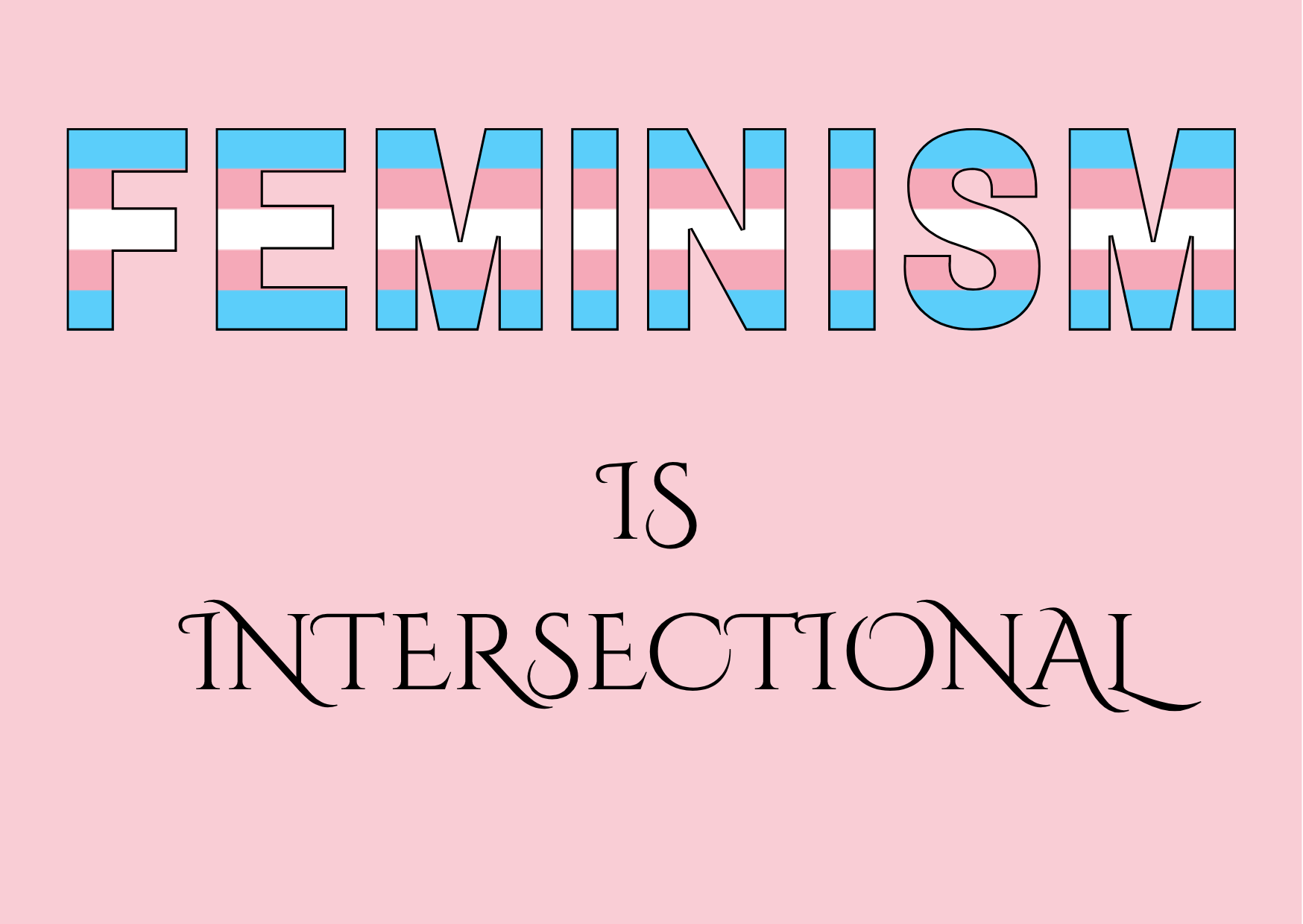
That means feminism has to be historical. It has to be intersectional. It has to be queer. It has to be trans-inclusive. It has to understand that patriarchy does not merely hate “female bodies.” It hates disobedient bodies. Unruly bodies. Queer bodies. Disabled bodies. Racialized bodies. Poor bodies. Fat bodies. Infertile bodies. Pregnant bodies that refuse state control. Trans bodies that refuse assignment. Cis women’s bodies that refuse service. Bodies that will not become property. Bodies that will not reproduce the family, the nation, the workforce, the church, the empire, or the fragile ego of a man named Chad who has his mattress on the floor and three opinions about how he’s owed sex because his dad gave him a job in finance.
TERF ideology narrows the circle of concern until cruelty starts looking like analysis.
Queer feminism widens it.
Not because categories never matter. They do. Sometimes categories are how people organize, survive, fight, demand resources, name violence, and find each other in the dark.
But categories are tools, not gods.
The moment the category becomes more sacred than the people it was meant to protect, we are no longer doing liberation. We are doing administration.
And I did not come to feminism to become a clerk for the patriarchy.
The whole point is not to build a better border around womanhood. The point is to ask why womanhood has been made into a border in the first place.
A TERF-free feminism does not mean we stop talking about rape, forced birth, reproductive coercion, medical misogyny, or the exploitation of bodies. It means we talk about them better.
It means we stop pretending patriarchy is a biology problem.
It means we stop pretending liberation can be built from the same essentialist rubble used to construct the cage.
It means we refuse the lie that trans women are threats rather than fellow targets of a system obsessed with sorting, disciplining, and punishing bodies.
It means we understand that when patriarchy points to the body and says “nature,” feminism should check for fingerprints.
Because they are always there.
On the law.
On the marriage contract.
On the birth certificate.
On the bathroom door.
On the dress code.
On the ultrasound screen.
On the sports ban.
On the prison intake form.
On the comment thread where someone insists she is “just defending women” while using the same logic patriarchy has always used to define women into smaller and smaller rooms.
So yes, this is a TERF-free zone.
Not because I am afraid of hard conversations. Not because I do not understand that women’s bodies have been brutalized under patriarchy. Not because I think reproductive oppression is imaginary. Please. I am a historian of gender. I have spent more time with patriarchal nonsense than is probably medically advisable.
This is a TERF-free zone because I refuse to call biological essentialism liberation just because someone slapped the word “feminism” on it.
A feminism worth having has to be bigger than the categories patriarchy handed us. It has to protect cis women without sacrificing trans women. It has to talk about bodies without turning bodies into destiny. It has to understand rape, forced birth, and medical control as patriarchal violence without pretending the only people harmed by patriarchy are the people TERFs are willing to recognize.
Because the goal is not to build a better cage around “real women.”
The goal is to burn down the system that keeps deciding bodies need cages at all.
Resources
Judith Butler, Gender Trouble: Feminism and the Subversion of Identity
Judith Butler, “Critically Queer”
Michel Foucault, The History of Sexuality, Volume 1: An Introduction
Susan Stryker, “My Words to Victor Frankenstein above the Village of Chamounix: Performing Transgender Rage”
Cathy J. Cohen, “Punks, Bulldaggers, and Welfare Queens: The Radical Potential of Queer Politics?”
Sara Ahmed, “Queer Feelings”
"The TERF answer is: women are adult human females.
The queer feminist answer is: why are you so invested in sounding like a livestock registry?"
Wish I'd said that. But don't worry, I will.
Once again I find myself bumfuzzled. Are Trans Folk somehow oppressing people? How can that be? They're a small group, and largely vulnerable. Doesn't seem like they have enough power to be oppressing anybody.
I don't get it. As usual. What's the big TERF objection to the existence of Trans Folk? Because it invades their She-Club? Muddies the water? I don't see where it does. Treating someone as they want to be treated doesn't cost anything. And what's in their pants or skirts is none of my business.
Absolutely fantastic piece. You laid out the problem and the proper perspective beautifully. You got me to think more deeply about my own viewpoint. You deserve every bit of the surge in readers that you’ve been getting. I’m so glad I found your work through Nan Tepper.