
Actually, I Can Still Call Myself a Lesbian
Or: the identity auditors have logged on

Author’s note: I wrote this a while back and scheduled it to post today. It’s a bit different than the stuff that my new readers have gotten the last few days. But I’ve never claimed to be consistent, I just write about what I like. So yes, today you get queer theory and thoughts on the fluidity of sexuality.
Just a quick note for the people who have apparently appointed themselves Assistant Deputy Commissioners of My Sexuality: if you hop into my comments or my DMs to tell me what my orientation really is, I am not arguing with you. I am blocking you.
Not because I am fragile. Not because I “can’t handle discussion.” But because I am deeply uninterested in being audited by strangers who think one celebrity thirst post, one broad use of the word “attracted,” or one acknowledgment that human desire is a little more complicated than a preschool shape sorter means they now have jurisdiction over my identity.
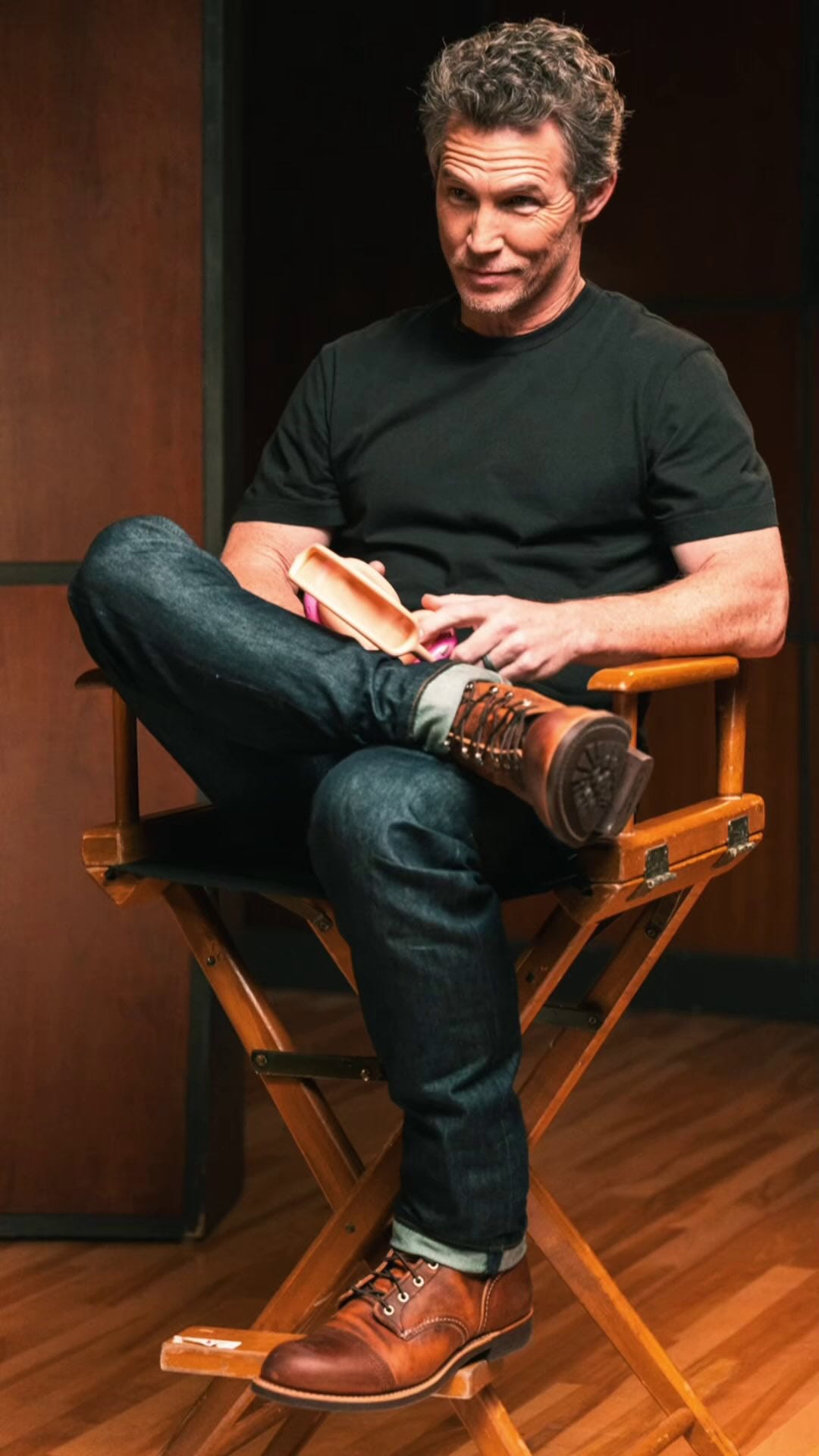
This whole thing started because I made what I genuinely thought was a fairly obvious point: attraction is a broad word. I can recognize that a man is hot. I can recognize that Shawn Hatosy is, in fact, a snack. I can say so publicly without that meaning I want to sleep with him, marry him, or submit paperwork to have my lesbian card revoked.
As I once told a friend, the fact that I only buy clothes from one side of the store doesn’t mean I can’t appreciate a well tailored outfit from the other.
And yet somehow this was enough to summon the identity auditors out of the floorboards like the world’s most annoying paranormal event.
Which is funny, in a grim little way, because what this discourse reveals is not that I am secretly confused. It reveals that a lot of people are still wildly invested in the idea that sexuality should be tidy, fixed, simple, and externally legible at all times. They want it to sit still. They want it to behave. They want it to come in neat little boxes with clear labels and no leakage.
They want sexuality to be ceramics.
Unfortunately for them, it is often more like a lava lamp.1
And I say that as someone who is still very much a lesbian.
I did not survive one moral regime for rainbow-flavored version 2.0
Part of why this irritates me so much is that I did not grow up getting told I could be damned to hell because of my sexuality only to arrive in adulthood and discover that some people in my own queer community have reinvented the same policing impulse with better branding and more self-righteous vocabulary.
I did not survive one moral regime just to be handed another with a pride flag slapped on it like a rebrand.
There is something especially galling about being told by queer people that your identity is invalid unless it remains perfectly legible to them at all times. One sentence. One exception. One joke. One celebrity crush. One broader understanding of attraction than they personally use, and suddenly they are acting like unpaid HR reps for the Department of Orientation Compliance.
No. Absolutely not.
And maybe that is part of what makes this so absurd. At a moment when queer rights are actively under attack, when actual material harm is being done to queer people in real time, some people have apparently decided their most urgent political project is auditing whether strangers are using the correct label for their own interior life.
Incredible priorities.
We have managed to look at a burning house and say, “Yes, but before we address the fire, I would like to police how someone else describes their own furniture.”
No, recognizing a snack does not mean I have to eat it
Part of the problem here is that people keep flattening everything into one giant blob called “sexuality,” and then acting shocked when the blob turns out to contain multiple things.
Attraction is not always the same as desire. Desire is not always the same as action. Action is not always the same as identity. Fantasy is not always the same as intention. Recognition is not always the same as pursuit.
I can recognize that a man is attractive and still have no interest in sex with men. I can understand beauty, charisma, chemistry, and hotness without that becoming a constitutional crisis for my lesbianism.
That should not be hard to understand, and yet here we are.
People hear “I can find a man attractive” and somehow translate it into “I have now fundamentally reorganized my erotic life around men.” That is an astonishing interpretive leap. It is like hearing someone say “that painting is beautiful” and replying, “So you plan to steal it in a high stakes museum heist?”
No. I am describing recognition, not rewriting my identity.
And I think some people are less upset by that complexity than by what it takes away from them. If attraction is broader than one narrow script, they lose the comfort of instant categorization. They lose the fantasy that they can hear one sentence and know everything important. They lose the satisfaction of pinning somebody down with certainty.
And some people really, really like their little pins.
The queer theorists were, in fact, onto something
One of the things queer theory is actually useful for, beyond giving people expensive words to misuse online, is that it reminds us sexuality has never been as simple or as “natural” as people pretend.
Jeffrey Weeks argues that sexuality is not some timeless fixed object but a historical subject “in constant flux,” and he explicitly notes that intimacy, sex, reproduction, and desire do not all collapse into one neat category. Foucault similarly dismantles the fantasy that sex is some hidden inner truth waiting to be properly decoded by experts, institutions, or random busybodies with opinions. Instead, sexuality gets produced through discourse, classification, and regulation. Judith Butler challenges the supposedly natural coherence between sex, gender, and desire, and warns against systems that treat only certain expressions as real, true, and legitimate while dismissing others as false or derivative. Michael Warner also notes that queer theory’s major break was to stop treating sexuality as merely individual “orientation” and start asking how norms and institutions decide which forms of desire count as legitimate in the first place.
In other words, the filing cabinet was always fake.
That does not mean labels are meaningless. I am not doing the lazy “everything is fluid, nothing matters, identity is just vibes” routine. Labels matter because language matters. Community matters. Self-description matters.
The point is not that categories are useless.
The point is that they are not neutral little facts of nature descending from heaven on laminated cards.
They are historical. Social. Contested. Negotiated. And enforced with far more confidence than accuracy.
Also, attraction itself is not one single thing
This is where the conversation gets even more annoying for the identity bureaucrats, because once you start looking at how attraction actually functions, the black-and-white model starts falling apart fast.
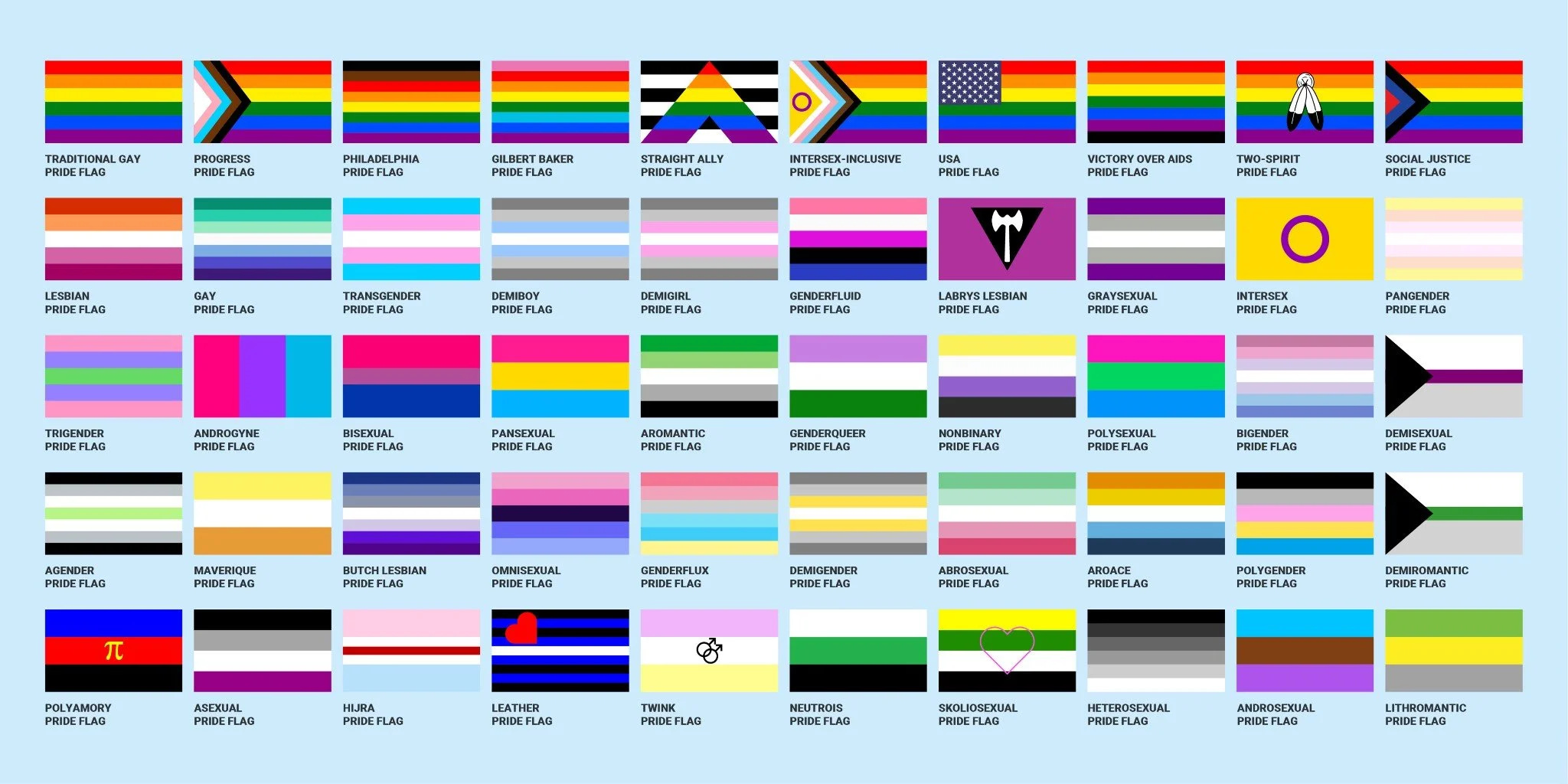
Sapiosexuality, demisexuality, graysexuality, asexuality, aromanticism, and nonbinary identity all complicate the fantasy that desire is immediate, visually obvious, binary, and basically the same for everyone.
Part of why this whole debate feels so stupid to me is that people are assuming attraction works for me the way it works for them.
It doesn’t.
I’m sapiosexual, or at least that is a term that helps describe my experience. Intelligence matters enormously to me. Intellectual connection matters enormously to me. And that means a person can be aesthetically attractive without that being what actually lights the fuse. Recognition is not the same as wanting access. Appearance is not always the engine. For some of us, intellect, emotional connection, trust, or context are doing a lot more of the work. And sometimes the intellect, emotional connection, or trust can be there without the other half of the equation, sexual attraction, showing up. That part of the Venn diagram is usually where I find my best friends.
And once you admit that, the whole “you found one man hot, therefore you must be X” framework starts looking even more ridiculous.
Because it was already too simplistic for gay, bi, and straight people.
It becomes completely absurd once you account for ace-spectrum identities, aromantic identities, and the fact that nonbinary people exist.
Asexual and graysexual people complicate the assumption that attraction is universal, constant, and central. Aromantic people complicate the idea that romance and sexuality are naturally bundled together. Demisexuality complicates the assumption that desire is immediate. Nonbinary identities complicate the whole idea that sexuality can always be sorted through a clean man/woman binary in the first place. And bisexuality, while broad and real and important, is not always the final container for every complicated relationship to attraction, desire, romance, gender, and embodiment.
Sometimes the available labels overlap. Sometimes they do not. Sometimes one describes the gendered direction of desire, another describes the conditions under which desire appears, and another describes how romance does or does not function.
That is not confusion.
That is complexity.
And frankly, queer people should be better at tolerating complexity than this.
Since we’re apparently going there, let’s talk about BDSM
One of the aspects of sexuality that often complicates the dialog on sexual orientation is BDSM, because BDSM is one of those spaces where people’s tidy little assumptions about sexuality start melting like chocolate left on a dashboard in July.
Most people hear BDSM and assume “sexual.” Full stop. And yes, obviously, it can be sexual. But not always, not in the same way you understand sexual, and not for the same reasons. Sometimes what is happening there is less about sexual attraction and more about power, structure, sensation, ritual, trust, embodiment, control, surrender, or kink. Sometimes those things overlap with sexuality. Sometimes they do not line up neatly with orientation at all.
Which means if I, as a lesbian, were to do a nonsexual scene with a man, would that somehow make me less of a lesbian? Why, exactly?
Because some people cannot tolerate the idea that power and desire are not always identical?
Because they need every charged interaction to fit into one approved orientation script?
Because we have collectively decided that anything embodied, intimate, or transgressive must automatically count as evidence in the Case Against My Label?
That is not understanding sexuality more deeply. That is understanding it less.
And honestly, even if you pushed the example one step further into sexual contact within BDSM, I still do not think one act, one framework, or one exception automatically overrides how a person understands their entire sexuality. Identity is not a criminal trial where one piece of evidence gets to overrule the rest of your lived reality. Human sexuality is not a courtroom drama, and I am not interested in cross-examining myself for the entertainment of people who think one exception should redraw the whole map.
Once you stop assuming every embodied act tells one coherent truth, the whole category-policing enterprise starts wobbling on its little bureaucratic heels.
Good.
Let it wobble.
Sexuality is personal.
This is the part that keeps getting flattened into nonsense.
Sexuality is not just a theory problem or a taxonomy problem. It is a personal reality. It is a lived experience. It is not a community vote.
And yes, people can choose labels that feel truest, most useful, most honest, and most livable to them. That does not mean labels are arbitrary. It means they are inhabited. They are negotiated. They are shaped by experience, comfort, desire, history, politics, and the language that feels possible in your own mouth.
That is also why “why not just call yourself bisexual?” does not work for me.
Not because bisexuality is not real. Not because the label is bad. But because a label can be valid, politically important, and deeply meaningful for many people and still not be the right fit for a specific person. “Bisexual” implies something I am not comfortable with as my standard. It suggests a habitual or meaningful orientation toward men as well as women that does not reflect how I move through the world, how I view men, how I understand my desire, or how I live my life.
That is not an insult to bisexuality.
That is called self-knowledge.
Because, quite frankly, I find dicks unappealing to look at and even less appealing anywhere near my person.
And if someone else would use that label for themselves in a similar situation, fine. Great. Love that for them. But my sexuality is not a crowdsourced branding exercise.
And yes, sexuality is political.
How could it not be?
Political structures have spent centuries policing sexuality, classifying it, pathologizing it, rewarding some forms of it and punishing others. Families police it. Religions police it. Laws police it. Schools police it. Entire cultural systems decide which desires are respectable, which relationships are real, which bodies are intelligible, and which people get recognition, safety, legitimacy, and rights.
That is why queer politics and theory exist in the first place.
We do not fight for recognition and equal rights because sexuality is apolitical. We fight precisely because it has always been political, because power has always had a great deal to say about whose love counts, whose bodies make sense, whose relationships deserve protection, and whose desires get treated as dangerous, illegible, ridiculous, or disposable.
So yes, sexuality is political.
But that is exactly why I am so uninterested in queer people taking up the same policing function and pretending it is enlightenment.
You cannot build a more expansive world by doing the sorting work of patriarchy for it.
You cannot create liberation by becoming unpaid interns for the identity registry.
And you definitely cannot claim to be resisting sexual regulation while jumping into someone else’s DMs to inform them that, after a brief review of the evidence, their orientation has been administratively denied.
Sexuality is personal because it is lived by actual people.
Sexuality is political because systems of power are constantly trying to determine what those people are allowed to be.
Both things are true.
And if we actually care about liberation, then our job is not to replicate those systems of validation and invalidation inside queer communities. Our job is to make that world bigger, looser, safer, and more livable than the one that was handed to us.
If that makes you uncomfortable because it doesn’t fit with how you define your sexuality and the terms you use for it, it might be time to sit with why it is that you think your experience is universal and binding.
A brief history of people being weirdly obsessed with sorting everyone
Historically, we should know better than this.
Modern systems did not merely “discover” sexual identities. They classified them, managed them, pathologized them, sorted them into the normal and the deviant, the productive and the perverse.

So when people insist sexuality must be perfectly fixed, immovable, and interpretable from the outside, they are not standing outside that patriarchal history.
They are speaking its language.
And queer communities are not magically immune from reproducing the same habits. When we start acting like our job is to police who gets to use which label based on a handful of approved criteria, we are not doing liberation. We are doing paperwork.
And not even interesting paperwork.
Maybe the problem is not my sexuality
I am not saying nobody can ever question their identity. Of course they can. People do. They should. People change. Language shifts. Self-understanding evolves. That is real, and good, and often liberating.
What I am rejecting is the smug little assumption that because some stranger thinks one statement sounds inconsistent to them, they therefore get to overrule the person actually living the life in question.
You do not.
You are not the final authority on someone else’s sexuality because you found an edge case. You do not get to seize one celebrity crush, one kink, one joke, one weird little blob in the lava lamp, and declare yourself chief archivist of another person’s desire.
Maybe the issue is not that I have failed to fit the box.
Maybe the issue is that some people have confused liberation with better box-sorting.
I’m still a lesbian. Your filing system still sucks.
I am still a lesbian.
Not because sexuality is simple, but because it isn’t.
Not because identity never contains contradiction, ambiguity, surprise, or overlap, but because human beings do.
And not because I owe anyone a performance of total coherence, but because I do not.
If that makes some people uncomfortable, I would gently suggest they sit with that discomfort instead of trying to make it my administrative problem.
I am still a lesbian.
Your filing system just sucks.
Resources
Michel Foucault, The History of Sexuality, Volume I: An Introduction
Jeffrey Weeks, The Invention of Sexuality
Judith Butler, Gender Trouble: Feminism and the Subversion of Identity and Critically Queer
Michael Warner, “Queer and Then?”
Cathy J. Cohen, “Punks, Bulldaggers, and Welfare Queens: The Radical Potential of Queer Politics?”
Lisa Duggan, The Twilight of Equality? Neoliberalism, Cultural Politics, and the Attack on Democracy, Chapter 3: “Equality, Inc.”
Thank you to my sister for that analogy.
I don't see anybody clutching their pearls and screeching "BI!!!" when straight girls call their friends pretty or are jealous of an Instagram model's face or think a female celeb is beautiful. Everybody seems to understand that aesthetic appreciation does not equal sexual attraction in that case.
Wild that people are harassing you like this, I am so sorry.
I kept interrupting my own read to make notes on all the things I want to say, I got SO excited reading about this. And not in a sexual way; I want that clearly understood, right up front, because yes, people mistake meaning all the time, instead of asking questions to clarify.
I've been out for, OMG, 50 years. 50 years? How did that happen? But I digress.
I love what I've read so far, but I have impulse control issues, so I'm jumping down here first, to simulate a conversation, and tell you how much I love this.
My coming out story is layered, complex, and was entirely codependent...with my father. We came out at. the same time more or less. I was an enabling teenager in love with my dad. He had tremendous guilt. I knew he was gay before he finally admitted it, and I was his child caretaker. He came out, and I basically said, "I am, too!" Not because it wasn't true, it was. But, I was 15, and attracted to boys as well as girls. And I pushed that part of me down. And my dad pushed that part of me down because he needed same-same so much to assuage his guilt. And I had a job. I had to take care of my poor, sad, lonely, guilty, lovely dad.
I don't want the labels so much anymore. I'm not so interested in pursuing sexual relationships lately, but alway open to that possibility. But even while not having sex I am not calling myself a lesbian as much as I used to. Because a lovely word came along that fits me SO MUCH BETTER. I am a happily rainbow-hued QUEER. QUEER covers all the possibilities. And truly, my first go-to will always be women, but there are definitely men in the world who turn my head. It's my life. I can do whatever works for me. And I don't have to explain the WHYs of it to anyone.
I'm cool with being me. Whatever that means. And I'll finish reading this essay later, and most like be back to comment some more.
You're fabulous. My newest label is "Bitchy History and ProfessorMeredith's Biggest Fan."
xo