
Flop Like a Man: Who Gets to Fail Their Way to Auteur Status
Notes from the trenches of a Gender Studies MA

“When men fail, they say ‘you gave it the old college try.’ But women fail and they say ‘You gave it the old college try… but you shouldn’t be in college.’” - Marvelous Mrs. Maisel
That line from The Marvelous Mrs. Maisel isn’t just a joke. It’s an industrial policy. It’s the unspoken HR manual of film culture, written in invisible ink and read aloud only when a woman’s movie underperforms.
Because here’s the thing about “failure” in Hollywood: it’s not one thing. It’s a resource. A currency. A permission slip. And like most permission slips, it’s not handed out evenly.
Men are allowed to fail in ways that get rebranded as “ambitious,” “misunderstood,” or “ahead of its time.” Women are expected to be profitable on the first try because the first try is the one people remember when they decide whether you deserve a second.
This is where feminist film theory stops being a seminar topic and starts being a map of how the industry quietly polices who gets to be “an artist” and who has to be “a safe bet.”
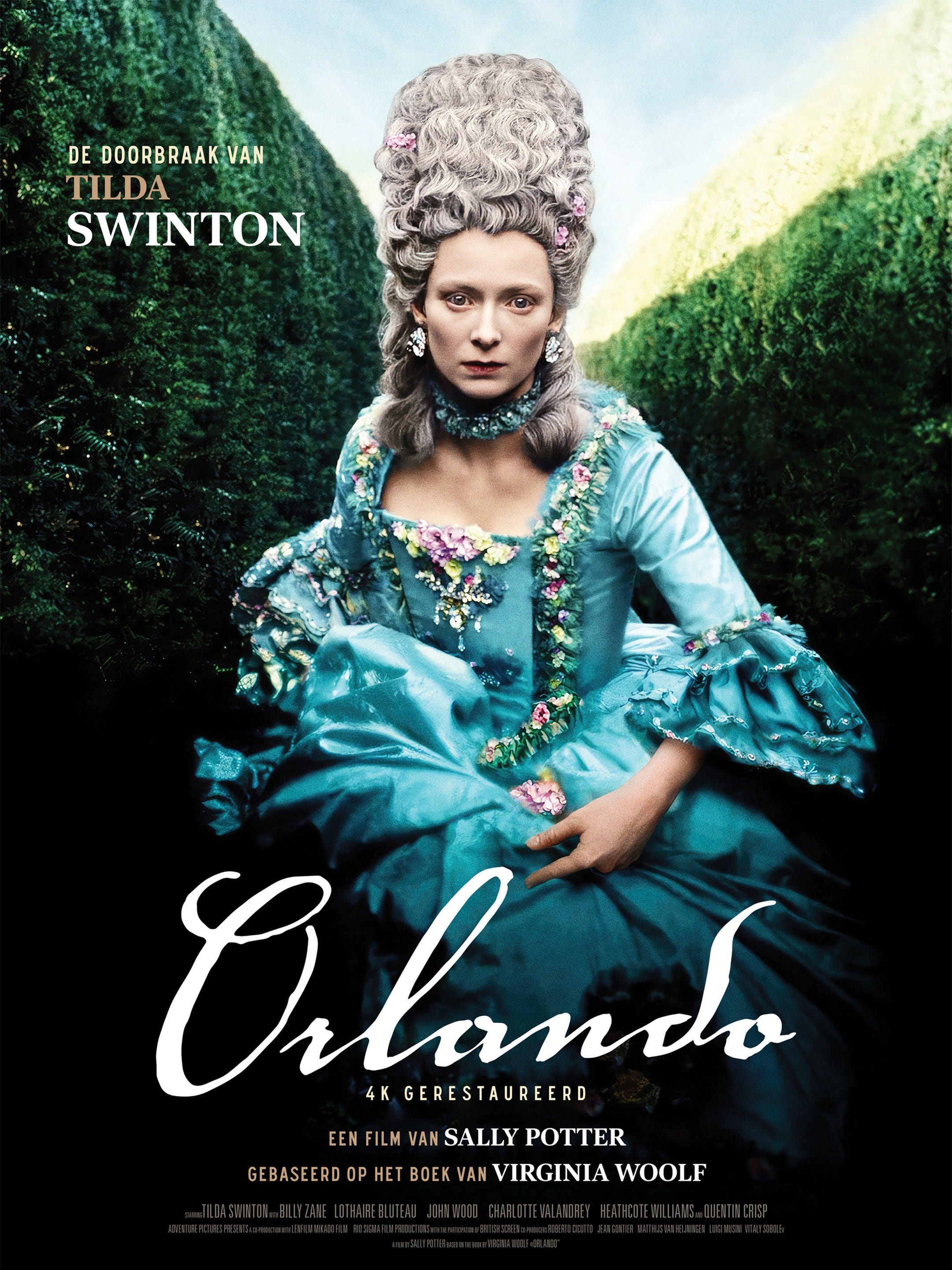
This week in my Gender and Film class we watched the 1992 Sally Potter film Orlando. I described it as a “beautiful, confusing fever dream” and I stand by that. It’s an excellent meditation on gender, sex, and structural misogyny. It was also a financial flop by Hollywood standards.
The film was described as a “slog,” “bloated, pretentious,” “silly,” and giving “arthouse cinema a bad name.”
Potter’s direction is “smug,” “amateurish,” “shows no command of her material,” “substituting pretentiousness for substance” and unable to “maintain a complex story.” One reviewer even name drops male auteurs like Peter Greenaway and Derek Jarman, saying that while Potter clearly is aiming to be like both, her films are “inaccessible” but “not nearly as much fun” as theirs.
Failure is gendered: the two kinds of flops
A male-directed flop often becomes a charming character trait. It gets absorbed into the mythology of the auteur: the tortured genius, the risk-taker, the guy who swung for the fences and struck out in a way that proves he belongs on the field.
A woman-directed flop is more likely to be treated as evidence. Not evidence that this film didn’t land, but that women shouldn’t be trusted with budgets, genres, production schedules, or the cinematic keys to the kingdom. It’s not “he made a bad movie.” It’s “she shouldn’t be making movies like that at all.”
Angela Martin’s work on authorship is helpful here because she nudges us away from the romantic “director as lone genius” story and toward something more useful: authorship as an institutional fact.2 Authorship isn’t just what’s on screen. It’s who gets funding, distribution, preservation, and a syllabus slot. It’s who gets a career long enough to develop a recognizable body of work in the first place.
And that’s where the trap snaps shut. If women aren’t granted the same tolerance for failure, they’re blocked from building the very kind of filmography that film culture demands before it will call anyone an auteur.
So we end up with a rigged loop: fewer second chances leads to fewer films, which leads to less “evidence” of authorship, which then gets used to justify why women are “rare” as auteurs. Scarcity gets mistaken for nature.
The male flop redemption tour
Let’s talk about Babylon, because it is a perfect modern example of the “fail upward” dynamic. Damien Chazelle made a huge, expensive, polarizing film that didn’t make its money back. By 2024, even the director was candid about its financial failure.3
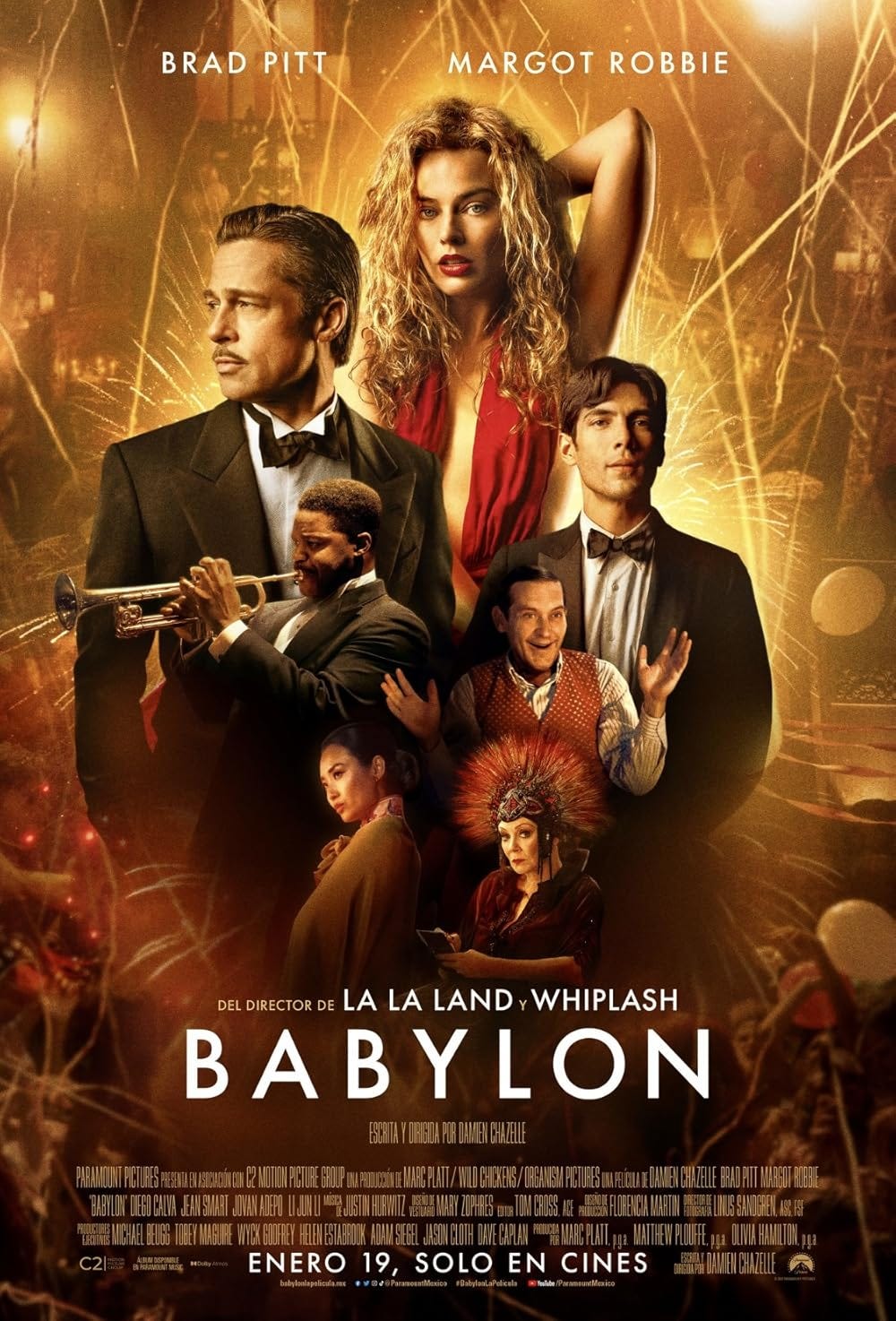
And what happened next? The response wasn’t “Damien Chazelle shouldn’t be directing.” It was “what will his comeback look like?” It became a narrative of artistic risk and recalibration, like a boxer adjusting his stance, not a woman being shown the door.
That’s the key difference: men’s flops are treated as plot points in an ongoing prestige story.
You can make a whole museum exhibit out of this pattern:
Francis Ford Coppola nearly nuked his finances with One from the Heart and still remained Coppola, capital-A Auteur, the guy whose “excess” is practically a brand.
David Fincher’s famously miserable experience on Alien 3 didn’t end his career. It became part of his legend: the early failure that sharpened the blade.
Ridley Scott has had commercial and critical misses sprinkled across decades, and the cultural narrative is still “master craftsman.” The misses don’t become a referendum on whether he belongs in Hollywood.
The point isn’t that these men didn’t deserve more chances. Many did. The point is that the industry assumes they should have more chances. Their risk is read as artistry, not irresponsibility.
When a woman flops, the door doesn’t just close. It locks.
Now flip the script to Elaine May and Ishtar.
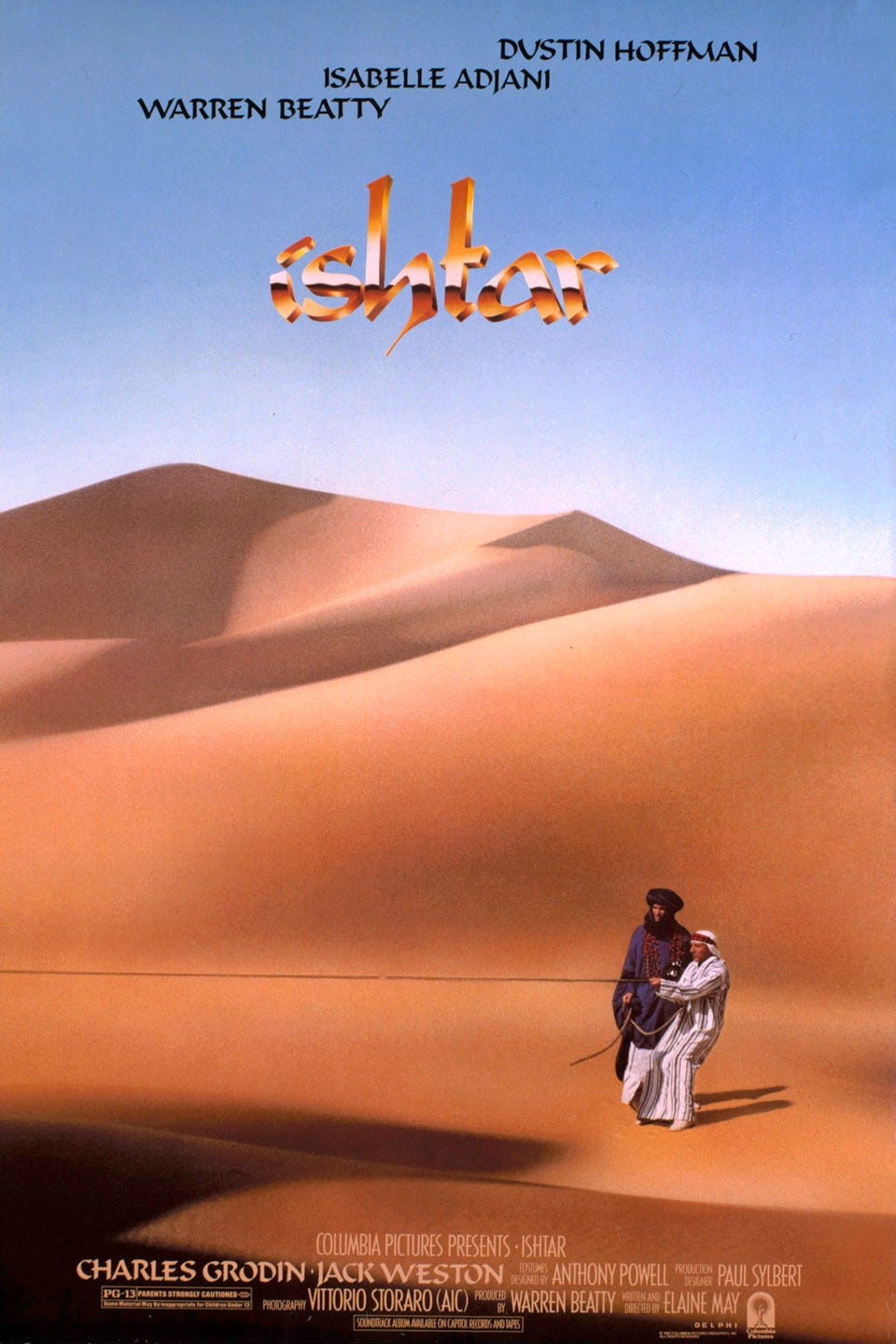
If you want a single case study for “women’s failure becomes disqualification,” it’s this. Ishtar became a pop culture punchline and is widely discussed as a career-altering catastrophe, with multiple retrospectives arguing that it effectively ended May’s directing career.
That’s the Maisel principle in the wild.
A man with a flop gets a redemption arc. A woman with a flop gets a cautionary tale built around her name.
And the cautionary tale doesn’t just punish the individual. It “teaches” the industry a lesson it was already inclined to believe: women are risky hires. Women can’t handle big productions. Women can’t be trusted with expensive movies.
Which is fascinating, because men have been making expensive disasters since cinema learned how to invoice.
But only some disasters become moral parables.
The marketing trap: when the industry sabotages and then blames
Now, let’s talk about one of my favorite cultural phenomena: the film that gets marketed wrong, underperforms, and then the underperformance gets used as proof that nobody wanted it.
Jennifer’s Body is a crystal-clear example of how this works. The film was marketed in a way that emphasized Megan Fox’s sex appeal and pitched it at a presumed young male audience, while the film itself is much more invested in satire, female friendship4, and gendered violence. In recent years, cast and coverage have explicitly framed the marketing as a key factor in its initial flop, even as it gained a cult afterlife.
“Women have to be successful” often comes with an asterisk nobody wants to read: women have to be successful inside systems that don’t reliably support their work.
When a woman-directed film fails, the industry often treats it as proof the woman failed. Not as proof that the studio didn’t know how to sell it, didn’t want to sell it, or sold it as something it wasn’t. And those are different diagnoses with different implications.
Men are allowed to have “misunderstood masterpieces.” Women are more likely to have “bad business.”
The “not profitable enough” standard
Even when women deliver, they can still be told it wasn’t enough.
Gina Prince-Bythewood’s The Woman King5 had a strong opening and strong critical response, and discussion quickly centered on whether it could “justify” its budget, a framing that often sticks to women-led historical epics like lint on a black sweater.
And that’s the move. It’s not simply: did it do well? It’s: did it do well enough to deserve to exist, and enough to prove a broader point about the viability of women-led spectacle.
Men rarely have to carry the burden of representing their entire gender category at the box office.
No one treats a mid-performing male-directed action film as evidence that men can’t direct action films.6
Yet women are routinely put in the position of “prove your entire demographic is bankable.” One movie becomes a referendum on the entire industry of female directors.
That’s the “women’s film” trap again: you get turned into a category, then your performance gets used to judge the category.
Auteur status as a risk shield
Auteur status is not just a label critics slap on a director. It operates like a protective layer in the funding ecosystem. Once you are an “auteur,” your failures can be reinterpreted as part of your artistic project. Your next pitch gets defended by your vision rather than your spreadsheet.
But if women aren’t granted auteur status as readily, they aren’t protected by that narrative. They have to “perform” value in a narrower way: profitability, respectability, legibility, awards, cultural usefulness. Often all at once.
Which means: women can make art, but they are frequently expected to make art that behaves like a product.
And that is one of the quiet ways the canon gets built. Not just through criticism, but through who gets to keep making movies long enough to accrue the critical infrastructure that turns a career into an oeuvre.
So when we ask, “Why are some directors considered auteurs and others not?” the answer isn’t just aesthetics. It’s cultural politics. It’s what kinds of ambition get culturally framed as genius, and what kinds get framed as overreach.
Or, to put it in Maisel terms: who gets told they belong in college even when they fail a class.
The takeaway: failure is not equally distributed
Women directors are not inherently more fragile or less talented. The system is just less forgiving.
If you want more women auteurs, you don’t just need more women making movies. You need:
more second chances,
more room for mess,
more tolerance for experiments that don’t immediately pay out,
and more critics and institutions willing to treat women’s work as art even when it’s difficult, strange, or commercially awkward.
Because right now, the industry’s logic is basically: men are allowed to fail into meaning. Women are expected to succeed into silence.
And that should make anyone who cares about cinema, art, and cultural memory extremely nervous.
There is something quite unsettling about the way Tilda Swinton makes direct eye contact with you when breaking the fourth wall in this film, you have been warned.
Angela Martin, “Refocusing Authorship in Women’s Filmmaking”
Arguably sapphic in nature, but we’ll talk about this movie more later this semester since it is actually one of the films we are watching for Gender and Film.
As a historian and a feminist I had mixed feelings on this one, because of the role that the slave trade plays in the overall setting and how I feel about romanticizing it/#girlboss ing it. But my point here isn’t whether I liked the film.
Take Zack Snyder, people love to hate on him (my defense of him is topic for a future article), but no one claims his “flops” (if indeed they were flops, debatable) mean that men should be reconsidered as directors entirely.