
How Anti-Feminists Made Feminism the Villain and Missed the Actual Plot
Anti-feminist substack essayists are so committed to the bit, that they miss every clue right in front of them.

A man is lonely.
A woman is angry.
A marriage ends.
A dating app fails to deliver a government-issued girlfriend.
Somewhere, in a dimly lit office lined with unread sociology books, Detective Anti-Feminist lights a cigarette, stares out into the rain, and mutters the only theory he has ever had.
“It was feminism.”
The evidence? Irrelevant.
The motive? Female autonomy.
The method? Probably a podcast.
The suspect? A woman who once said “patriarchy” in a tone he didn’t enjoy.
Welcome to the world of anti-feminist analysis, where every social problem is a crime scene, every structural explanation is escorted out of the room, and feminism is always found standing over the body holding a copy of The Feminine Mystique.1
The case is closed before the detective even arrives.
Case File One: The Lonely Man
The first body on the floor is male loneliness.
This one is real. Men are lonely. Men are struggling. Men are isolated. Men are often taught from childhood that vulnerability is weakness, emotional intimacy is feminine, care is women’s work, and friendship is acceptable only if it happens near a grill, a ball, or a podcast microphone.
There are plenty of clues here.
Economic precarity. Declining community life. Work culture. Social media. The collapse of third places. The way masculinity trains men to confuse emotional repression with strength. The fact that many men have been told their whole lives that the only acceptable source of intimacy is a romantic relationship with a woman, preferably one who also functions as therapist, social secretary, emotional support animal, and domestic appliance.
Detective Anti-Feminist examines all of this carefully.
Then he throws it directly into the river.
“Interesting,” he says. “But have we considered that women got jobs?”
This is the magic trick. The loneliness is real, but the analysis is a clown car with a badge. Instead of asking why men have been discouraged from building deep emotional relationships with each other, anti-feminists ask why women are no longer legally, economically, or socially trapped into solving men’s loneliness for them.
Feminism did not make men lonely.
Patriarchy promised men dominance and forgot to teach them intimacy.
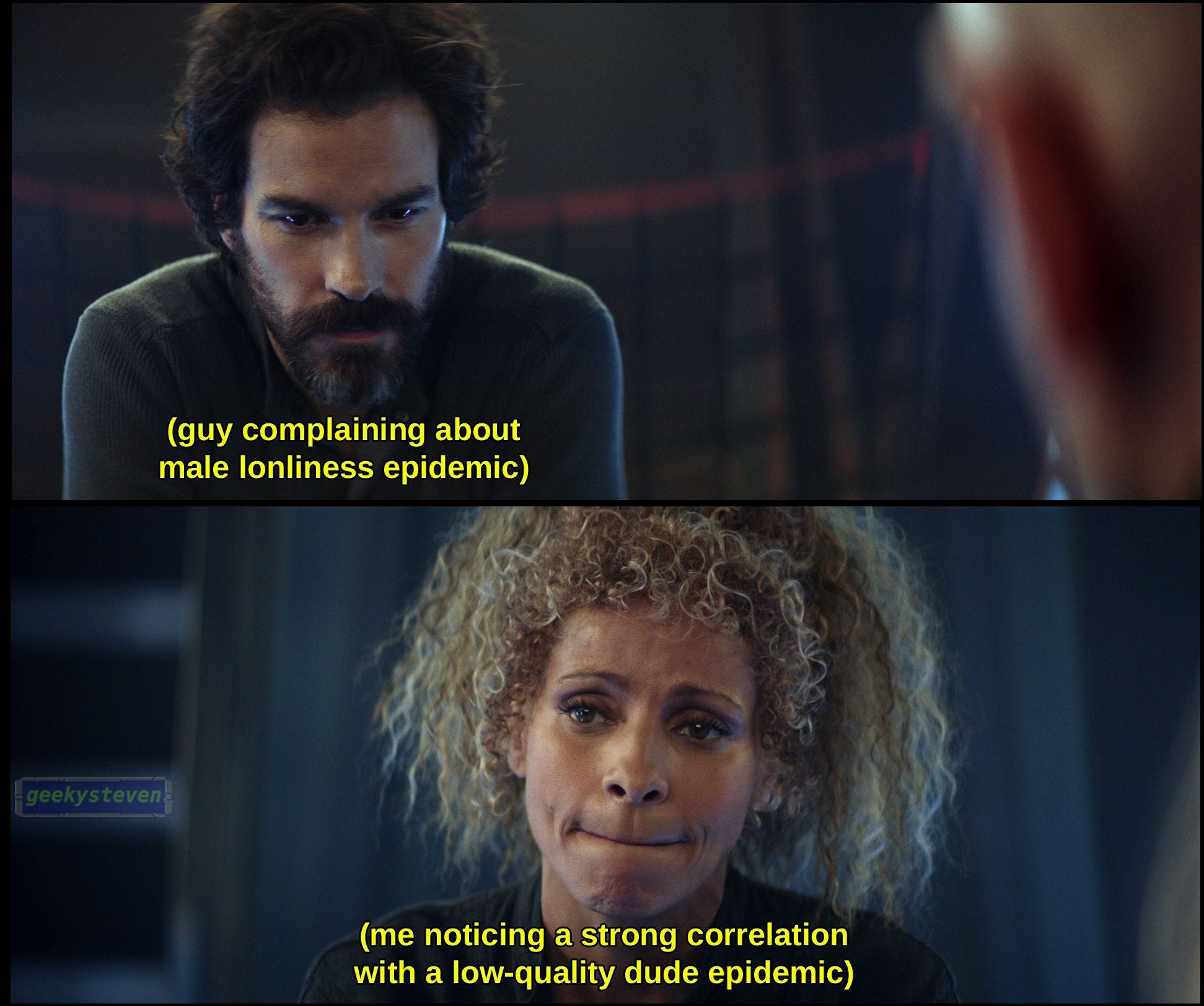
But that would require the detective to investigate the actual crime scene, and unfortunately, he is very busy drawing devil horns on Gloria Steinem.
Case File Two: The Dating App Massacre
Next, we arrive at the dating app crime scene.
Bodies everywhere. Hinge prompts. Ghosted conversations. Men holding fish. Women developing the thousand-yard stare after reading “low-body counts only” for the four hundredth time.
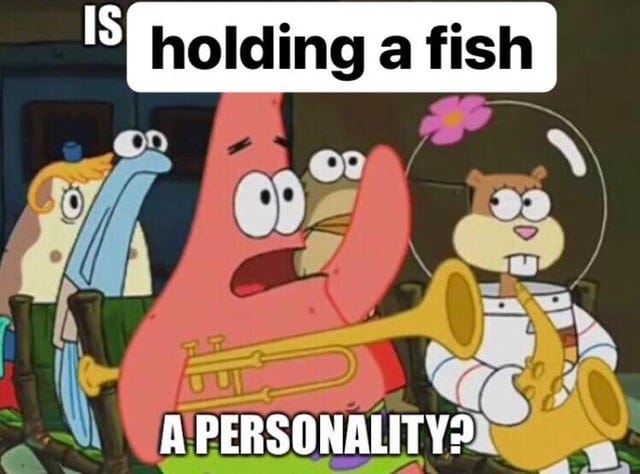
Nobody is happy here.
Possible suspects include profit-driven platforms, swipe mechanics, gamified attraction, algorithmic sorting, declining social spaces, rising economic insecurity, and the general horror of trying to market your soul with six photos and a sentence about tacos.
Detective Anti-Feminist surveys the wreckage.
He notices that apps are designed to keep people using them, not necessarily to help them leave happily paired off into the sunset.
He notices that loneliness has become monetizable.

He notices that everyone is tired, overstimulated, underpaid, and being forced to flirt through the world’s least romantic interface.
Then he spots the real clue.
A woman has standards.
“Dear God,” he whispers. “Feminism.”
This is where the anti-feminist argument always starts doing interpretive jazz with a concussion. If a woman chooses marriage, motherhood, domesticity, or traditional femininity, that is natural. If she chooses education, independence, divorce, childfreedom, or refusing to date a man who thinks foreplay is a coastal elite conspiracy, she has been brainwashed.
Apparently women have agency only when they choose correctly.
Which is not agency.
That is compliance in a hat that says “women want me, fish fear me.”
Case File Three: The Disappearing Wife
The detective’s next case concerns the mysterious disappearance of the endlessly available wife.
Once upon a time, women married younger, stayed married more often, had fewer legal options, fewer economic options, fewer reproductive options, and fewer socially acceptable escape routes.
Anti-feminists look at this and call it stability.

 Tiktok failed to load.
Enable 3rd party cookies or use another browser
Historians, being cursed with access to documents, call it context.
It is very easy to romanticize “traditional marriage” when you glide past coverture, marital rape exemptions, employment discrimination, unequal divorce laws, domestic violence, reproductive coercion, and the fact that many women were not choosing marriage so much as being herded into it by law, economics, religion, and cultural terror.
But Detective Anti-Feminist does not concern himself with such unpleasant details. He prefers vibes.
He finds a woman who got divorced and asks what went wrong.
She says, “I was doing all the housework, childcare, emotional labor, and life management while also working.”
The detective nods.
“So feminism ruined your marriage.”
She blinks.
“No, I think it was the man who thought me asking him to unload the dishwasher was a hate crime.”
The detective writes down: feminism.
Case File Four: The Angry Woman
Now we arrive at the most baffling case of all.
Women are angry.
No one knows why.

It is one of history’s great mysteries, right up there with “What happened to the Roanoke colony?”2 and “Why does every man in a Facebook comment section think he understands the fall of Rome?”
Detective Anti-Feminist arrives at the scene. There are clues everywhere.
Women denied bodily autonomy.
Women underpaid.
Women harassed.
Women assaulted.
Women expected to work like they don’t have families and parent like they don’t have jobs.
Women watching reproductive rights get treated like a seasonal privilege.
Women told that their anger is unattractive by men who have built entire political movements out of grievance, resentment, and yelling into microphones.
The detective studies the evidence.
“Clearly,” he says, “feminism taught women to hate men.”
No, babe.
Women’s anger did not materialize from the mist because feminists forgot to be nice. It comes from centuries of being told to smile while being denied rights, safety, education, money, political power, bodily autonomy, and basic personhood.
Maybe the rage has a source, maybe that source is not just us being unpleasant, maybe it’s in response to actual systemic injustice.
Just a tiny thought to consider, Detective Anti-Feminist.
Never mind, he’s gone already.
Case File Five: The Algorithm Did It, But Feminism Was Nearby
One of the funniest parts of this entire genre is watching people blame feminism for the personality damage caused by social media.
Someone is rude online.
Feminism.
Someone makes a lazy TikTok.
Feminism.
Someone uses therapy language like a medieval weapon.
Feminism.
Someone says something stupid on a podcast.
Feminism, probably, somehow. The podcast host once mentioned she owned a cat. BINGO!
No, babe. Social media made everyone insufferable. Different beast. Feminism didn’t invent algorithms that reward rage bait.
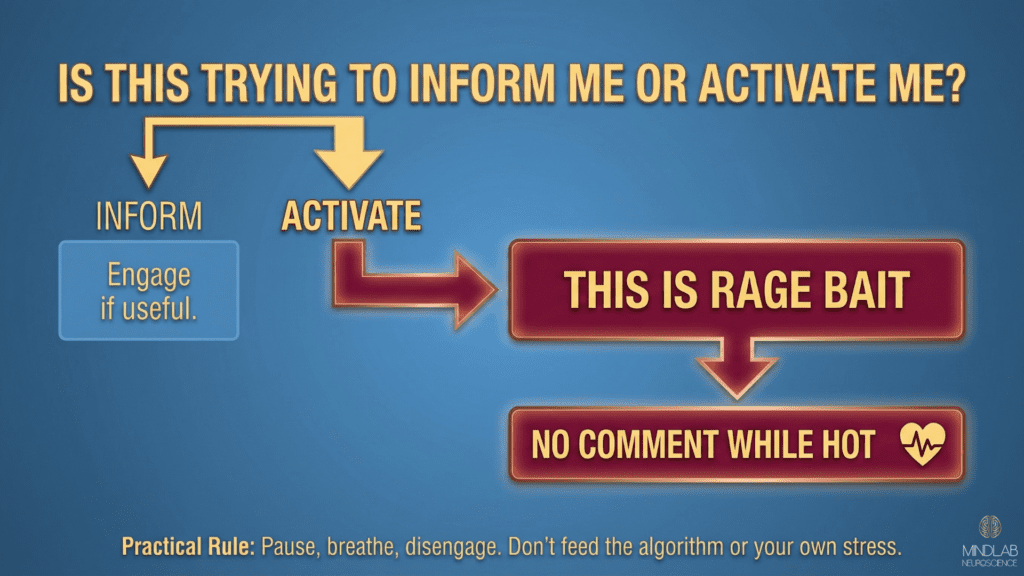
The internet has taken every ideology, hobby, fandom, movement, and minor disagreement and fed it into a machine designed to turn attention into money. Outrage performs well. Nuance does not. The algorithm does not care if you are discussing feminism, football, baking, theology, skincare, or whether Captain Janeway made the right call to kill Tuvix.
It wants conflict.
It wants engagement.
It wants everyone slightly deranged and refreshing the app like a poltergeist throwing chairs around a colonial era home.
That is not feminism.
That is capitalism with push notifications.
Case File Six: The Missing System
Here is the biggest problem with the anti-feminist detective.
He cannot investigate systems.
He can investigate vibes. He can investigate women being annoying. He can investigate one TikTok he saw and has been emotionally processing for eleven months because it made him personally feel bad. But systems? Institutions? Incentives? Cultural expectations? Legal structures? Economic pressures?
No.
Too complicated.
Too many books.
Not enough villain lighting.
That is why patriarchy gets treated like a vibes-based insult instead of a system. Feminists saying “patriarchy harms women and privileges men as a class” is not the same as saying “every individual man is evil.” That distinction matters, and skipping it is how you end up shadowboxing an argument you hallucinated instead of engaging with feminism.
Patriarchy is not “men are bad.”
Patriarchy is the social, political, economic, and cultural system that has historically organized power around men and masculinity. It hurts women, obviously, but it also traps men inside a narrow, emotionally stunted version of manhood and then calls the cage “natural.”
But if Detective Anti-Feminist admits that, the whole case falls apart.
Because suddenly feminism is not the villain.
Feminism is the witness.
Worse, feminism might be the person who called 911.
Case File Seven: The Terrible Discovery
At the end of the investigation, after ignoring every clue and accusing every woman with a tote bag, Detective Anti-Feminist stumbles upon feminism’s actual argument.
Women are people.
Men are people.
Gender systems shape everyone’s lives.
Power matters.
History matters.
Autonomy matters.
Relationships should not be built on domination, dependence, fear, or legally enforced helplessness.
Men should be allowed emotional depth.
Women should be allowed full humanity.
The detective is horrified.
Because this is not villainy.
This is a political and intellectual tradition that, at its best, asks us to build a world where people are not trapped by gendered scripts written by dead men, advertisers, pastors, lawmakers, bosses, and podcast hosts with ring lights.
The irony is that many anti-feminist essays claim to want the same things feminists have been arguing for: mutual respect, vulnerability, emotional honesty, interdependence, and relationships not built on dominance.
They just want all of that without naming the system that makes it difficult.
They want the benefits of feminist critique without the inconvenience of feminism.
They want the diagnosis, but only if the doctor promises not to say patriarchy.
The Case Remains Open, Unfortunately
Anti-feminists keep writing essays about how feminism made men the villains.
But feminism was never primarily talking about villains.
It was talking about systems.
The people obsessed with heroes and villains are the ones turning every sociological conversation into a Marvel movie with worse dialogue and more resentment.
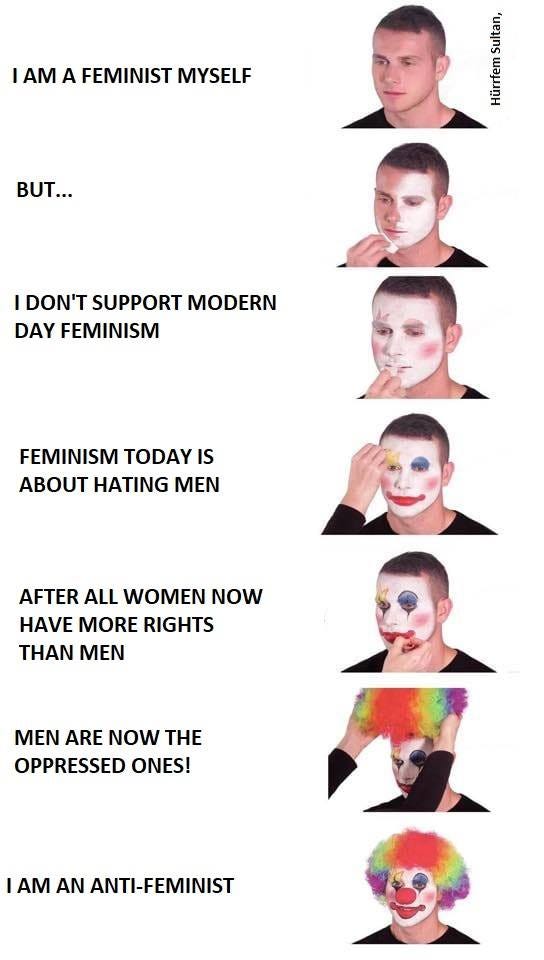
The real mystery is not why feminism gets blamed.
The real mystery is how anti-feminists keep walking past every useful clue.
Economic precarity?
Ignored.
Social media?
Ignored.
Capitalism?
Ignored.
Patriarchy?
Declared inadmissible.
Men’s emotional socialization?
Too gay, probably.
Women’s autonomy?
Suspicious.
Feminism?
Arrest her immediately.
And so Detective Anti-Feminist closes another case.
The culprit remains feminism.
The evidence remains missing.
The point remains untouched, lying quietly in the corner, waiting for someone with a working flashlight and a basic understanding of structural analysis to open the door.
The worst part is that 95% of these anti-feminists essayists are pick-me girls. Have they picked you yet? Why would you even WANT these men to pick you?
Bad weather, illness, food shortage, absorption in local native tribes. Solved it!
I love it! Very well analyzed, and I love your humor and writing style. :)
I'd just add one thing: I don't know in what corners of the manosphere you've been lurking around, but most of the sad anti-feminist rhetoric I've encountered is far less sophisticated than this. You describe what comes close to actual arguments. With structure. And logic. Bad logic, but still :))
I suspect that part of it is your own mind and ability to make sense of what mostly resembles a toddler's tantrum of thoughts messed up all over the place. A clown car with a badge, as you put it so well. :)
Every antifeminist really is “shadowboxing an argument [they] hallucinated instead of engaging with feminism.”
This! They always think it’s about devaluing men instead of ending a system built on subjugating and devaluing women. They think it’s about revenge instead of justice.
I’m so tired of telling these folks that we don’t have the energy to hate men. We need them to join us and help break the stupid system keeping us all boxed in.