
If Gender Roles Are Natural, Why Do They Need So Much Homework?
From conduct books to “wife school,” the history of “natural femininity” is mostly the history of people desperately teaching women to perform it correctly.

There are few phrases in the English language more immediately suspicious than “wife school.”
It sounds like something a satirical novelist invented after drinking too much coffee and reading one too many Facebook posts from a woman named Blessed Mama Bear Patriot. Unfortunately, no. It is real, aimed at teaching women how to become submissive, compliant wives within a conservative evangelical framework. The course promotes “proactive submission,” encourages women to defer to husbands, reframe complaints positively, and track emotional cycles so they can better serve their spouses.
And on a personal note, as someone who grew up in the Southern Baptist church, the idea of anything even tangentially connected to that ecosystem offering women a lesson plan on how to behave makes me want to open my calendar and search for the phrase emergency therapy sessions near me.
Because this is not happening in a vacuum. The Southern Baptist Convention has spent years publicly reckoning with a massive sexual abuse scandal. A 2022 independent Guidepost Solutions investigation found that influential Southern Baptist leaders had ignored, belittled, and intimidated survivors of sexual abuse for nearly two decades while protecting the legal interests of churches accused of harboring abusers. Earlier reporting from the Houston Chronicle and San Antonio Express-News identified about 400 Southern Baptist church leaders and volunteers who had faced allegations of sexual misconduct over roughly 20 years, including pastors, ministers, youth pastors, Sunday school teachers, deacons, and church volunteers, leaving behind more than 700 victims.
So forgive me if I am not especially eager to receive behavioral guidance from the same broader religious world where women and children were so often told to submit, forgive, stay quiet, protect the church, and trust male authority, all while that male authority was victimizing women and children with zero consequences.
That is the part that makes Wife School so much more disturbing than its beige internet packaging suggests. This is not merely a quirky conservative marriage course. It is part of a larger religious culture that has repeatedly taught women to soften themselves around male power, then acted shocked when male power behaved exactly like power with insufficient accountability tends to behave.
And listen. I have questions.
Most of them begin with: if this is supposedly natural, why does it require a syllabus?
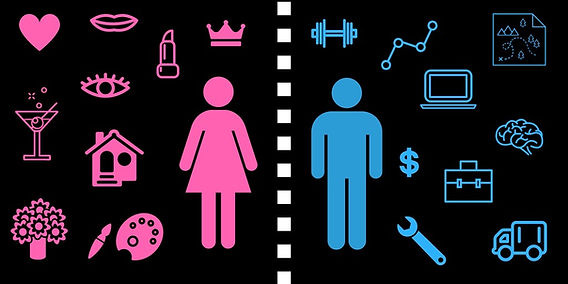
Because that is always the tell, isn’t it? The entire premise of “traditional gender roles” is that they are natural. Women are naturally submissive. Women are naturally domestic. Women are naturally nurturing. Women are naturally happier when they serve, defer, marry, mother, organize the spice cabinet, and orbit the male household like a cheerful domestic moon.
Fine.
Then why do these roles require centuries of conduct books, sermons, etiquette guides, legal restrictions, finishing schools, home economics curricula, purity talks, marriage manuals, women’s magazines, religious conferences, mommy blogs, influencer courses, and now apparently downloadable homework?
Nature usually does not need this many press releases.
No one had to create Oxygen School to convince humans to breathe. No one had to publish 400 years of advice literature on the proper feminine way to digest lunch. But somehow, “natural womanhood” has required an entire historical enforcement apparatus, and every time women wander too far from the approved script, someone shows up with a book, a pastor, a law, a psychiatrist, a school board, or a pastel PDF explaining how to behave.
That is not nature.
That is maintenance.
And maintenance is patriarchy’s confession.
If It’s Natural, Why Is There a Curriculum?
The history of gender roles is not the history of women naturally floating toward domestic submission like enchanted laundry sprites. It is the history of societies repeatedly teaching, rewarding, punishing, sentimentalizing, theologizing, and legislating femininity into existence. Gender roles do not survive because they are inevitable. They survive because a staggering number of institutions have worked very hard to make them feel inevitable.
Which brings us back to Wife School, the latest glittering little goblin in the long history of teaching women to behave.
The Black Plague School of Marriage Counseling
One of the most revealing details in The Guardian’s reporting is a story Dillehay tells about a woman frustrated that she has to remind her “germophile” husband to wash his hands. Dillehay’s advice was not, apparently, “perhaps this adult man could take responsibility for his own hygiene.” Instead, she suggested it would be better for the family to get “the black plague and die” than for the wife to keep treating her husband like a toddler.
Which is certainly one approach to marriage.
A terrible one, but an approach.
This is the core logic of submission culture: a man’s authority must be protected even from the consequences of his own behavior. If he will not wash his hands, the wife’s problem is not germs. The wife’s problem is tone. She must not nag. She must not mother him. She must not imply that he, the household leader, has somehow failed at the complex masculine art of soap.
Welcome to patriarchy, where apparently bubonic plague is preferable to a woman saying, “Did you wash your hands?”1
The most revealing thing about Wife School is not that it exists. It is that it belongs to a very old genre: the woman-improvement project. The specific language may be modern, but the structure is ancient. A woman is dissatisfied. A woman is angry. A woman is exhausted. A woman notices that her marriage, church, household, or community requires her to constantly shrink herself while calling it love.
And the answer?
Not structural change. Not mutual accountability. Not equal partnership. Not “maybe your husband should grow up and understand germ theory like an adult and wash his hands without instruction because he’s not a fucking toddler.”
No. The answer is that she must become better at submission.
Her resentment becomes a spiritual failing. Her frustration becomes nagging. Her exhaustion becomes poor attitude management. Her desire for reciprocity becomes rebellion. Her legitimate complaint gets dropped into the patriarchal blender and comes out as a personal growth opportunity.
Congratulations, babe. The problem is not the system. The problem is your tone.
Patriarchy, But Make It a Tandem Bike
Dillehay reportedly uses a tandem bike metaphor to describe marriage: the husband rides in front and steers, while the wife pedals behind him. She tells women, “You’re exerting effort without being in control.”
That line deserves to be put in a museum of accidental honesty.
Because yes. That is the arrangement. Women exert effort without control. They cook, clean, birth, soothe, manage, schedule, remember, sexually accommodate, emotionally regulate, and keep the family machine from wheezing itself into a ditch. But control? No, no. That belongs to the husband at the front of the metaphorical bicycle, presumably steering everyone toward God’s plan or an urgent care clinic because someone still did not wash his hands.
This is why the “natural gender roles” argument collapses so quickly under historical pressure. If women were naturally built for this, patriarchy would not have needed to spend centuries training them into it.
The Natural Woman Had a Reading List
The “natural woman” had a reading list.
From the late seventeenth to the mid-eighteenth century, there was a boom in conduct books for women, texts designed to instruct them in proper manners and moral behavior. Trinity Hall Cambridge notes that these books reveal anxieties about social conduct and the expectations placed on women.
That anxiety matters.
Conduct literature did not simply reflect womanhood. It tried to produce it. These texts taught women modesty, restraint, obedience, religious devotion, silence, politeness, and the endless management of their bodies, speech, and desires. Women were instructed not merely in what to do, but in how to be perceived doing it. Femininity became a performance of effortlessness that required constant effort.
Which is one of patriarchy’s greatest scams: making women work very hard to look naturally passive.
The ideal woman was supposed to be modest without seeming self-conscious, intelligent without appearing threatening, attractive without seeming vain, religious without seeming fanatical, sexually pure without being cold after marriage, deferential without looking resentful, and socially graceful without admitting she had been trained like a show pony with better gloves.
And when women failed, as human beings tend to do when handed an impossible assignment, the answer was always more instruction.
More books. More correction. More rules. More shame.
Separate Spheres: Hierarchy with Curtains
By the nineteenth century, this had developed into one of the most famous ideological cages in gender history: separate spheres.
Victorian gender ideology claimed that men and women were naturally suited to different worlds. Men belonged in public: work, politics, commerce, competition, money, ambition, law. Women belonged in private: home, children, morality, religion, comfort, decoration, emotional care. The ideology rested on supposedly natural differences, casting women as physically weaker but morally superior and therefore suited to domesticity.
Please appreciate the elegance of this trap.

Men got power, money, political authority, property, education, professional life, and legal identity. Women got moral superiority, which is a bit like being handed a beautifully embossed certificate that says Congratulations, You May Now Be Oppressed Poetically.
Separate spheres were sold as complementarity. In reality, they were hierarchy with curtains.
The domestic sphere was framed as women’s natural domain, but there was nothing natural about the legal and economic structures that trapped women there. Marriage laws, property laws, inheritance systems, educational restrictions, employment barriers, sexual double standards, and political exclusion all worked together to make women’s dependence appear inevitable. The cage was built, locked, wallpapered, and then called biology.
This is the trick: first deny women access to public power, then point to their absence from public power as proof that they were never suited for it.
It is the historical equivalent of pushing someone into a pond and then writing a bestselling book called Women: Naturally Damp.
Finishing Schools: Because Femininity Apparently Needed Final Edits
And because gender roles had to be performed correctly, not merely occupied, upper-class femininity needed even more formal polishing. Enter the finishing school.
Finishing schools historically focused on teaching young women social graces, deportment, etiquette, and upper-class cultural rituals. The goal was not intellectual independence. It was social presentation, marriageability, and class performance. Even the name gives the game away: women had to be “finished” into acceptability.
Again: if femininity is natural, what exactly needed finishing?
The posture? The silence? The way one entered a room? The careful ability to seem charming but not ambitious, educated but not intimidating, decorative but not frivolous, desirable but not desiring?
Finishing schools reveal something crucial about gender: femininity was not only about sex. It was about class, race, respectability, marriage markets, and social reproduction. A “proper woman” was not simply born. She was trained to signal the status of her family and future husband. Her body became a résumé. Her manners became currency. Her softness became proof that someone else had enough money to protect her from visible labor.
Nothing says “natural womanhood” like paying an institution to teach girls how to sit down correctly.
Home Economics: When the Prison Became a Laboratory
The story gets more complicated when we move into home economics, because history enjoys refusing to fit neatly into our little ideological drawers.
Home economics is easy to mock as “how to fold napkins and become Mrs. Patriarchy 1954,” and yes, it absolutely could reinforce domestic gender roles. But it also offered women a route into science, professional authority, public education, nutrition, consumer advocacy, public health, and academia.
That contradiction matters.
Home economics emerged in the late nineteenth century as a field that applied science, efficiency, and professional standards to domestic labor, and women such as Ellen Swallow Richards and Lillian Gilbreth used it to influence nutrition, household management, and consumer practices. The field has also been described as swinging between scientific education for women and vocational training for future wives and mothers, which is basically the whole gender-role contradiction wearing an apron and carrying a clipboard.
Home economics did not prove women naturally belonged in kitchens. It proved that once women were shoved into kitchens, some of them started taking measurements, founding disciplines, studying sanitation, rethinking labor, and turning the prison into a laboratory.
That is not the same thing as liberation, but it is historically important. Women have always found ways to carve power out of constrained spaces. The tragedy is not that women made domestic work intellectual. The tragedy is that domestic work had to be intellectualized before anyone would admit it was work.
This is one of the central gaslights of gender history: domestic labor is treated as sacred when men benefit from it, natural when women perform it, worthless when women demand compensation for it, and civilization-ending when women stop doing it for free.
The Housewife Had to Be Manufactured
By the twentieth century, especially after World War II, the idea of the natural housewife had to be manufactured all over again.
During the war, women entered industrial labor, military support roles, offices, factories, transportation, agriculture, and public life in highly visible ways. Then the war ended, men came home, and American culture launched one of its most aggressive re-domestication campaigns. Women did not simply glide back into the home because biology tugged them gently toward the vacuum cleaner. They were pushed by employers, policymakers, advertisers, educators, psychologists, religious leaders, popular culture, and a postwar political economy built around the male breadwinner ideal.
This is where Betty Friedan’s The Feminine Mystique becomes historically useful, even with all the important critiques of its white middle-class focus. Friedan challenged the postwar belief that fulfillment for American women had one definition: the housewife-mother. The “problem that has no name” was not simply personal sadness. It was the collision between women’s humanity and a culture insisting that marriage, children, sex, and appliances should be enough.
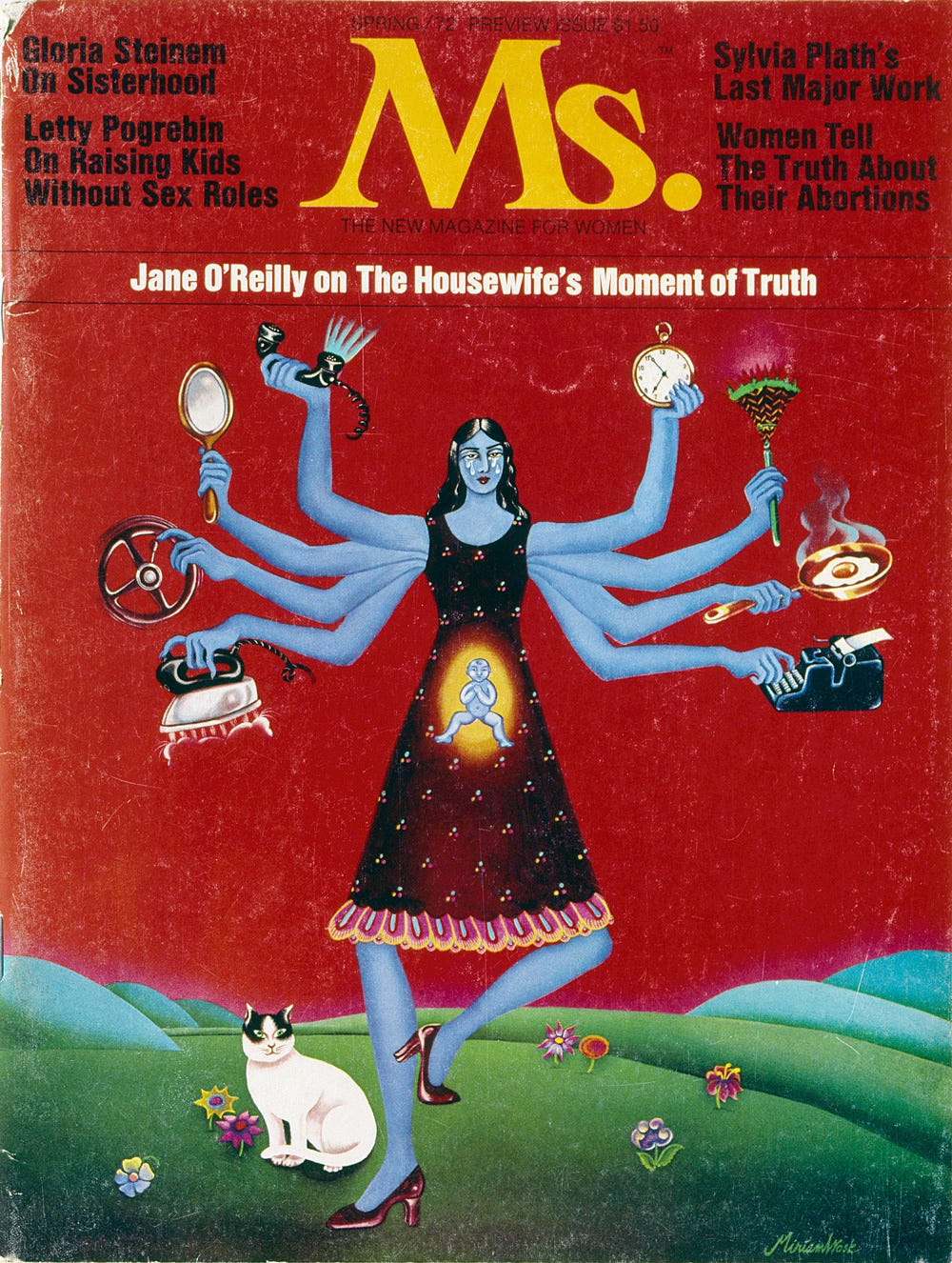
The key point is not that all housewives were miserable or that domestic life is inherently empty. That is too simple, and history punishes simplicity by making it look foolish in public.
The point is that women were told their dissatisfaction was individual failure rather than structural confinement.
If they felt trapped, they were ungrateful. If they wanted work, they were unfeminine. If they wanted education, they were threatening. If they did not want children, they were unnatural. If they wanted sex without compulsory motherhood, they were immoral. If they wanted a self beyond wife and mother, they were sick.
And sometimes, quite literally, they were pathologized.
Postwar anti-feminist psychology and popular “expert” culture often treated women’s independence as neurosis. The very existence of books like Modern Woman: The Lost Sex2 shows how much intellectual labor went into reasserting women’s domestic destiny after the disruptions of war. The “natural” family order had to be defended with pseudo-science, moral panic, and cultural propaganda because it was not simply reasserting itself.
Again, nature usually does not require an advertising campaign.
If the housewife was so natural, why did it take magazines, psychiatrists, advertisers, politicians, pastors, school curricula, television writers, and appliance companies working in chorus to produce her?
Why did women need to be told, over and over, that the home was enough?
Why did their desire for more have to be renamed illness?
Tradwife Culture: Obedience with Better Lighting
That same machinery continues today in tradwife culture, except now it has better lighting and affiliate links.
The modern tradwife aesthetic is not just about women staying home. It is about making submission look soft, beautiful, moral, and freely chosen, while stripping away the political and economic scaffolding that makes “choice” such a slippery little eel of a word. The Guardian has also described tradwife culture as a curated performance that packages domestic submission, motherhood, and feminine service as a nostalgic lifestyle, often obscuring labor, privilege, and political regression beneath the visuals.
A wealthy influencer baking bread in a sun-drenched kitchen is not the same as a working-class woman trapped in financial dependence. A woman choosing homemaking with legal rights, contraception, divorce access, and her own bank account is not the same as a woman told obedience is her divine assignment and marital sex is her obligation.
Choice matters.
But choices are made inside structures.
That is the part the tradwife fantasy works very hard to airbrush out.
Wife School is not just teaching women to be nicer wives. It is teaching them to interpret unequal power as moral order. It takes patriarchal hierarchy and translates it into personal spiritual discipline. It tells women that the problem is not male entitlement, not religious authoritarianism, not unpaid labor, not sexual obligation, not emotional asymmetry, not the way “leadership” often means “he decides and you cope.”
The problem is that she has not submitted correctly.
“A Husband Expects a Yes” Is Not Romance
That becomes especially disturbing when the subject turns to sex. The Guardian reports that Dillehay tells wives that “a husband expects a yes” when he asks for sex, citing Corinthians and framing refusal through religious obligation.
There is a word for a marital sexual ethic built around a husband “expecting a yes,” and it is not romance.
It is marital rape.
And again, I say this as someone raised in the Southern Baptist church: when a religious institution with a documented abuse crisis starts teaching women that holiness looks like sexual availability, submission, and obedience, the appropriate response is not polite curiosity. It is every alarm bell in the county climbing out of its tower and sprinting down the street.
Because we have seen what happens when churches teach women that male authority is sacred, female resistance is rebellion, and institutional reputation matters more than bodily autonomy. We have seen what happens when “forgiveness” becomes a muzzle, “submission” becomes a shield for abusers, and “biblical marriage” becomes a velvet rope around women’s ability to say no.
This is where the whole “traditional roles” conversation stops being quirky internet anthropology and becomes something much darker. Once submission is treated as a wife’s spiritual duty, the line between “loving sacrifice” and coercion becomes dangerously easy to blur. A woman’s body becomes another site where her virtue is measured by access.
And again: if women are naturally fulfilled by this arrangement, why does it require so much theological reinforcement?
Submission Is Not a Personality Trait
This is the old script in a new format.
Conduct books taught women to behave. Separate spheres taught women where they belonged. Finishing schools taught women how to perform classed femininity. Domestic ideology taught women that the home was their kingdom, while quietly making sure someone else held the deed. Postwar psychology taught women that wanting more was a symptom. Tradwife culture teaches women that obedience is empowerment if you film it in linen.
Wife School just adds course modules.
And this is why “gender roles are natural” is not a neutral claim. It is a political claim. It takes historical arrangements created by law, religion, economics, education, media, and violence, then pretends they emerged from the misty depths of biology.
But biology did not write conduct manuals.
Biology did not ban women from universities.
Biology did not create coverture.
Biology did not publish Victorian advice books.
Biology did not deny women the vote.
Biology did not fire women after marriage.
Biology did not write school dress codes.
Biology did not tell wives to submit to husbands.
Biology did not invent purity culture.
Biology did not create the mommy wars.
Biology did not decide that men “babysit” their own children while women “parent.”
People did that.
Institutions did that.
Power did that.
And power loves nothing more than disguising itself as nature.
The Panic Is the Proof
The real giveaway is the panic.
If traditional gender roles were natural, then women refusing them would not cause such hysteria. There would be no need to panic over women working, voting, divorcing, not marrying, not having children, using contraception, becoming doctors, becoming politicians, dating women, staying single, keeping their last names, wearing pants, opening bank accounts, demanding orgasms, or asking men to wash their own hands.
Yet every major expansion of women’s autonomy has been greeted as a crisis.
Women’s education would destroy femininity. Women’s suffrage would destroy the home. Birth control would destroy morality. Divorce would destroy marriage. Working mothers would destroy children. Queer women would destroy the family. Trans people would destroy gender. Feminism would destroy civilization. No-fault divorce would destroy men. Childfree women would destroy the birthrate. Women with standards would destroy dating.
At a certain point, one begins to suspect civilization is a bit dramatic.
At the very least it’s got the physical constitution of a Victorian orphan with tuberculosis and I think it might be time to give it a DNR.
What these panics reveal is not that women are defying nature. They reveal that gender hierarchy is fragile. It has to be defended constantly because people keep noticing it is not inevitable.
That is why feminist movements have always been so threatening. They do not simply demand rights. They expose the scaffolding.
The Home Has Always Been Political
Second-wave feminism’s famous claim that “the personal is political” mattered because it refused to treat marriage, sex, child-rearing, housework, and family life as private little islands floating outside power. It named the home as a political space. It insisted that gender was not only something that happened in legislatures and workplaces, but something enforced at the dinner table, in the bedroom, in the nursery, in the doctor’s office, in the church pew, and in the kitchen where someone was always expected to notice the trash needed taking out.
That is precisely why conservative movements are so invested in reclaiming the home. The household is not politically neutral. It never has been.
The “traditional family” is not just a family structure. It is a governance model.
Someone leads. Someone submits. Someone earns. Someone depends. Someone speaks. Someone softens. Someone decides. Someone adapts. Someone owns the public name, and someone does the invisible work that makes his life possible.
Call it natural enough times, and maybe no one will notice it is a power arrangement.
The Syllabus Gives Away the Scam
That is why Wife School matters. Not because every woman who takes a course on marriage is oppressed. Not because homemaking is bad. Not because religious women are foolish. Not because domestic labor is worthless.
The problem is not women choosing home, marriage, motherhood, faith, domesticity, or care.
The problem is a political culture that keeps insisting those things are women’s natural destiny while treating every alternative as rebellion, pathology, selfishness, or sin.
The problem is calling submission freedom.
The problem is calling hierarchy harmony.
The problem is telling women that peace means becoming easier to control.
And the problem is pretending any of this is new.
Wife School is funny because it sounds absurd. It is frightening because it is familiar. It belongs to a long tradition of teaching women to mistake obedience for virtue, exhaustion for love, and self-erasure for peace.
But the need for all that instruction gives away the whole scam.
If submission were natural, it would not need a course.
If domesticity were destiny, it would not need centuries of manuals.
If femininity were instinctive, it would not require etiquette training, purity pledges, dress codes, marriage seminars, conduct books, finishing schools, lifestyle influencers, and theological customer support.
And if patriarchy were truly inevitable, it would not be working this hard.
Additional Reading
Betty Friedan, The Feminine Mystique (1963).
Elaine Tyler May, Homeward Bound: American Families in the Cold War Era.
Stephanie Coontz, The Way We Never Were: American Families and the Nostalgia Trap.
Judith Butler, Gender Trouble: Feminism and the Subversion of Identity.
Simone de Beauvoir, The Second Sex.
Joan Wallach Scott, “Gender: A Useful Category of Historical Analysis,” The American Historical Review, 1986.
Kristin Kobes Du Mez, Jesus and John Wayne: How White Evangelicals Corrupted a Faith and Fractured a Nation.
Beth Allison Barr, The Making of Biblical Womanhood: How the Subjugation of Women Became Gospel Truth.
That said no grown woman should have to tell a grown man to wash his hands. The men aren’t lonely enough.
My least favorite book I have ever owned or annotated.
"Which is one of patriarchy’s greatest scams: making women work very hard to look naturally passive."
All of it is so absurd — painfully absurd.
Thank you.
If gender roles are “natural”, why do they need so much ENFORCEMENT?
That's what I want to know.