
The Long Realignment and the Short Attention Span of the Internet
History is a process, not a screenshot.

Recently I did the thing I tell you not to do, which is read the YouTube comments and respond to them as if the person writing them is a fully literate and intelligent human being that cares about facts, instead of a victim of a traumatic brain injury suffering from a gas leak.
It started innocently enough. Someone declared, with the confidence of a man who has never been asked to cite a source for anything in his life, that “The Confederacy was the dumbest thing the Democrats ever did.” Then came the predictable follow-up from someone else: what about the party realignments? You know, the documented, decades-long shift in coalitions, voting blocs, platforms, and regional loyalties that historians and political scientists have been writing about for generations.
And right on schedule, we got the sacred chant of internet pseudo-history: “You people lie about a party switch. Show a single proof. Learn real history.”
Here is the problem. “Party switch” is shorthand. It is not a spell you cast on one Tuesday afternoon in 1964 where everyone lines up, trades jerseys, and the camera cuts to credits. What happened is called party realignment, and it unfolded over decades, with economics, race, labor, religion, and regional identity pulling the parties into new coalitions slowly, painfully, and very publicly.
The reason this argument never dies is that one side is talking about a historical process, and the other side is pretending history only counts if it arrives as a single screenshot.
So let’s do this the annoying way. Let’s talk about evidence.
They want “one proof,” so let’s start with the kind historians love: government documents
In 1948, President Harry Truman signed Executive Order 9981, declaring that there “shall be equality of treatment and opportunity for all persons in the armed services without regard to race, color, religion or national origin.” That is not vibes. That is the federal government, in writing.
That same year, segregationist Democrats who were furious about civil rights language in the national Democratic platform bolted and ran a third-party presidential ticket as the States’ Rights Democratic Party, better known as the Dixiecrats.1 Their platform is refreshingly honest in a way modern commenters never are. It explicitly states, “We stand for the segregation of the races…” and rails against civil rights as federal interference.
Already, we are watching the Democratic coalition strain at the seams. Not because of a sudden “switch,” but because race is becoming a sorting mechanism for the political parts of the mid-20th century.
Now fast-forward to 1957, when Senator Strom Thurmond of South Carolina, a Democrat at the time, decided to make history in the worst way possible. He delivered a then-record filibuster lasting 24 hours and 18 minutes to try to block the Civil Rights Act of 1957. If you want a primary source for what he thought he was doing, the Congressional Record is right there, with Thurmond opening by announcing, “Mr. President, I rise to speak against the so-called voting-right bill…”
Then comes the part people really hate, because it ruins the neat little morality play where party labels are eternal and identity is inherited like a cursed heirloom. In September 1964, Thurmond joined the Republican Party. On its own, that switch is not the whole story. It is a high-profile mile marker in a broader political realignment, often discussed in connection with the “Southern strategy,” as many white Southern conservatives increasingly moved into the GOP while the national Democratic Party made civil rights and federal enforcement harder to ignore. In other words, Thurmond’s move was not an isolated personal reinvention. It was a signal of where the segregationist, states’ rights wing of American politics was headed, and which party was willing to make room for it.
That is not “spin.” That is a timeline.
“But Republicans passed the Civil Rights Act,” the commenter yells, thinking this is a trap
It is true that Republicans were crucial votes for the Civil Rights Act of 1964. It is also true that this fact is routinely deployed in the laziest possible way, as if it cancels out everything else about mid-century party coalitions.
Here is what the official record says: the Senate passed the Civil Rights Act 73–27, and the House passed the amended bill 289–126. Those are the totals.
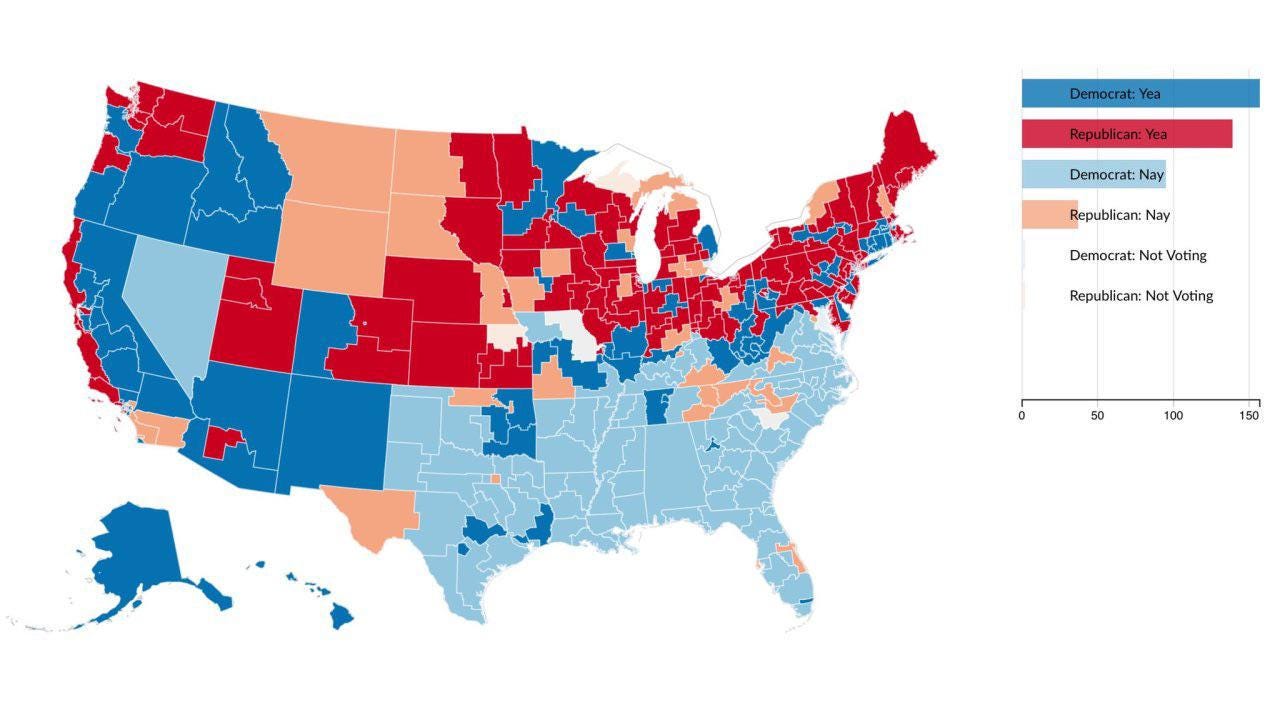
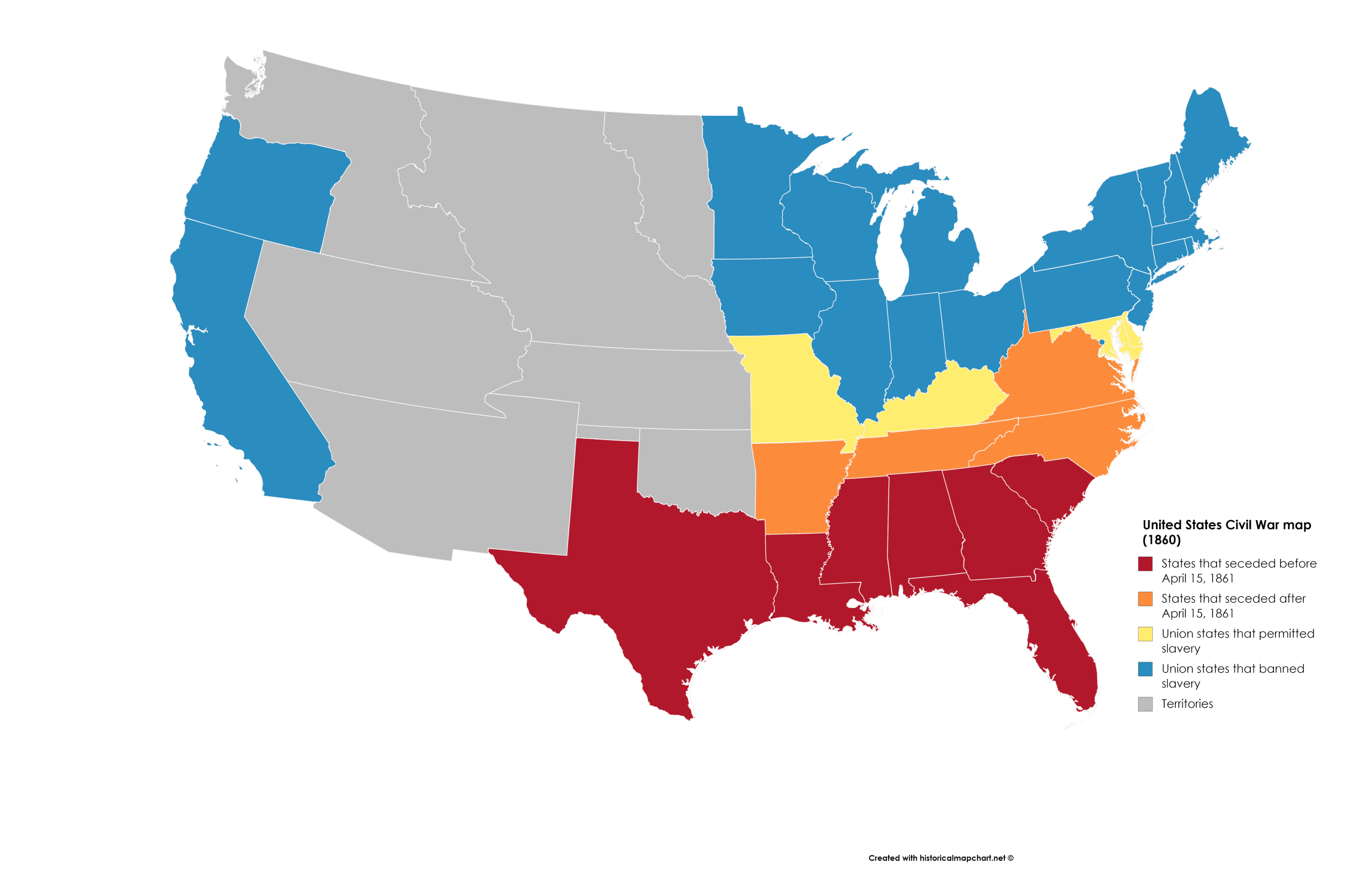
If you look at the vote breakdowns, what you see is not “Republicans good, Democrats bad.” What you see is that the real split was regional and ideological, with many Southern Democrats voting no and many Northern Democrats voting yes, while Republicans outside the South largely supported the bill. That is exactly what you would expect in a coalition that is breaking apart in slow motion.
So when someone says, “Explain how it was Republicans who passed the Civil Rights Act,” what they are really doing is refusing to acknowledge the messy truth: both parties contained competing wings, and the civil rights era was the period when those wings began sorting into the parties we recognize today.
Or, in other words, a realignment.
Strange how that works.
The realignment is not a conspiracy theory. It is a documented political shift.
If you want something more rigorous than “a historian on the internet told me,” political scientists and economists have done the homework with data.
A widely cited paper by Ilyana Kuziemko and Ebonya Washington lays out the central point plainly: white Southerners left the Democratic Party en masse in the second half of the twentieth century, and the evidence strongly links that shift to reactions against national Democratic civil rights initiatives. In other words, race was not a side issue. It was a driver of party and policy shifts.
And if you want the long view on the South specifically, Earl and Merle Black’s work tracks the slow rise of Republican power in the region over decades. The keyword there is slow. The entire point is that this was not instantaneous.
This is why the “show a single proof” demand is such a tell. It is not a request for evidence. It is a way to reject the form evidence takes.
“David Duke ran as a Democrat,” they say, as if that’s the end of the discussion
This is another favorite comment-section magic trick: find one messy fact, strip it of context, wave it around like a crucifix.
Yes, David Duke ran in the Democratic presidential primaries in 1988. He then sought the Populist Party nomination, and later that same year he changed his affiliation from Democrat to Republican. That is not a secret. It is documented.
More importantly, extremists attach themselves to whoever they think will amplify their worldview. Duke publicly urged support for Donald Trump in 2016. That is also documented, including in mainstream coverage at the time.

The point is not “one party is pure and the other is evil.” The point is that modern political identities have histories, and those histories have trajectories. That is what realignment means.
If you want the simplest modern “spot the coalition” clue, follow the Confederate flag
This is where my commenter really did not want the conversation to go, because it makes the entire “Democrats are the Confederacy forever” line collapse under the weight of modern reality.
On January 6, 2021, a supporter of Donald Trump carried a Confederate battle flag through the U.S. Capitol. There is a reason that image went viral. It was not subtle.
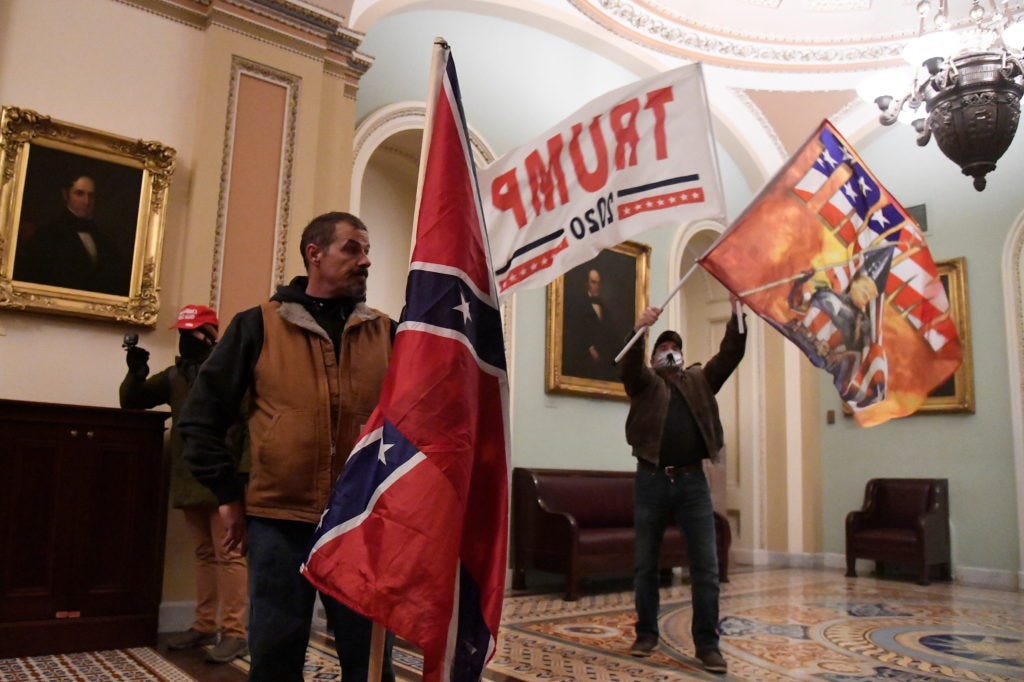
And when the country debates Confederate monuments and memory, it is not hard to see which modern political coalition most loudly frames Confederate symbols as “heritage,” argues that removal is “erasing history,” and turns the flag into a culture-war prop. In 2017, Trump complained that statue removals were “ripping apart” American history and culture.
In 2021, the House passed a bill to remove Confederate statues from the U.S. Capitol, 285–120, with dozens of Republicans joining Democrats to support removal, and all the votes against coming from Republicans.
Nobody needs a time machine to understand what coalition Confederate nostalgia lives in now.
And then the comment section did what it always does when it runs out of facts
After I laid out a basic timeline, my favorite kind of response arrived: not a counterargument, not a source, not even a coherent claim. Just insults, “fake degrees,” and “the Democrat party always was and will always be the party of racism,” repeated like a rosary.
This is the part I want you to notice, because it is the real story of how misinformation survives. When evidence shows up, the argument pivots from history to identity. The goal becomes not “what happened,” but “my team can never be guilty.” That is why the timeline makes them furious. If the coalition changed, then moral accounting gets complicated, and complication is the one thing the internet cannot emotionally tolerate.
So I replied, honestly, that they would receive a zero in my class.
Not because they disagreed with me. Disagreement can be productive. A good student can disagree with a professor and still do well, if they can argue with sources, logic, and evidence.2
They would receive a zero because they refused to engage evidence at all.
History is not what you can shout the loudest. It is what you can document, contextualize, and defend. If you demand “a single proof” for a decades-long realignment, and then ignore the documents when they are handed to you, you are not doing history. You are doing performance.
And performance does not get points.
Important note, the Dixiecrats really hated the term “Dixiecrats” which is exactly why I will always and forever refer to them as the Dixiecrats.
Something a certain psychology student at OU should take note of, but probably doesn’t have the braincells to cope with.
You continue to be my heroine fighting the good fight against historical dumbing down online✨