
The Men in My Mentions Proved My Point
I said patriarchy trains boys to confuse critique with persecution. Then the comments section brought visual aids.

A while ago, I posted what I thought was a fairly straightforward point:
Men and boys are not in crisis because of feminism. They are in crisis because patriarchy taught them to expect to be the center of the universe while putting in very little emotional effort and expecting women to applaud them like trained seals. Now that many of them are not getting what they were told to expect, they often do not have the emotional tools to handle disappointment, rejection, accountability, or women’s refusal to organize their lives around male approval.
In other words, this is a skill issue.
Because the internet is a cursed pedagogical laboratory with push notifications, several men immediately arrived to demonstrate the concept in real time. Not all men, obviously. But enough men. Enough men to form a focus group, if not a statistically significant sample size.
The replies were, predictably, a buffet of wounded indignation. I was accused of prejudice. I was accused of victim-blaming. I was accused of grouping all men into one stereotype. I was called a heartless sexist bigot being paid a “professor salary” to turn out more heartless sexist bigots from my allegedly luxurious academic bubble.
First of all, “professor salary” is adorable. Even when I was lecturing full time, I was not exactly lounging on a chaise made of money while a butler fed me grapes and whispered, “Another patriarchy takedown, madam?” Now I have 57 paid subscribers and am compensated primarily in spite, caffeine, and the faint hope that maybe fewer people will keep taking life advice from the same patriarchal handbook currently setting the house on fire if I offer an alternative.
Second, and more importantly, patriarchy does not mean “men are bad.” It means boys and men are often trained to experience basic accountability as persecution, critique as hatred, and women’s refusal to flatter them as social collapse. Which is, incidentally, exactly what the replies did.
I did not say men are inherently terrible. I did not say every man is personally responsible for every problem on earth. I did not say women are flawless woodland spirits who emerge from moss beds carrying soup and intersectional praxis. I said patriarchy trains people.
And my God, did some of the trained seals start clapping.1

“Not All Men” and the Tiny Funeral for Reading Comprehension
One of the most common responses to any feminist critique of patriarchy is the classic “not all men.” It has a close cousin: “Why should any man behave better if all men are judged by the worst of us?” This would be a useful objection if the original claim had been “all men are the worst of men.” But that was not the claim.
The claim was that patriarchy, as a system, teaches boys and men certain expectations about power, attention, emotional expression, entitlement, and women’s labor.
Many men hear “patriarchy does this to men” and translate it into “you, personally, Kevin, are history’s greatest monster.”2 That translation error is not incidental. It is part of the problem. If your first response to a systemic critique is to demand individual reassurance, you are already showing how much you expect the conversation to bend around your feelings.
Systems are not the same thing as individual character. When historians talk about monarchy, we are not saying every king or queen that ever was, was the most evil being to ever walk the earth. When we talk about white supremacy, we are not saying every white person wakes up and consults a laminated racism checklist over breakfast. Systems shape behavior. They reward certain actions, punish others, and teach people what to expect from the world.
R. W. Connell and James W. Messerschmidt’s work on hegemonic masculinity argues that masculinity is not simply a biological fact or a collection of individual personality traits. It is a hierarchy of gendered expectations, with certain versions of manhood culturally rewarded over others. Their concept has shaped gender studies, sociology, criminology, education, and health research precisely because it helps explain how gender norms become social instructions rather than private quirks.
Patriarchy teaches boys that masculinity means control, emotional invulnerability, sexual access, public authority, and distance from anything coded feminine. It teaches them that anger is strength, grief is weakness, care is emasculating, and women’s attention is a resource owed to them if they perform masculinity correctly. Then, when the world does not hand them the prize they were promised, many men experience that not as disappointment, but as theft.
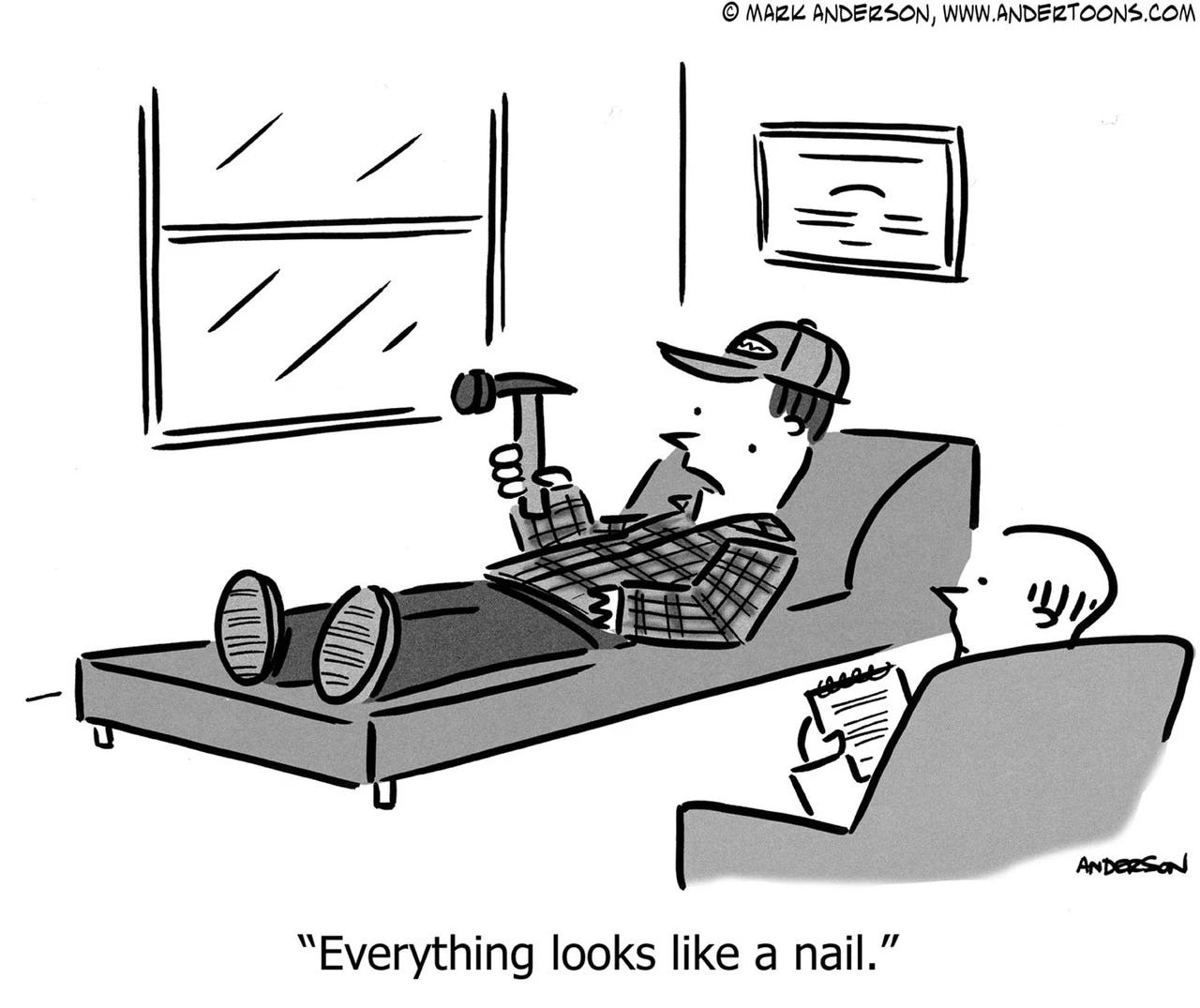
That is the crisis. Not “men are monsters.” Not “boys are born bad.” Not “women good, men bad, please clap.” The crisis is that boys are being handed a broken emotional toolkit and then told the hammer is the only instrument a real man should need.
Patriarchy Hurts Men Too, Which Some Men Only Admit When They Want to Blame Women
One man accused me of victim-blaming men and boys. Another said men are really in crisis because oligarchs are “vampires” sucking the life out of America.
Now, listen. The oligarchs are absolutely vampires. No notes. They are wearing Patagonia vests instead of capes, but spiritually, yes, Dracula with a quarterly earnings call.
Economic precarity matters. Loneliness matters. The decline of social institutions matters. Young people of all genders are living through unstable housing, unstable employment, political radicalization, social isolation, digital algorithmic alienation, and a general sense that the future has been replaced by a subscription service. But patriarchy is not separate from those problems. It is one of the ways people are taught to understand them.
If a man feels lonely, patriarchy often tells him the problem is women. If a man feels economically powerless, patriarchy tells him he has been robbed of the breadwinner status that was supposedly his birthright by women in the workplace. If a man feels sexually rejected, patriarchy tells him women have become too picky, too selfish, too feminist, too fat, too old, too educated, too ruined by cats, too busy voting, too unwilling to organize their lives around his emotional weather. If a man feels lost, patriarchy offers him a map where every road leads back to controlling women.
This is why it matters to be precise. Men and boys really are struggling. Equimundo’s State of American Men report explicitly frames men’s lives through questions of purpose, relationships, precarity, isolation, and hope. It does not require us to pretend men are fine. It asks us to take seriously the social conditions shaping their lives.
The data on male friendship and isolation also matters here. The American Perspectives Survey found that Americans report fewer close friendships than they once did, communicate with friends less often, and rely less on friends for personal support. The same research has been used to show a particularly sharp decline in men’s social circles: in 1990, a majority of men reported having at least six close friends, while by 2021 that number had dropped dramatically, and 15 percent of men reported having no close friendships at all.
That is not nothing. Loneliness matters. Isolation matters. The collapse of male friendship matters. The fact that many men are taught to pour all emotional intimacy into a romantic partner, then panic when women are unwilling to be girlfriend, therapist, mother, confessor, maid, muse, sex object, and emotional landfill all at once, matters.
But that is exactly why patriarchy has to be part of the analysis. Feminism did not invent male loneliness. Feminism did not close the factories, destroy unions, gut wages, atomize communities, or create algorithmic sludge pits where teenage boys are fed misogyny by men with microphones and unresolved daddy issues.
But feminism is often blamed because it is easier to yell at women than to ask why the entire social order has trained men to confuse dominance with stability.
The “Skill Issue” Is Not a Joke, Except Where It Is Extremely Funny
I keep coming back to “skill issue” because it is funny, but also because it is true. Emotional literacy is a skill. So are accountability, vulnerability, apology, rejection, grief, loneliness, and the ability to listen without immediately centering yourself. Hearing criticism of a system you benefit from without pretending someone has thrown you personally into a volcano is a skill. Respecting women who do not flatter you is a skill. Building friendships that do not depend on misogyny as social glue is a skill. Learning how to be a person without needing a woman nearby to absorb the emotional shrapnel is also, unfortunately, a skill many men were never encouraged to develop.
The American Psychological Association’s guidelines for psychological practice with boys and men do not frame masculinity as an individual moral failure. They define masculinity ideology as a set of descriptive, prescriptive, and proscriptive beliefs about boys and men. In other words, masculinity is not just “what men are.” It is what boys and men are told they should be, should not be, and must never be caught being. The APA also discusses gender role strain: the distress boys and men may experience when they violate masculine norms, fail to meet them, or are punished for deviating from them.
This is the part the “you just hate men” crowd refuses to hear. Patriarchy does not merely hand men power. It also narrows the range of acceptable humanity available to them. A boy who cries is mocked. A boy who is gentle is feminized. A boy who seeks help is weak. A man who loves women as people rather than prizes risks being told he has been domesticated, softened, ruined, or a “simp.”3
Then these boys grow up and are told they should lead households, run governments, dominate workplaces, interpret women’s boundaries, manage disappointment, build relationships, become fathers, and somehow navigate a world where women increasingly have the legal, economic, and social power to say no. And many of them cannot handle it.
Not because they are biologically incapable. Not because they are uniquely evil. Not because women are better humans by nature. Because they were trained badly. And when women say, “This training is bad,” too many men hear, “You are bad,” and react accordingly.
Again: skill issue.
“Maybe the Issue Is Humanity in General”
Another reply asked whether the problem was really just “humanity in general.” This is one of those statements that sounds reasonable if you squint hard enough and avoid all of recorded history.
Yes, humanity is messy. Humans are capable of selfishness, cruelty, cowardice, resentment, and posting absolute nonsense on the internet with the confidence of a man explaining menstruation to a gynecologist.
Women can be terrible. Women can be abusive. Women can be narcissistic. Women can uphold patriarchy. Women can enforce gender norms with the dedication of a border collie herding sheep into a burning barn. No serious feminist historian is arguing that women are incapable of harm.
But “everyone is flawed” is often used to sand the fingerprints off power.
The question is not “Can women also be bad?” The question is: whose bad behavior has historically been normalized, legalized, excused, institutionalized, romanticized, and built into the structure of family, church, state, medicine, education, law, and culture?
That is where patriarchy enters. Patriarchy is not “men are uniquely sinful.” It is a system that has historically given men disproportionate authority in public life, private life, economic life, religious life, political life, and sexual life, while teaching everyone that this arrangement is natural, moral, biological, divine, efficient, romantic, or simply inevitable.
That does not mean every man is powerful. It does mean masculinity has been culturally associated with authority, control, rationality, leadership, and public life, while femininity has been associated with care, submission, emotional labor, dependency, and private life.
When those associations start to break down, some people experience equality as loss.
That is not “humanity in general.” That is power throwing a tantrum because someone touched its toys.
The Manosphere Is Patriarchy With a Ring Light
The modern “male crisis” conversation often presents itself as compassionate concern for men and boys. Sometimes that concern is real. Men are struggling with loneliness, suicide, addiction, isolation, educational disengagement, and a lack of meaningful community. Those things matter. But the loudest voices claiming to care about men rarely seem interested in helping men become emotionally healthy, mutually respectful, socially connected human beings.
Instead, they sell grievance. They tell men that women are the problem. Feminism is the problem. Queer people are the problem. Single mothers are the problem. Birth control is the problem. No-fault divorce is the problem. Women’s education is the problem. Women having standards is the problem.
The manosphere does not rescue men from patriarchy. It repackages patriarchy as self-help.
Recent research on online misogyny and masculinity influencers has raised concerns about how boys encounter misogynistic content online. Dublin City University’s Anti-Bullying Centre, where Debbie Ging’s work on digital media, gender, online anti-feminism, incels, and male supremacist ideology is central, has developed resources specifically addressing the impact of masculinity influencers on teenage boys.
That matters because the manosphere offers boys a story. Not a good story. Not a true story. But a story with villains, rewards, rituals, and a very flattering mirror. It tells men they are suffering because women have stopped obeying. It tells them healing means domination, confidence means contempt, and emotional regulation means never admitting vulnerability unless it can be weaponized against women later.
And then, when women point out that this is dangerous, we are accused of hating men.
No. I hate the system that tells men the only way to be whole is to be in charge of someone else. I hate the system that teaches boys to amputate parts of themselves and call the wound masculinity. I hate the system that tells men anger is the only acceptable emotion and then acts surprised when the world is full of angry men. I hate the system that convinces men they are entitled to women’s care while training them to despise the very traits that make care possible.
That is not misandry. That is analysis.
Entitlement Is Not the Same Thing as Need
In Entitled: How Male Privilege Hurts Women, Kate Manne argues that male entitlement extends beyond sex into admiration, bodily autonomy, knowledge, power, and care. In interviews about her work, she has framed misogyny not merely as individual hatred of women, but as a system that enforces patriarchal norms and punishes women who refuse to give men what they have been taught they are owed.
That distinction matters because need is human, while entitlement is political. A man needing love, care, intimacy, friendship, sex, belonging, respect, purpose, and tenderness is not a problem. Those are human needs. Everyone has them. Everyone is shaped by whether they receive them. The problem begins when those needs are converted into debts women supposedly owe.
“I am lonely” is a feeling. “Women should lower their standards because I am lonely” is entitlement. “I want care” is human. “Women are selfish if they do not provide me care on demand” is entitlement. “I feel rejected” is pain. “Women must be punished for rejecting me” is misogyny. “I am struggling” deserves compassion. “I am struggling, therefore feminism has ruined society and women must become more obedient” deserves a shovel and a shallow grave.
This is why the replies to my post were so useful. They did not merely object. They demanded. They demanded reassurance, exception, sympathy, and the immediate softening of a critique because it made them uncomfortable. The first move was not “How do we help boys develop better emotional tools?” It was “How dare you say the tools we were given are broken?”
Aggrieved Entitlement, or: Where Is My Throne?
Sociologist Michael Kimmel has described “aggrieved entitlement” as the experience of feeling entitled to something and then experiencing not receiving it as humiliation.
That phrase deserves to be bronzed and placed above the entrance to every comment section where men are furious that women are discussing patriarchy without first issuing a warm blanket and a personal exemption form.
Aggrieved entitlement helps explain why equality can feel like oppression to people who expected dominance. It explains why some men experience women’s independence not as freedom, but as abandonment. It explains why women’s criticism becomes “misandry,” women’s boundaries become “cruelty,” women’s standards become “hypergamy,” women’s education becomes “indoctrination,” and women’s refusal to soothe male discomfort becomes evidence that feminism has destroyed civilization.
Patriarchy promised men a throne. Not all men got one, obviously. Many men were exploited, impoverished, racialized, colonized, disabled, criminalized, marginalized, and ground under the boot of other hierarchies. Patriarchy does not distribute power equally among men. It never has. But it still sold men a story about what they were owed as men: a wife, a household, authority, respect, sex, children, a family name, public deference, emotional service, domestic labor, and the right to be the default human subject around whom others orbit.
Then social movements came along and said, actually, women are people. Some men have still not recovered from the shock.
“Men Are Turning Away”
One reply informed me that as men stop giving women “attention or concern,” women will need to “learn to defend themselves from consequences.” This was meant, I assume, as a threat. It landed more like a weather report from the Republic of Proving My Point.
Because there it is: the imagined punishment for women not behaving properly is male abandonment, male indifference, and male withdrawal of protection. This is old. Dusty old. Victorian fainting couch old. Antebellum paternalism old. “Women have only one right, the right to protection, and protection requires obedience” old.
Patriarchy has always loved this bargain. Obey, and men will protect you. Submit, and men will provide. Be pleasing, and men will care. Stay in your place, and men will call it love. But the protection was always conditional. Women were protected as long as they were useful, compliant, respectable, sexually available within approved boundaries, reproductively available within approved boundaries, and grateful for the arrangement. The moment women wanted autonomy, the protection would vanish.
This is why the threat “men are turning away” does not terrify me in the way it is supposed to. Women have been defending themselves from the consequences of men’s choices for centuries. Women have defended themselves from laws they did not write, wars they did not declare, pregnancies they did not freely choose, economies that underpaid them, medical systems that dismissed them, churches that subordinated them, and households that treated their labor as natural rather than necessary.
So when men threaten to stop giving women “attention,” forgive me if I do not immediately collapse onto a chaise in mourning.

Male attention has not historically been an uncomplicated blessing. Sometimes it is love, partnership, friendship, solidarity, tenderness, desire, collaboration, and care. And sometimes it is surveillance, entitlement, harassment, control, violence, and a man in your mentions explaining that women are toxic narcissists because he is very calm and rational and definitely handling disappointment well.
The Point Was Never That Men Are Hopeless
The saddest part is that none of this has to be inevitable. Men are not doomed to emotional incompetence. Boys are not born entitled. Masculinity does not have to be a haunted house where every room contains either rage or silence.
There are men who know this. There are men who have done the work, who build real friendships, parent with tenderness, hear women’s criticism without needing to turn it into a courtroom drama starring themselves as the accused, and understand that feminism is not asking them to vanish. It is asking them to stop mistaking domination for identity.
The problem is not men existing. The problem is a system that teaches men to understand equality as humiliation. That is exactly why the backlash to my post was so revealing. I said patriarchy trains boys and men to expect women’s applause. Several men replied by demanding reassurance, exception, praise, deference, nuance, sympathy, and immediate protection from the discomfort of being discussed as part of a gendered social system.
They did not disprove the point. They footnoted it.
I do this work because I care. Not because I think men are disposable. Not because I enjoy being yelled at by strangers whose reading comprehension arrives on a three-day delay. Not because I am making a lavish “professor salary” from the feminist-industrial chaise lounge complex.4
I do it because patriarchy is killing us. It is killing women through violence, control, medical neglect, forced pregnancy, economic inequality, and the thousand daily degradations of being told we exist to serve, soothe, smile, and submit. It is killing men too, through isolation, emotional repression, grievance politics, violence, addiction, despair, and the lie that being loved is less important than being obeyed.
Feminism did not create this crisis. Feminism is just one of the few traditions honest enough to name it.
So no, men and boys are not in crisis because women got too mean, too educated, too independent, too feminist, too unwilling to clap like trained seals. They are in crisis because patriarchy promised them a throne and gave them a cage.
And some of them are so attached to the cage, they cannot even see the bars.
This is an insult to seals and I’m sorry.
And maybe Kevin is, I don’t know his life.
A man on substack literally called my father, a man who has been married to the same woman 50+ years because he loves and respects his wife, a simp. At this point, we can all admit the manosphere doesn’t actually want men to be in satisfying long-term relationships with women.
I fucking wish.
Your posts responding to male critiques in your comment section are my favorite. They show so clearly what our problem is, and why it’s so essential that we wake up now. Sadly, so many women as just as conditioned into supporting a power structure that is killing them. Killing the planet. We are at an evolutionary pinch point.
“Professor’s salary” made me laugh. I’ve looked back over ten years and mine has remained fairly stagnant the entire time, and actually in negative growth with increases in healthcare premiums, etc. resulting in the same - or lower - net pay each paycheck. This is despite having a higher teaching load than ever.