
The New Missionaries: Trump Is Exporting America’s Culture War
The United States is using foreign aid, Christian political networks, and colonial legal systems to impose Republican ideas about gender and reproduction overseas. Then it calls that sovereignty.

Empires have always exported more than soldiers.
They export laws. They export religions. They export economic systems and political hierarchies. They export entire theories of human civilization, including remarkably specific instructions about what a family should look like, how a woman should behave, which forms of sex should be criminal, and who gets to control reproduction.
Then, after imposing those ideas through churches, schools, courts, colonial governments, and occasionally the barrel of a gun, they begin describing them as local tradition.
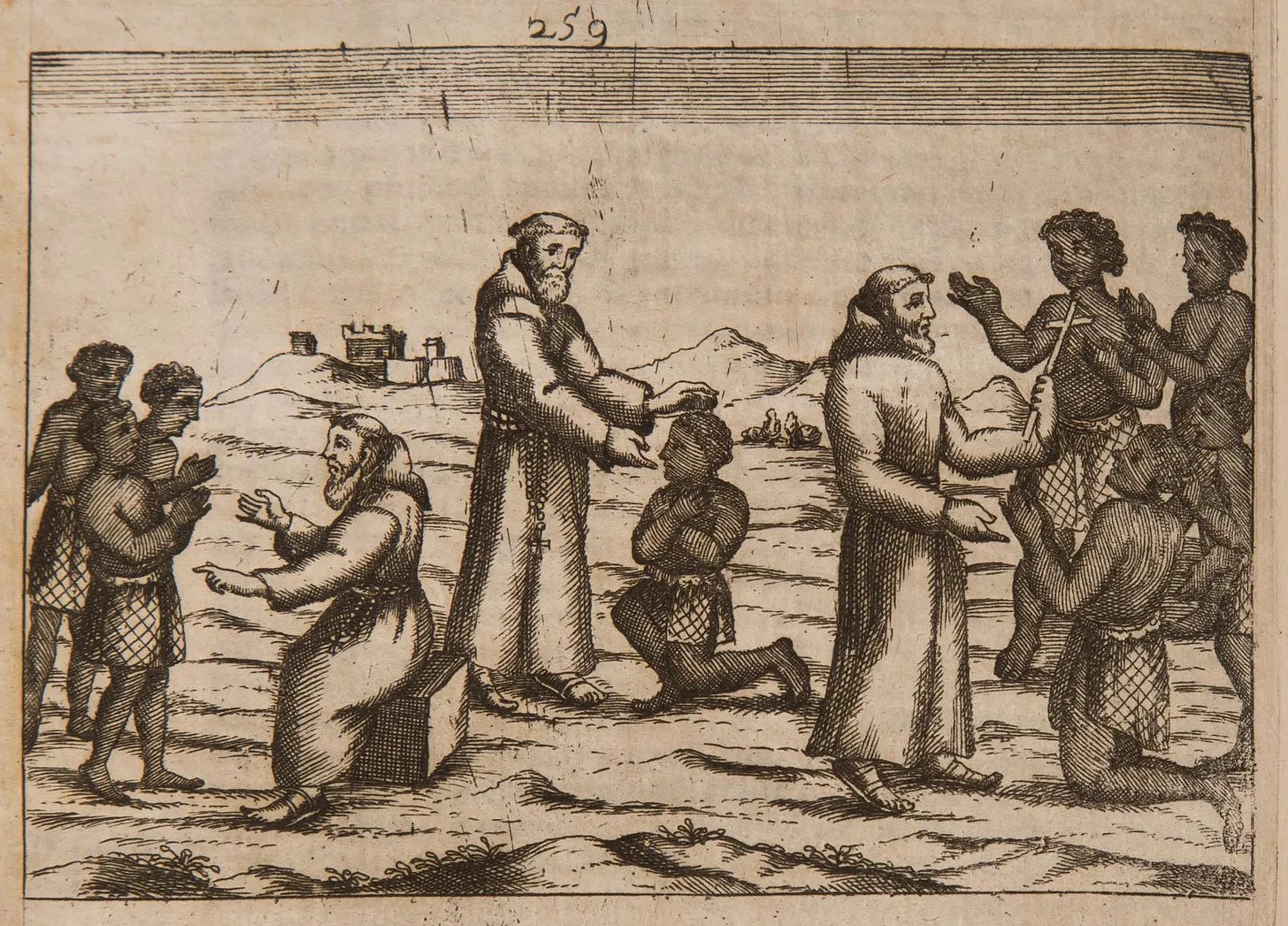
It is one of imperialism’s more successful magic tricks. First, a foreign power reorganizes a society around its own moral assumptions. Then everyone is encouraged to forget where those assumptions came from.
European colonialism did not invent patriarchy in Africa. Precolonial African societies were not a single feminist paradise temporarily ruined by white men, because Africa is a continent containing thousands of cultures rather than a convenient blank canvas for someone else’s political allegory. Gender inequality, restrictions on sexuality, and reproductive control existed in many forms before colonization.
But colonialism changed those systems. It codified some practices, suppressed others, elevated particular men as intermediaries, and used European Christianity and law to impose new definitions of marriage, sexuality, domesticity, and legitimate authority.
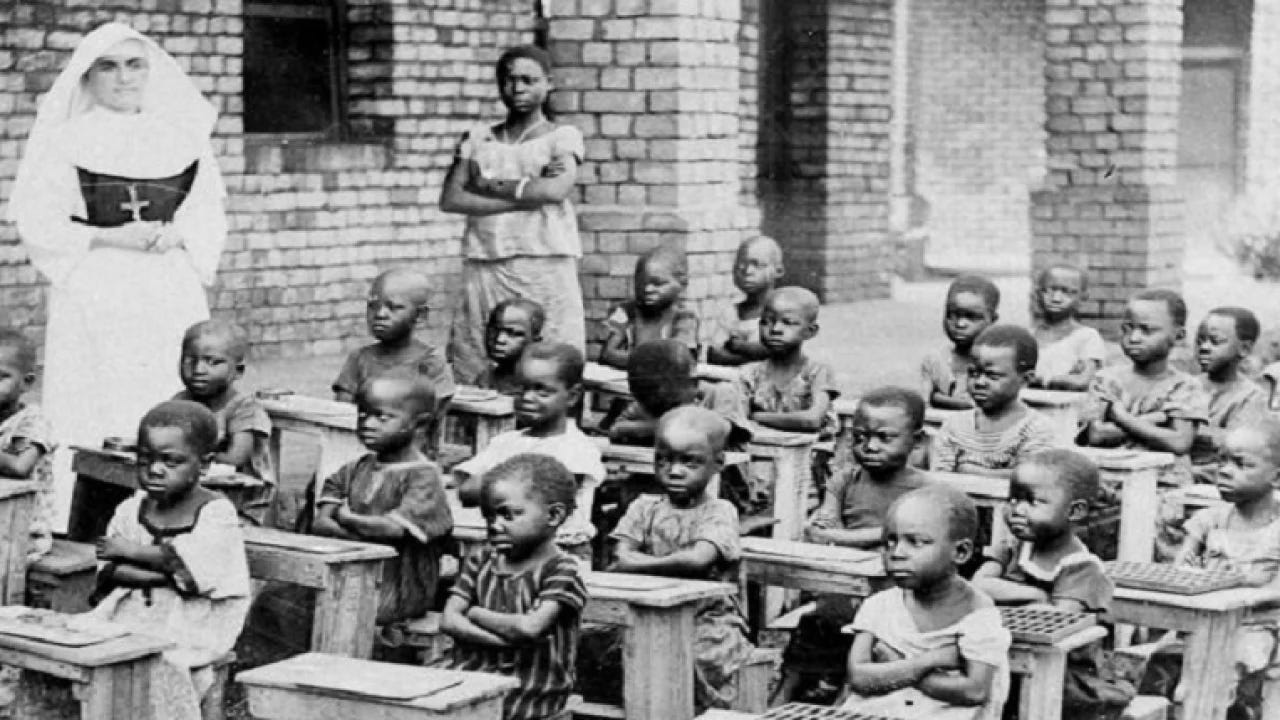
Missionaries taught religion, but they also taught gender. Mission schools frequently trained African girls for Christian marriage, motherhood, domestic labor, and submission to male authority. A Friends Africa Mission school in colonial Kenya, for example, explicitly sought to transform African girls into “better wives and mothers,” although the students did not always use their education in the ways missionaries intended.
Christian marriage was defined through European expectations of monogamy, sexual discipline, and male-headed domestic order, even where local systems of marriage, inheritance, kinship, and gendered authority operated differently. Missionary and colonial institutions introduced new marital expectations into places such as Lagos, linking church marriage to European education, legal status, economic opportunity, and membership in a new colonial elite.
Colonial governments supplied the legal enforcement.
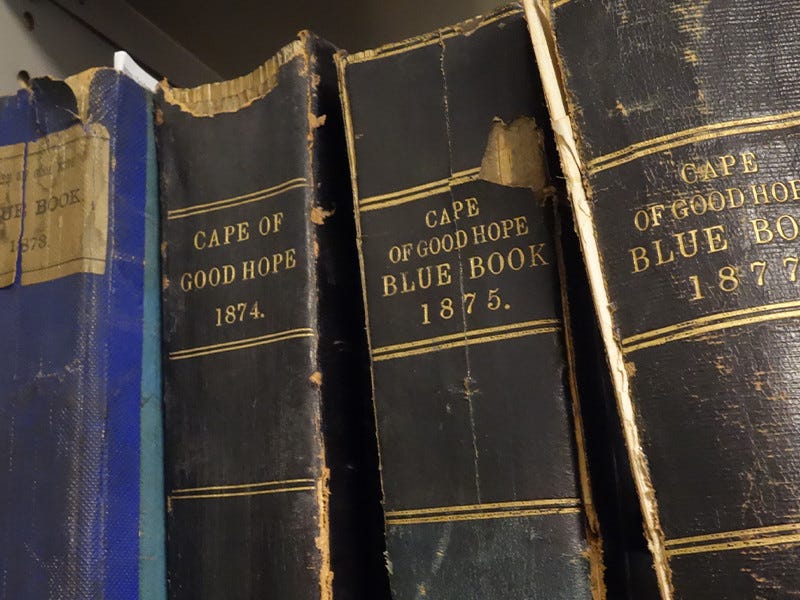
The British Empire exported criminal codes prohibiting same-sex activity across Asia, the Pacific, and Africa. Section 377 of the Indian Penal Code became a model for laws reproduced throughout British territory, transforming Victorian sexual anxieties into criminal statutes imposed upon populations that had not been consulted. Many of those laws survived independence, remaining available to later governments as supposedly traditional protections against supposedly foreign sexual identities.
This is how imperial ideas disappear into the wallpaper.
Britain exported the criminal code. Christian missionaries exported European sexual morality. Colonial governments gave both the force of law. Generations later, politicians could point to that legal inheritance and announce that they were defending authentic African values from Western decadence.
The foreign import had completed its transformation into indigenous tradition.
That history matters because the United States is currently performing a modern variation of the same trick.
The Trump administration and its allies in the American Christian Right are pouring money, political support, lobbying expertise, and foreign-aid pressure into campaigns against abortion and LGBTQ rights across Africa. They are doing so while describing reproductive and queer rights as foreign ideological colonization.
Apparently, foreign influence only counts when the foreigners disagree with them.
Colonialism With a Grant Agreement
In January 2026, the Trump administration introduced a group of foreign-aid restrictions under the title “Promoting Human Flourishing in Foreign Assistance.”
Human flourishing, in this case, means accepting the Republican Party’s positions on abortion, gender identity, and diversity initiatives as conditions of receiving American assistance.
The policy consists of three linked rules: “Protecting Life in Foreign Assistance,” “Combating Gender Ideology in Foreign Assistance,” and “Combating Discriminatory Equity Ideology in Foreign Assistance.” Together, they restrict funding connected with abortion, gender-affirming care, legal protections based on gender identity, and diversity, equity, and inclusion initiatives.
Organizations receiving affected funding may be required to certify that they will not provide, promote, or support services and ideas prohibited by the administration. Depending on the recipient and the particular rule, those restrictions can reach activities supported with non-American funds.
This is much broader than the older version of the Mexico City Policy, commonly called the global gag rule.
KFF estimates that approximately $39.8 billion in American foreign assistance obligated during the 2024 fiscal year would fall within the expanded policy’s potential reach. That funding was distributed across 160 countries and included health, humanitarian assistance, economic development, education, human rights, and governance programs. The policy also reaches multilateral organizations, American organizations, foreign governments, and thousands of primary aid recipients, not merely foreign reproductive-health NGOs.
This is not a politically neutral adjustment to foreign-aid administration.
The Mexico City Policy was created under Ronald Reagan in 1984. Since then, Republican presidents have repeatedly reinstated it and Democratic presidents have repeatedly revoked it. Trump restored it after returning to office in January 2025 and then expanded the underlying principle into a much broader campaign against abortion, gender-affirming care, LGBTQ protections, and diversity programs.
Vice President JD Vance announced the expanded restrictions at the March for Life, just in case anyone remained confused about which domestic political movement was writing American global-health policy.
This is not merely “the United States” exporting American beliefs. That language is too vague and too polite. It dissolves responsibility into a national mist.
This is the American Christian Right using the machinery of the Trump administration to export a specifically Republican political program.
The administration is taking the culture-war coalition that overturned Roe v. Wade, attacked transgender healthcare, dismantled diversity programs, and turned “gender ideology” into a catchall term for anything more complicated than a church pamphlet from 1954, and converting its priorities into foreign policy.
It is Project 2025 with a passport.
The New Missionary Network
The government is not acting alone. American conservative organizations have spent years constructing the political infrastructure needed to carry these ideas overseas.
An Associated Press investigation found that publicly disclosed spending in Africa by 17 American anti-abortion organizations increased by 50 percent between 2019 and 2022, reaching more than $16 million. Those organizations spent another $9.4 million across Africa during 2023 and 2024. Because churches and some religious organizations do not have to provide comparable public financial disclosures, the documented total almost certainly captures only part of the network.
The organizations involved include Focus on the Family and Family Watch International, along with other groups that connect opposition to abortion with campaigns against LGBTQ rights, comprehensive sexuality education, gender equality, and international human-rights frameworks.
This is not simply a collection of charities offering pastoral guidance. It is a transnational political operation.
The network organizes conferences, cultivates relationships with lawmakers, distributes lobbying materials, trains activists, supports legal campaigns, and helps construct a shared vocabulary in which abortion, feminism, queer rights, sex education, and gender equality become different tentacles of the same foreign monster.
At a 2026 conference in Ghana, lawmakers from 18 African countries backed an African Charter on Family, Sovereignty and Values. The proposed charter urges governments to reject international agreements associated with abortion, LGBTQ rights, and comprehensive sexuality education. Participants included politicians and conservative activists from Africa, Europe, and the United States.
The language of sovereignty is doing an almost heroic amount of work.
Conference organizers and allied politicians describe LGBTQ rights, reproductive rights, and comprehensive sexuality education as Western interference. Yet the political movement supporting that claim is connected to American elections, American conservative organizations, European legal groups, international conferences, and foreign funding.
Reuters reported that participants explicitly credited Trump’s return to power with strengthening their movement. A former Ugandan lawmaker thanked American voters for electing him.
At the Accra conference, Ugandan former lawmaker Sarah Opendi welcomed the shift. “Let us first thank the American people for voting for President Trump. The conversation in America today is different,” she said.
There is something wonderfully brazen about a movement gathering international activists and foreign-funded organizations to complain about international activists and foreign-funded organizations.
But the contradiction is more than amusing. It is strategically useful.
Calling reproductive and LGBTQ rights “Western” allows conservative campaigners to position themselves as defenders of African self-determination. Their own American and European connections can then be recast as mere solidarity, while African feminists, queer activists, doctors, lawyers, and human-rights organizations are portrayed as agents of foreign corruption.
American conservatism becomes invisible. African resistance becomes foreign.
The empire vanishes, but somehow its funding remains in the room.
Africa Already Has a Reproductive-Rights Framework
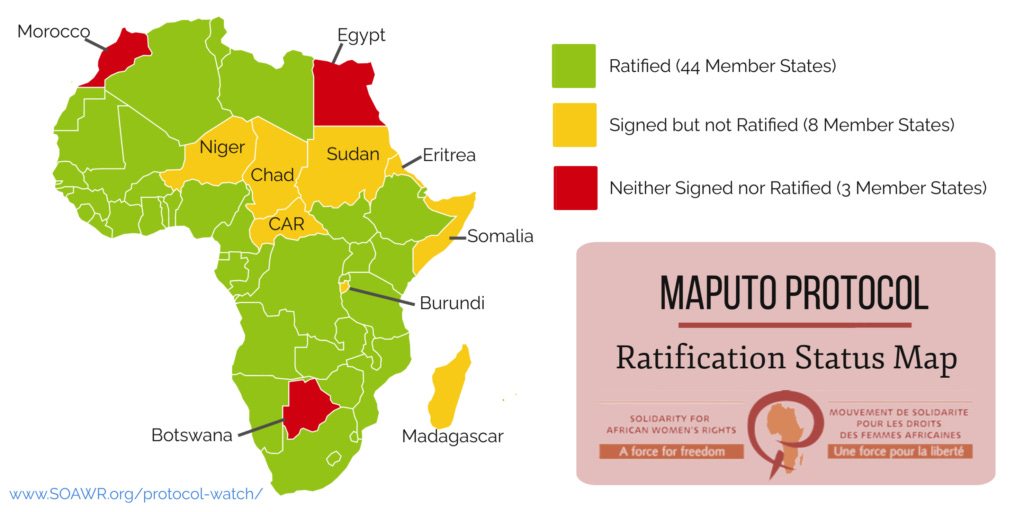
The claim that reproductive rights are simply being imposed on Africa from abroad also requires erasing one rather inconvenient document: the Maputo Protocol.
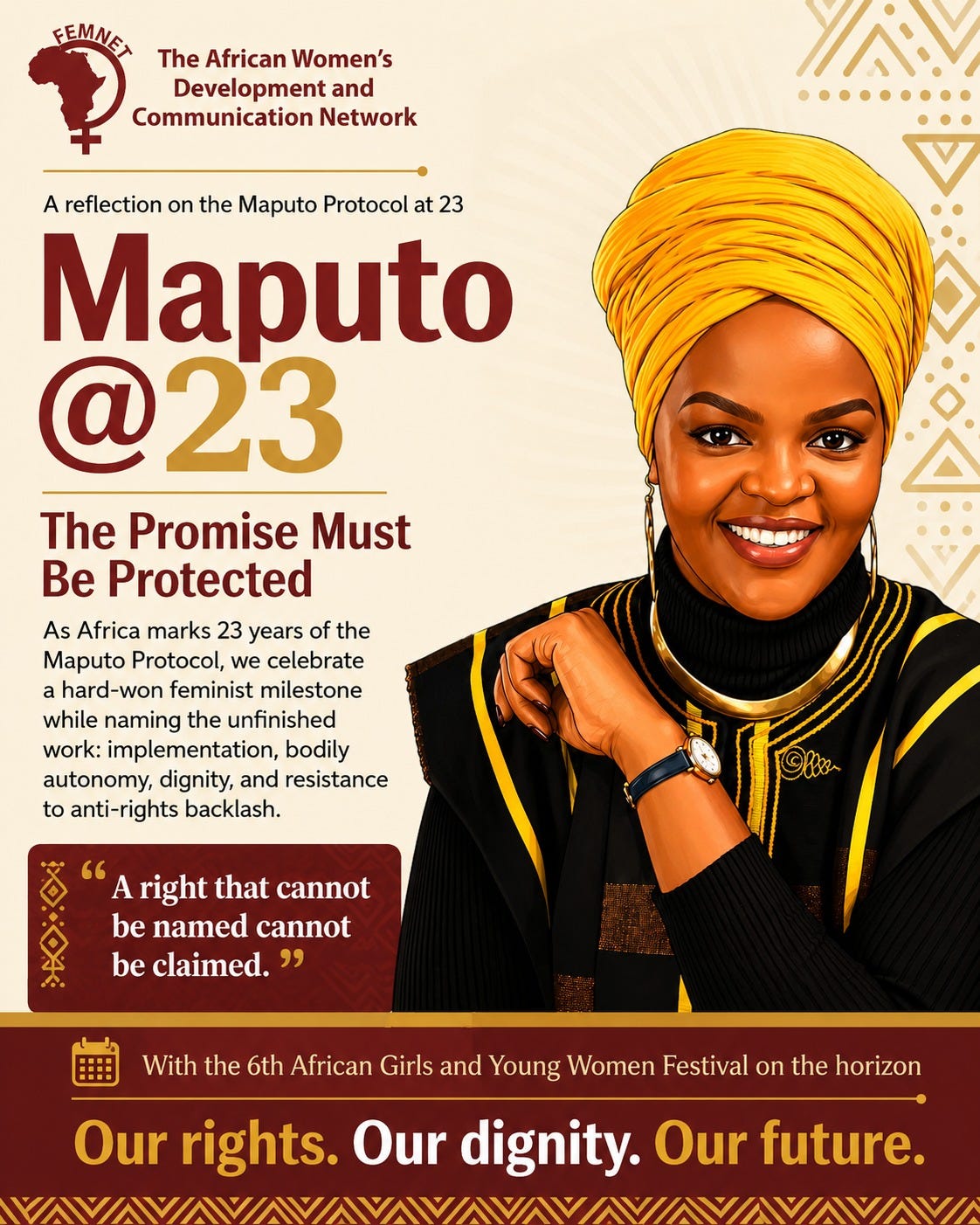
Adopted by the African Union in 2003, the Protocol to the African Charter on Human and Peoples’ Rights on the Rights of Women in Africa is one of the world’s most significant regional women’s-rights agreements. It addresses political participation, violence against women, harmful practices, marriage, inheritance, reproductive health, and economic rights.
Article 14 requires participating states to respect women’s sexual and reproductive health rights, including the right to control fertility and choose contraceptive methods. It also requires states to authorize medical abortion in cases involving sexual assault, rape, incest, threats to a pregnant woman’s mental or physical health, and threats to her life or the life of the fetus.
The Maputo Protocol was not drafted by Planned Parenthood in a basement under George Soros’s house.
It is an African human-rights instrument developed through African institutions and adopted by African governments.
That does not mean it is universally accepted or fully implemented. Some governments have entered reservations to its reproductive-rights provisions, while others have failed to translate their treaty obligations into accessible healthcare. But the African Commission continues to recognize access to safe abortion under the conditions specified in Article 14 as a women’s and girls’ right.
There are African anti-abortion activists and African reproductive-rights activists. There are conservative religious leaders and feminist legal scholars. There are governments moving toward greater access and governments imposing harsher restrictions. There are urban and rural differences, regional differences, generational differences, and political struggles within individual countries.
There is no single African voice, because there is no single Africa.
Presenting opposition to abortion and LGBTQ rights as indigenous while dismissing African supporters of those rights as foreign puppets is not respect for African sovereignty. It is a decision about which Africans are allowed to count.
Conveniently, the Africans who count are the ones agreeing with Republicans in Washington.
The Colonial Law Beneath the Culture War
Kenya demonstrates how neatly historical and contemporary systems can interlock.
Kenya’s 2010 constitution permits abortion when emergency treatment is necessary or when the life or health of the pregnant woman is endangered. Court decisions have also shaped access in cases involving rape, incest, and serious threats to mental health.
Yet Kenya’s penal code, inherited from British colonial rule, continues to criminalize abortion providers and patients, creating a legal gray area in which healthcare workers can face investigation, harassment, or prosecution. The conflict between the constitution and the older penal code leaves many public hospitals unwilling to provide care that may be constitutionally permissible.
Modern American anti-abortion organizations did not create that contradiction. British imperialism helped create it.
But contemporary activists can exploit it.
Colonial law provides the weapon. Foreign-funded conservative networks help determine where it is aimed.
That is why the historical framework matters. Without it, the current fight can be presented as a simple conflict between traditional African values and modern Western liberalism. Once the colonial history becomes visible, that tidy story collapses.
The “traditional” criminal code may be British.
The Christian model of family may have been reshaped by European missions.
The language of the modern campaign may come from American culture-war organizations.
The political momentum may depend on Donald Trump.
And the people accused of importing foreign ideas may be African women demanding that their governments implement an African treaty protecting their rights.
Tradition, in this context, is less an ancient inheritance than a warehouse full of imported goods with the labels carefully removed.
The Policy Does Not Even Accomplish What It Claims
The Trump administration describes these restrictions as protections for life. The available evidence suggests that gag-rule policies can produce the opposite result.
A 2019 study examining 26 sub-Saharan African countries found that periods of high exposure to the Mexico City Policy were associated with a 40 percent increase in abortion rates, a 14 percent decline in modern contraceptive use, and a 12 percent increase in pregnancies. The researchers concluded that reductions in contraceptive services offered a likely explanation for the increase in abortions.
Later research into the policy’s implementation found that affected healthcare facilities provided fewer family-planning services, including emergency contraception. Women living in highly exposed areas were less likely to use contraception and more likely to have recently given birth.
A wider KFF review of 71 studies and reports identified recurring consequences including reduced contraceptive use, increased abortion and pregnancy rates, disrupted health services, lost partnerships, administrative confusion, and a broader chilling effect among healthcare organizations.
In other words, a policy advertised as preventing abortion can remove contraception, weaken clinics, increase unintended pregnancy, and create the conditions for more abortions, including unsafe ones.

Sub-Saharan Africa already experiences more than six million unsafe abortions annually. Africa accounts for approximately 70 percent of maternal deaths worldwide, and the Associated Press documented the consequences of unsafe procedures, delayed treatment, inadequate services, and legal intimidation in countries where reproductive healthcare is already difficult to access. In Kenya, researchers estimate that an average of seven women die each day from complications connected with unsafe abortion.
These women are not rhetorical devices in an American election.
They are not background characters in JD Vance’s performance of Catholic masculinity.
They are people attempting to survive pregnancies, miscarriages, sexual violence, medical emergencies, and healthcare systems that may depend upon funding controlled by politicians thousands of miles away.
When that funding is conditioned upon obedience to American conservative ideology, the United States is not withdrawing from interference in other countries.
It is interfering through the threat of withdrawal.
Sovereignty for People Who Agree With Us
The Trump administration says its policies protect national sovereignty from ideological coercion.
What it actually offers is a choice: adopt our approved definitions of sex, gender, family, equality, and reproduction, or risk losing access to the resources that keep clinics, educational programs, and humanitarian organizations operating.
That is not sovereignty.
It is coercion with grant paperwork.
Imperial power has always been adept at disguising itself as benevolence. Colonial governments called conquest “civilization.” Missionaries called cultural erasure “salvation.” Development projects called economic control “modernization.”
The Trump administration calls ideological compliance “human flourishing,” while it actually contributes to human death and suffering.
The vocabulary changes because the old words eventually become embarrassing. The underlying entitlement survives: powerful countries still imagine that their money gives them the right to organize other people’s families, bodies, healthcare systems, and laws.
The United States is not formally colonizing African territory. American conservative activists are not simply Victorian missionaries reborn with podcasts and nonprofit tax status. History does not repeat itself so tidily.
But the resemblance lies in the machinery.
A wealthy foreign power defines its morality as universal. It uses financial dependence to reward compliance. It works through sympathetic religious and political elites. It exploits legal systems shaped by earlier imperial rule. It dismisses local opposition as corrupted by foreign influence. Then it calls the entire process a defense of indigenous values.
This is not an incidental consequence of Trump’s foreign policy.
It is the policy.
The American Christian Right won a transformative victory when the Supreme Court overturned Roe v. Wade. But Dobbs was never going to remain inside the borders of the United States, because the movement that produced it has never understood abortion as merely a domestic issue. It understands gender, sexuality, and reproduction as a global struggle over who has the authority to define human life.
Now that movement controls the foreign-policy machinery of the world’s most powerful country.
The missionaries are back.
This time, they are carrying grant agreements.
The level of malignant narcissism in churches who send missionaries out to other countries to spread their toxic belief systems is incredible. THEY are the sickness in our societies. They will do anything and everything to force people to believe. Out in the open loud and proud murdering disappearing and throwing people into concentration camps under their Gawds name. They want every one of us in their self righteous sanctimonious judgmental shaming guilting angry box.
That’s what they will do to the people in the US. They have said so and it is written.
My long time mantra from Dirty Dancing “No one puts baby in the corner” aka box
Fight fight fight