
The ROI For Making Women Come
Do You Like Women, or Do You Just Need Other Men to Think You Do?

It starts, as many terrible things do, with a man speaking into a microphone like it’s court-appointed compensation for never being hugged correctly.
A clip makes the rounds. A masculinity influencer, seated in what appears to be yet another podcast studio designed by a man who thinks shiplap and exercise equipment are replacements for a personality, announces that there is “no ROI” in making women orgasm.
No return on investment.
For women orgasming.
Apparently, some men are spending “fifteen or twenty minutes” on their female partners when they could be building businesses, hitting the gym, optimizing their schedules, soaking in ice baths, or doing whatever else men with podcast microphones believe counts as civilization.
And because we live in a society currently being held hostage by the emotional development of men who discovered protein powder before empathy, the host nods along like this is a serious economic framework and not a man publicly confessing, with the confidence of a TED Talk and the sexual politics of a broken office printer, that he cannot make a woman come and has decided to turn that into ideology.
The first thing to say is simple: it should matter to your partner that you orgasm.
That should not be controversial. That should not be radical. That should not require a manifesto, a research grant, or a hostage negotiation with the most emotionally constipated corners of the internet. And yet here we are, because the bar is in hell and somehow some influencer boys still showed up with a shovel.
When a man says there is “no ROI” in making women orgasm, he is not making a clever point about time management. He is revealing an entire worldview. In that worldview, women are not partners, lovers, collaborators, or human beings with bodies that matter. They are accessories to male performance. Props in the theater of masculinity. Appliances men resent maintaining.
Actually, even that may be too generous, because appliances at least get warranty protection.
What these men seem to want is not women so much as masturbatory tools that do not require batteries, boundaries, conversations, lubrication, emotional intelligence, or the exhausting inconvenience of another person having an inner life. They want access to a body, but not an encounter with a person. They want the sensation, the validation, the conquest narrative, the proof of virility, the masculinity receipt they can metaphorically slap down on the table in front of other men.
The woman herself is beside the point. Her pleasure, her comfort, her desire, her body responding in ways that do not exist purely for male convenience: all of that becomes a problem, because it interrupts the fantasy that sex is something men extract rather than something people share.
This is not really about sex.
Well, it is about sex, obviously. Bad sex. Tragic sex. Sex that sounds like it should come with a customer service survey and a laminated apology card. But it is also about power.
The “no ROI” argument treats female pleasure as waste. It frames mutuality as inefficiency. It takes one of the most intimate forms of human connection and runs it through the language of quarterly earnings reports until foreplay starts to sound like a hostile corporate merger.
And this is not an isolated take. The manosphere has developed an entire genre of sexual advice that treats women’s pleasure as suspicious, excessive, emasculating, inconvenient, or irrelevant. These are the same corners of the internet where men will confidently announce that women do not need orgasms, that oral sex is submissive, that caring whether a woman enjoys herself is “simping,” and, in one of the bleakest additions to the Museum of Men Telling on Themselves, that you apparently do not want a woman to get “too wet.”
Too wet.
Imagine being so committed to bad sex that you start treating evidence of arousal as a design flaw.
This is where the ideology trips over its own unlaced bootstraps. These men insist that women exist to sexually validate men. They build whole brands around being virile, alpha, high-value, dominant, desirable. Their masculinity is supposedly proven by access to women’s bodies. But the moment a woman’s body gives any sign of pleasure, comfort, arousal, or enthusiasm, they panic.
They want sex with women, but not female pleasure. They want conquest, but not mutual desire. They want access, but not intimacy. They want a woman’s body to confirm their masculinity while behaving as though her actual enjoyment is an administrative inconvenience.
That is not heterosexual desire in any healthy sense. That is status anxiety with a ring light.
And this is where the whole thing gets even stranger, because at a certain point, listening to these men talk about sex with women raises a question that is not actually an insult, even though they would absolutely hear it as one:
Do you like women, or do you just need other men to think you do?
Not “like women” in the abstract. Not “like women” as a category of person who can be photographed next to you on a boat. Not “like women” as proof that you are straight, virile, dominant, high-value, alpha, sigma, or whatever other Greek letter is currently being held hostage by men who need therapy and a hobby.
I mean: do you actually like women?
Do you enjoy women as full human beings? Do you desire them as people with bodies, preferences, boundaries, thoughts, moods, needs, appetites, jokes, softness, sweat, noise, inconvenient humanity, and their own experience of pleasure?
Because a lot of this content does not sound like desire. It sounds like obligation. It sounds like men performing heterosexuality for the approval of other men.
And to be very clear, because the internet loves nothing more than chewing nuance into paste and calling it lunch: this is not using gayness or asexuality as a punchline. Queerness is not a defect. Asexuality is not misogyny. Not wanting to have sex with women is not a moral failure. Not being attracted to women is not the problem.
The problem is being trained by toxic masculinity to believe you must perform attraction to women in order to count as a man, while also being trained to treat women’s actual pleasure as embarrassing, threatening, inefficient, or beneath you. The problem is when men are forced into a role they may not even want, then punish women for the discomfort that role creates. The problem is taking your own alienation from sex, intimacy, vulnerability, or women’s bodies and turning it into a podcast brand.
That is the part worth sitting with.
Heterosexuality is not always just private desire. It can also be a social script, a discipline, a demand, and a route into legitimacy. Patriarchy does not simply tell women what they are supposed to want. It also tells men what they are supposed to prove. It tells them that real men want sex, real men want women, real men dominate, real men conquer, real men do not hesitate, and real men certainly do not sit around caring whether a woman enjoyed herself.
The manosphere takes that script, monetizes it, and adds a neon sign.
Maybe some of these men are straight and simply selfish. Very possible. History has produced no shortage of heterosexual men who consider female pleasure an optional side quest, usually one they skipped because there was no achievement badge.
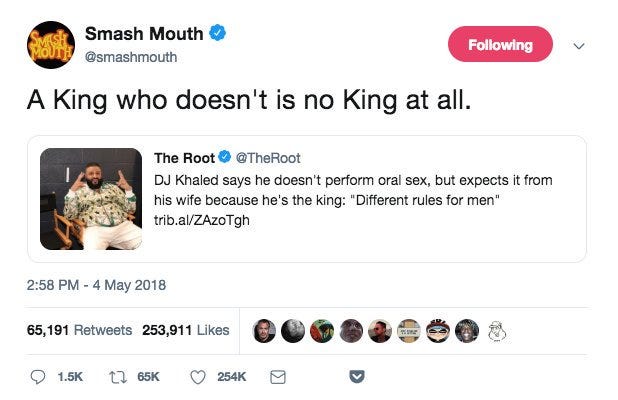
Maybe some are deeply repressed. Maybe some are queer and cannot admit it because the masculinity economy they live in treats queerness as social death. Maybe some are asexual but stuck inside a worldview where male worth is measured by sexual conquest. Maybe some are attracted to women but only through a filter of resentment, fear, status anxiety, and contempt so thick it could be studied by geologists.
We cannot know from a clip. We do not need to know.
What we can know is what the performance is doing.
And the performance is bizarre.
These men build entire identities around proving that they are sexually successful with women, then speak about sex with women like it is a chore assigned by a middle manager. They brag about access to women’s bodies, then complain about women having needs inside those bodies. They insist that heterosexual conquest is central to masculinity, then frame women’s pleasure as a bad investment.
That is not desire. That is résumé padding.
It is heterosexuality as a credential. Sex as certification. Women as paperwork.
This is the part of patriarchy people often miss: women may be the object, but other men are often the audience. Men are not only trying to dominate women. They are trying to impress, outrank, intimidate, and gain approval from other men. Women become the medium through which men compete with each other.
That is exactly the energy of manosphere dating advice. So much of it does not sound like an attempt to create good sex with women. It sounds like a peer-reviewed application for approval from the Council of Men Who Have Never Washed a Pillow.
The goal is not intimacy. The goal is ranking.
Who got the hottest woman? Who put in the least effort? Who cared the least? Who stayed the most emotionally unavailable? Who made a woman want him while proving he did not need her? Who can extract the most validation while offering the least vulnerability?
This is not seduction. This is LinkedIn for heterosexual panic.
And women are just supposed to stand there, apparently, serving as performance reviews with breasts.
That is why female pleasure becomes such a problem in this worldview. Pleasure means she is not just a prop. She is a participant. She is not merely evidence of his masculinity. She is a person having her own experience. And if she is a person having her own experience, then sex requires reciprocity.
If sex requires reciprocity, then masculinity cannot be proven by extraction alone.
If masculinity cannot be proven by extraction alone, then the entire little podcast empire starts wobbling like a barstool under a drunk libertarian.
So instead, they make women’s pleasure the enemy.
They say there is “no ROI” in making women orgasm. They say men should not waste time trying. They say oral sex is weak or submissive or somehow gay, because apparently nothing says secure heterosexuality like being terrified that enjoying a woman’s body will make you less of a man. They say you do not want a woman to get “too wet,” which is an incredible thing to say if your goal is to convince people you have ever made sex enjoyable for another human being.
Let us pause there, because this deserves a small, tasteful memorial service for sex education.
Women’s arousal is not a plumbing emergency. Lubrication is not a hostile market signal. A woman’s body responding to pleasure is not a design flaw.

If your sexual ideology requires women to be available but not aroused, present but not enthusiastic, penetrable but not too comfortable, then you do not want sex with a person.
You want compliance with candles and champagne.
You want the idea of sex without the problem of another human being enjoying it differently than you scripted. You want a body that performs arousal for your ego but never enough to suggest independent desire. You want a masturbatory tool that praises you afterward and does not require cleaning, conversation, or care.
And I am sorry, but that is bleak.
The “too wet” complaint is especially revealing because it exposes the contradiction at the center of this whole masculinity performance. These men want women to validate them sexually, but they do not seem comfortable with women experiencing sex as something for themselves. A woman who is aroused is harder to frame as passive. A woman who enjoys herself is harder to treat as a conquest object. A woman who wants things, likes things, asks for things, responds to things, or refuses things is inconvenient to a sexual politics built around male control.
Female pleasure disrupts the fantasy, which is why these men keep trying to discipline it.
Too loud. Too wet. Too needy. Too experienced. Too demanding. Too damaged. Too frigid. Too sexual. Too prudish. Too much.
There is always some way for women’s bodies to be wrong.
Historically, this is not new. Patriarchy has never known what to do with women’s pleasure except fear it, regulate it, pathologize it, commodify it, or declare it imaginary. What is new is the branding. Instead of priests, doctors, husbands, and moral reformers solemnly explaining that women’s bodies must be managed for the good of civilization, we now have men in podcast studios explaining that female orgasms are bad portfolio management.
Same haunted house. New LED lighting.
This is also why the manosphere is so obsessed with weakness. Everything is weakness. Caring is weakness. Listening is weakness. Generosity is weakness. Letting a woman’s pleasure matter is weakness. Oral sex is weakness. Emotional honesty is weakness. Vulnerability is weakness. Not wanting sex is weakness. Wanting tenderness is weakness.
The entire worldview is a panic room built out of the fear that some other man will decide you are not performing masculinity correctly.
And because that fear cannot be admitted, it gets converted into contempt for women.
The investment metaphor is not even good finance, which may be the funniest part. If we are going to accept this man’s miserable little business-school framing for a second, his analysis is still wrong. An investment is not just about instant extraction. It is about value over time. It is about returns generated through trust, reliability, mutual benefit, and continued participation.
A man who thinks giving his partner pleasure has “no ROI” is not a savvy investor. He is the guy who sells every stock the second it does not make him rich overnight and then calls himself a strategist.
The ROI, since apparently we are doing the world’s least sexy business seminar, is that your partner likes having sex with you.
The ROI is trust. The ROI is desire that does not have to be negotiated like a utility bill. The ROI is not having your wife, girlfriend, situationship, or future ex quietly calculate how many years she can endure being treated like a fleshlight with a Google Calendar. The ROI is that someone feels safe, wanted, and satisfied with you.
The ROI is that she wants to come back.
I realize this is challenging material for men who think “female nature” can be explained by a 45-minute podcast recorded next to a neon sign, but women are not machines that dispense sex when fed enough performative masculinity. Women are people. And people generally prefer being touched by someone who seems to like them.
This is the part the manosphere cannot seem to absorb, because so much of its sexual politics is built around avoiding women’s personhood. A woman’s body is acceptable when it functions as proof: proof that he is desirable, proof that he is dominant, proof that he can “get” women, proof that other men should envy him, proof that he is not weak, not feminine, not gay, not unwanted, not failing at the masculine performance review happening every day inside his skull.
But a woman as a person? A woman with preferences? A woman whose body may respond, refuse, flood, tense, relax, ache, want, stop wanting, ask for more, ask for different, ask him to learn where the clitoris is, or ask him to slow down and pay attention?

That is apparently where the system collapses.
Because that kind of woman cannot be used as a masturbatory device with a pulse. She cannot be reduced to friction plus validation. She cannot be treated as a silent receptacle for male insecurity and then asked to clap at the end. She has to be encountered.
And that is precisely what these men seem desperate to avoid.
The backlash to conversations like this is always revealing, because the worst men on the internet cannot help telling on themselves. The moment women say, “Actually, our pleasure matters,” some man appears to announce that civilization was built by men, that modern women are selfish, that feminism ruined sex, that women do not “deserve” orgasms, or that male weakness is why heterosexual dating is collapsing.
Which is fascinating, because nothing screams masculine strength quite like being terrified of a clitoris.

And then, inevitably, someone tries to make it about birth rates, because of course they do. There is always some conservative commentator lurking in the bushes, waiting to connect women’s refusal to sleep with selfish men to the collapse of Western civilization. You say, “Women deserve satisfying sex,” and they respond, “This is why nobody is having babies.”
No.
Women not wanting to sleep with selfish men is not a demographic crisis. It is a review process.
If your pitch for saving civilization depends on women having more sex with men who do not care whether they enjoy it, perhaps the problem is not feminism. Perhaps the problem is that your model of civilization requires women to absorb male entitlement with a smile.
And women are tired.
The “birth rates” panic is always especially rich coming from men who seem personally committed to making heterosexuality sound like a bad Yelp review. They want women to marry, reproduce, nurture, serve, desire, submit, and remain sexually available, but they also want to reserve the right to treat women’s pleasure as optional, inefficient, or suspicious.
Then they act shocked when women look at the deal and say, “Actually, no, I’ll just take my vibrator and go home.”
Sir, that is not civilizational collapse.
That is market feedback.
You offered a bad product.
This is the lie at the center of so much modern masculinity content. These men are constantly telling young men that they are defending traditional manhood, restoring masculine excellence, rebuilding discipline, reclaiming leadership, and protecting civilization from decadence. But then they turn around and describe generosity, care, patience, and sexual attentiveness as weakness.
So what exactly are they building?
A civilization of men who cannot make breakfast, cannot name an emotion, cannot touch a woman without resenting the time commitment, and think intimacy is a poor use of resources?
Be serious.
That is not masculine excellence. That is loneliness with branding.
The saddest part is that this script is bad for everyone. It is obviously bad for women, because it turns our bodies into proving grounds for male insecurity. It teaches men that our pleasure is optional, our discomfort is irrelevant, and our humanity is negotiable.
But it is also bad for men, because it traps them inside a performance of desire so rigid that they may never get to ask themselves what they actually want.
Do they want women? Do they want sex? Do they want intimacy? Do they want approval? Do they want dominance? Do they want to be wanted? Do they want other men to envy them? Do they want a girlfriend, or do they want a witness for the masculinity trial happening inside their own head?
Toxic masculinity does not leave much room for those questions. It hands men a script and calls it nature. It tells them that real men always want sex, always want women, always want dominance, always want conquest, always want more, and never need tenderness, reassurance, softness, slowness, or refusal. Then, when that script makes them miserable, it tells them to blame women.
That is the trap.
If a man is not attracted to women, patriarchy does not give him a safe way to know that. It gives him shame. If a man is asexual, patriarchy does not give him language. It gives him inadequacy. If a man is attracted to women but also afraid of vulnerability, patriarchy does not give him emotional literacy. It gives him dominance. If a man wants intimacy but has been trained to experience care as weakness, patriarchy does not give him connection.
It gives him a microphone.
And then women get stuck dealing with the fallout. Women become the place where men dump every feeling they are not allowed to identify: resentment, fear, envy, desire, shame, confusion, loneliness, dependency, need. All of it gets converted into contempt, because contempt feels powerful and vulnerability feels dangerous.
This is why the question matters: do you like women, or do you just need other men to think you do?
Because if your relationship to women is mostly about proving something to men, then women are not your partners. They are your props. If your desire for women evaporates the second women become active participants in their own pleasure, then maybe what you wanted was not women. Maybe what you wanted was validation. If making a woman orgasm feels like losing status, then you are not having sex. You are trapped in a masculinity pyramid scheme.
And honestly, the returns look terrible.
Because what do these men actually get? A brand? A following? A comment section full of boys calling them based? A monetized loneliness funnel where every woman is either a trophy, a threat, or a failed appliance?
Real intimacy is not inefficient. It is one of the few places where human beings get to stop performing long enough to be honest. That does not mean sex has to be solemn or perfect or wrapped in therapy language. But, please, for the love of all available gods, nobody needs to bring a quarterly performance review into the bedroom.
Sex should involve mutual care. It should involve curiosity. It should involve the understanding that another person’s pleasure is not an obstacle to your own. The tragedy of the “no ROI” guy is not just that he sounds bad in bed, though he absolutely does. It is that he has been taught to see pleasure as a zero-sum game. If she gets attention, he loses time. If she needs care, he loses status. If sex requires reciprocity, he has been cheated.
That is a bleak little prison to live in.
And it is one patriarchy built.
Because patriarchy does not just harm women by demanding our submission. It also harms men by training them to experience tenderness as humiliation, reciprocity as weakness, and women’s pleasure as a threat to male control. Then it sells them a microphone and tells them they are philosophers.
So yes, women are going to laugh at this. We are going to mock it. We are going to quote-tweet it into the sun, because sometimes ridicule is the appropriate response to a grown man describing cunnilingus like a project that just ran over budget.

But underneath the jokes is a serious point: sexual selfishness is not neutral. It is not just “preference.” It is not a quirky personal brand. It is part of a broader culture that teaches men to expect service from women without reciprocity, labor from women without gratitude, and bodies from women without personhood.
And women are increasingly saying no.
No to bad sex dressed up as biology. No to selfishness dressed up as efficiency. No to men who think desire can survive contempt. No to being treated like a masturbatory aid with a chore chart. No to being told that our pleasure is optional, excessive, inconvenient, suspicious, or unproductive.
If that makes some men angry, fine.
Let them be angry. Let them make podcasts about it. Let them call it feminism. Let them blame modern women, birth control, TikTok, therapy, astrology, oat milk, lube, leggings, higher education, or whatever else the grievance economy is monetizing this week.
But the truth is much simpler.
If making your partner feel desired, safe, and sexually satisfied sounds like a waste of time, the problem is not women. The problem is that you do not actually like women very much.
The return on mutual enjoyment of sex is not complicated. It is that your partner wants to keep having sex with you.
Revolutionary. Shocking. Someone alert the Harvard Business Review.
When sex is good for both people, it does not become a one-time extraction event. It becomes part of a relationship built on trust, attraction, safety, attention, and the deeply underrated erotic power of actually liking each other. Mutual pleasure creates a base of mutual desire. It teaches two people that they can be vulnerable together and still feel wanted. It makes sex something you return to not out of obligation, not out of fear, not because one person has learned to endure it, but because both people actually want to be there.
That is the investment.
Not fifteen minutes spent “down there” like a man begrudgingly waiting for customer service to transfer him to a supervisor. Not a transaction where one person gets off and the other person gets a character-building exercise in disappointment. Not a masculinity ritual performed for men who are not even in the room but somehow still ruining the mood.
The investment is building a relationship where desire has somewhere to live.
A partner who feels desired, respected, and satisfied is not being tricked into sex. She is being invited into a shared experience she may actually want to repeat. Imagine that. Imagine discovering that women, those famously mysterious creatures known to science as “people,” might be more interested in sex when it is enjoyable for them too.
This is the part the manosphere keeps missing because it understands sex as proof, not connection. Proof that a man is virile. Proof that he is dominant. Proof that he can get women. Proof that other men should envy him. But sex that is only proof is brittle. It has to be constantly performed, defended, exaggerated, and monetized. Sex rooted in mutual desire does not need an audience. It does not need a podcast clip. It does not need a spreadsheet.
It just needs two people who actually want each other.
And that is the difference.
If your only goal is ejaculation, then yes, a woman’s pleasure may look inefficient to you, mostly because you have confused sex with using someone else’s body to masturbate. But if your goal is intimacy, desire, connection, love, erotic trust, or even simply being someone your partner wants to sleep with more than once, mutual pleasure is not inefficient.
It is the entire infrastructure.
Because the real ROI of making sex good for your partner is that your partner looks at you and thinks: yes, again. Yes, you. Yes, this. Yes, I want to be here.
And if what you want is a silent tool for your own pleasure rather than a person with desire of her own, then at least have the courage to admit that.
You do not want a woman.
You want a masturbation device that makes you feel like a man.
And if you want a good ROI for that, invest in the blow-up doll industry.
Thank you for this rant.
I think something was left behind in your essay, though.
This worldview, that there is "no ROI" in women orgasming, has a very dark, very violent corollary: a permission structure to r*pe.
I think this way of thinking is a direct link to the idea that a man has no need for a woman's consent at all.
I feel this is the loudest unsaid thing in this entire conversation.
It is nice how many men are publicly declaring themselves ineligible for intimacy before women have to find out by actually sleeping with them