
The Smithsonian Hearing That Wanted an Uncomplicated America
At the House Oversight Committee’s “Rewriting American History” hearing, historical complexity was treated as bias - and bad history as patriotism.

Representative Lauren Boebert asked Dr. Anthea Hartig, director of the National Museum of American History, whether any part of the American founding could be looked at in an uncomplicated way.
Hartig was very polite in her response. She had to be. She was under oath, sitting before Congress, and apparently possesses both professional discipline and an intact survival instinct.
I am not in front of a Congressional committee, thank God. Had I been invited to testify at this hearing, I probably would have ended the day being held in contempt of Congress.
So here is the uncomplicated answer Boebert wanted:
No.
There is no part of the American founding, or any history for that matter, that can honestly be called uncomplicated. Humans are the raw material of history, and humans are complicated little disasters. They proclaim liberty while denying it to other people. They write magnificent words and behave abominably. They compromise, contradict themselves, change their minds, and leave later generations to argue over what they meant. Sometimes they are brave. Sometimes they are selfish. Usually they are several things at once.
The men who declared that all men were created equal lived in a society built on racial slavery. The Constitution created a durable republic and protected slavery through compromise. The nation expanded democratic participation while taking Indigenous land, excluding women from formal political power, and fighting over who counted as “the people.” None of those facts cancels the others. They are the history.
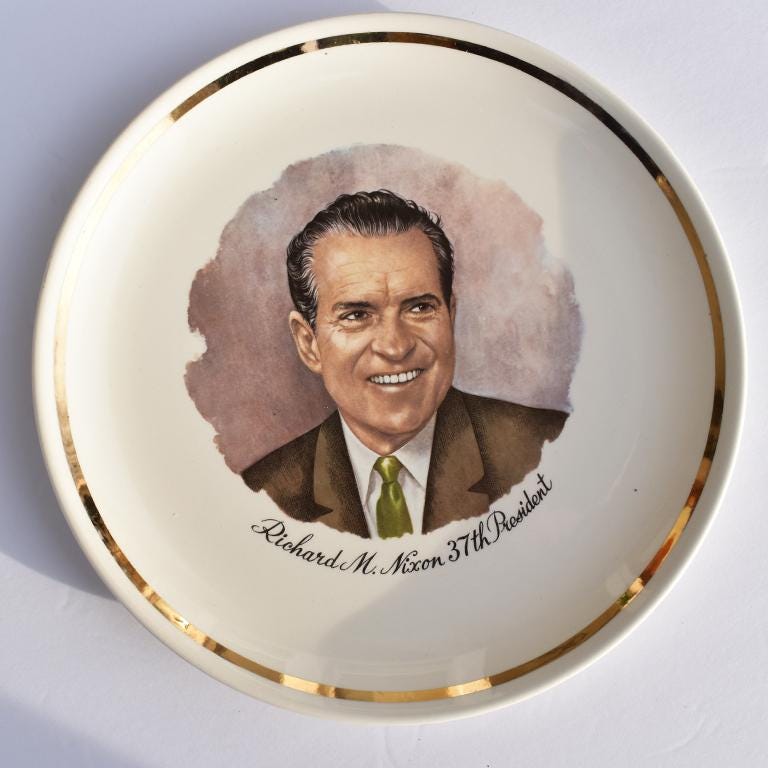
If you need the founding to be uncomplicated, you do not want history. You want a commemorative plate.
That distinction caused repeated trouble during the July 21 hearing titled Rewriting American History: Examining the Smithsonian’s Efforts to Reshape the Past. Members of the House Oversight Committee’s Subcommittee on Delivering on Government Efficiency claimed to be investigating whether the museum had distorted American history. Much of the questioning was devoted to something else: making Hartig display the proper amount of patriotism, endorse some genuinely dreadful history, and explain why the museum had failed to arrange the national past according to each member’s personal preferences.
The museum’s accuracy barely mattered. Hartig was being asked whether professional historians would trade complexity for patriotic reassurance. By the end of the hearing, the majority’s witness had supplied the consequence for refusing: “clean house” and replace the Smithsonian’s leadership.
The committee majority then published its official wrap-up. Its headline announced the conclusion: the museum had a “radical agenda to reshape the past.” The release said members had exposed a “hateful agenda” and “extensive left-wing biases.” It featured Chairman Tim Burchett and Representatives Brandon Gill and Brian Jack, quoted the majority’s invited witnesses at generous length, and omitted every Democratic member’s questioning.
It also omitted several Republican exchanges that made the hearing look less like oversight and more like an ideological obedience test. Hartig’s description of the museum’s scholarly review process vanished. So did the call to replace its leadership.
A committee spent hours accusing historians of selective presentation and then issued a selective official history of the event. The release distilled the hearing’s method: keep whatever flatters the conclusion and lose whatever complicates it. The omitted exchanges show exactly what had to disappear.
The approved emotional setting
Representative Eric Burlison began sensibly enough by asking about the museum’s purpose. Hartig said its mission was to tell the richest story of America’s past it could and to preserve and explore the past in all its complexity. Burlison quickly abandoned museum practice for a patriotism examination.
“Are you America First?”
“Do you love America?”
“Are you proud of America’s history?”
Hartig said she was a proud American, loved the country unconditionally, and was proud of its history “warts and all.” This was apparently still insufficient. Burlison wanted to know who had spread the “falsehoods” that World Cup visitors supposedly believed about the United States. The director of the National Museum of American History was now responsible for the entire planet’s vibes.
Representative Pat Fallon administered another exam. First he asked Hartig’s salary, emphasized that the Smithsonian receives taxpayer money, and reminded her that she worked for all Americans, including those with whom she disagreed.1 Then came the questions that apparently determine whether a historian may be trusted near the nation’s objects.
Did she love America? Yes.
Had the United States been a force for good? Yes.
Was it still a force for good? Yes.
Was it “the greatest nation history has ever known”?
Hartig declined to rank every society in human history during a rapid-fire congressional loyalty test. Fallon announced the score: “So we got three out of four. That’s not bad.”2
Apparently the director of the National Museum of American History was auditioning for Miss America, and professional caution cost her the evening-gown category.
The official wrap-up included none of this. A reader relying on the committee’s account would not know that Hartig had been asked to declare herself “America First,” that multiple members demanded professions of national love, or that Fallon literally scored her patriotism aloud.
Those omissions are useful. They preserve the committee’s preferred version of the hearing, in which sober legislators evaluated museum scholarship. The actual questions revealed a different standard. Accuracy was not enough; the historian had to display the approved emotional posture toward the nation.
Abolition needs a calendar
Burlison’s history became worse when he stopped asking Hartig how she felt and began telling her what she should teach. He described the United States as the country that “led the world and inspired them to eliminate slavery” and, somehow, end “all of the genocides that happened.” He did not offer evidence. He offered the conclusion and waited for Hartig to salute it.
Representative Michael Cloud made a similar claim. He acknowledged that slavery belonged in the museum because it had existed in many societies. What made the United States exceptional, he said, was that “we worked to overcome it” and were “leading on the world stage in getting rid of it.”
The history of abolition is complicated. Sorry to spring that on everyone again.
Abolishing the transatlantic trade was not the same as abolishing slavery. National decrees did not always reach every territory, and enforcement was another matter. A law could declare emancipation while leaving coercive labor systems in place. Enslaved people forced the issue through resistance and revolution; free Black activists, religious dissenters, politicians, soldiers, writers, and organizers pursued different routes for different reasons. Imperial self-interest lived quite comfortably beside genuine moral conviction.
Even with all those qualifications, the United States did not lead the world in abolishing slavery. Haiti declared independence in 1804 after a successful revolution by enslaved people and became the first country in the Western Hemisphere to outlaw slavery. Mexico formally abolished slavery under President Vicente Guerrero in 1829. Britain abolished its slave trade in 1807 and passed the Slavery Abolition Act in 1833. Emancipation took effect in most British colonies in 1834, accompanied by an exploitative “apprenticeship” system and an enormous payment to enslavers because even moral progress can arrive carrying a bill for the wrong people.
The United States abolished slavery nationally through the Thirteenth Amendment in 1865, after a civil war that killed hundreds of thousands of people. The National Archives gives the dates plainly: Congress passed the amendment on January 31, 1865, and the states ratified it on December 6. The Emancipation Proclamation in 1863 had not ended slavery throughout the country; it applied to areas in rebellion and excluded the loyal slave states.
That timeline does not make the United States uniquely evil, a tedious straw man dragged out whenever anyone points at a calendar. However, it makes Burlison’s and Cloud’s claim false. The American abolitionist struggle was enormously important. So were the actions of enslaved people, Black soldiers, abolitionists, lawmakers, and the millions who pushed the founding’s promise beyond what many founders were prepared to grant. Their achievement does not need a fabricated gold medal in the Global Abolition Olympics.
The genocide claim was even stranger. No country inspired the world to end “all of the genocides,” a phrase with the intellectual precision of something found scribbled on a bar napkin. Representative Don Beyer later named some of the history flattened by Burlison’s sentence: the Trail of Tears, Wounded Knee, the Sand Creek Massacre, the California genocide, and forced Indigenous boarding schools. He asked why acknowledging the people who lived on the land before European settlement should be objectionable. Hartig answered that recognizing the country’s first peoples was part of acknowledging the “layered complexity” of the place where the museum stands.
The majority wrap-up omitted Burlison’s claims about both slavery and genocide. They were too useful during the hearing to challenge Hartig and too historically illiterate to preserve afterward.
When evidence appears, move the standard
Cloud argued that the museum had buried the Declaration of Independence and the founders beneath displays about slavery, social reform, abortion, and drag. Hartig explained that the Declaration appeared across a full wall in The Price of Freedom. Cloud’s response deserves preservation: “It’s in the back. You have to walk through a bunch of junk to get there.”3
The Declaration had not disappeared.4 He disliked where it was placed, what visitors encountered before it, and the fact that the museum expected them to walk through American history to reach more American history. Objects and exhibits about Americans he found objectionable became “a bunch of junk.” Jefferson’s desk and Lincoln’s hat did not count because they had not been encountered with sufficient ceremonial fanfare.
Fallon used the same method while asking about the 250th anniversary. He wanted new exhibits on Washington, Jefferson, Franklin, and American inventors. Whenever Hartig said those people appeared prominently in the museum’s new exhibition, Fallon changed the requirement. Washington being featured did not count unless there was an exhibition solely about Washington.5 An exhibition including Jefferson did not count as an exhibition “on” Jefferson. The same happened with Franklin and the inventors. The standard moved so often it should have worn running shoes.
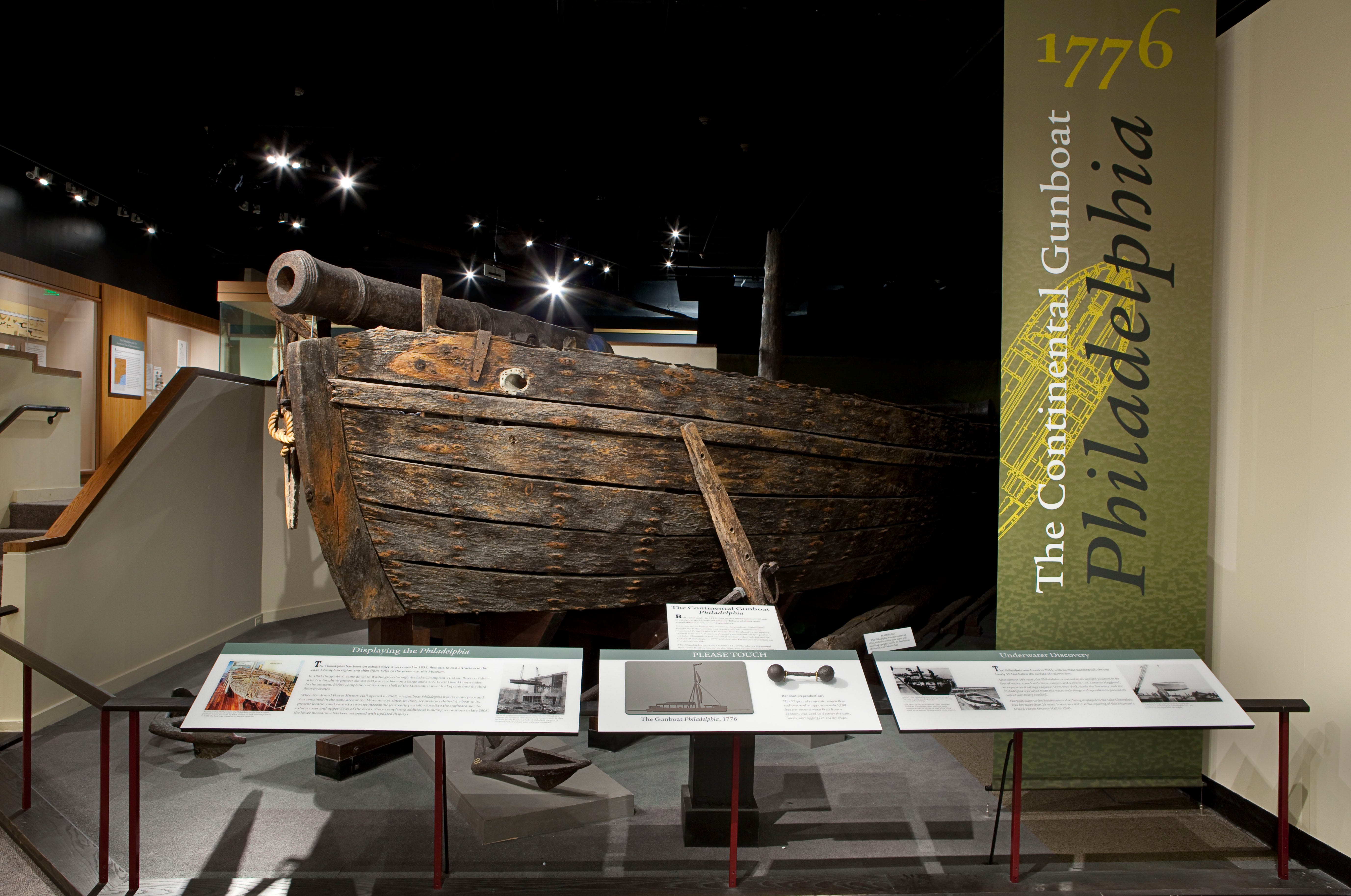
The museum’s actual anniversary project is not mysterious. In Pursuit of Life, Liberty & Happiness opened in May. It contains 250 objects spread across 250,000 square feet and all three public floors. It is explicitly organized around the ideals of the Declaration. Highlighted objects include Washington’s uniform and sword, Jefferson’s writing desk, the Revolutionary War gunboat Philadelphia, and the Star-Spangled Banner.
Representative Melanie Stansbury gave the committee a brisk virtual tour: the flag, Lincoln’s hat, Jefferson’s desk, R2-D2, Dorothy’s ruby slippers, the Wright Flyer, and the Apollo 11 command module. All of that, she observed, is American history. She also noted that many of the Republican members who considered this hearing so urgent had left before its conclusion.
Maxwell Frost had already suggested that the committee should perhaps consider actually visiting the museums it was condemning. The National Museum of American History is about two miles from the hearing room.
One hates to recommend primary-source research to a congressional oversight committee, but desperate times.
Cloud did conduct some fieldwork in the gift shop. He said he could not find Thomas Paine’s Common Sense on the day he visited, but he found George Takei’s It Rhymes with Takei, which he described as a book about “one young man lusting after another” in the children’s section.

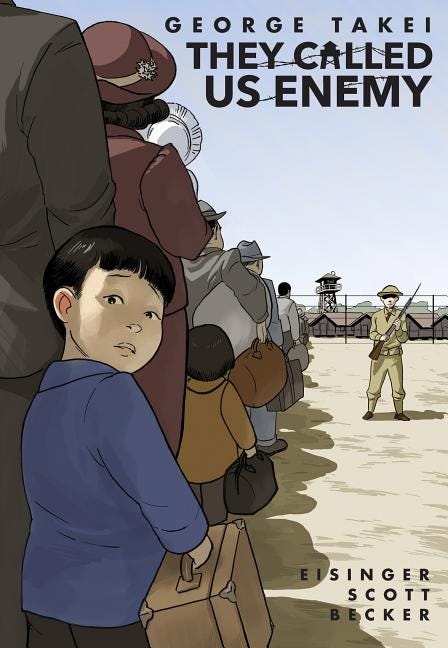
We cannot reconstruct the physical shop’s inventory or shelving that day, perhaps Cloud did find the book in the children’s section. Or, hear me out here, is it possible that he assumed that because it is a graphic novel memoir he assumed it must be for children despite being 328 pages long. If I am being particularly generous, which Cloud has not exactly given me cause to be, I might think that somehow It Rhymes With Takei was accidentally shelved in the children’s section alongside Takei’s actual children’s book They Called Us Enemy.6
Cloud may indeed have found it in a children’s section. He may indeed have been unable to find Common Sense. Neither fact establishes institutional erasure. A retail shelf is not an exhibition, the physical museum shop is not the curatorial department.
The current Smithsonian Books history catalogue includes editions of the Declaration of Independence, the Constitution, and the Emancipation Proclamation; books on the American Revolution, American democracy, Benjamin Franklin, presidents, first ladies, military service, slavery, and the nation’s 250th anniversary. The Smithsonian Store’s history section online lists 141 items. I did not find Common Sense on either webpage. I also did not mistake one absent eighteenth-century pamphlet for proof that the Smithsonian had abolished the founding.
The republic will survive a gift shop being out of Thomas Paine.
The wrap-up omitted Cloud’s “bunch of junk,” Fallon’s shifting definition of a founding-era exhibition, Frost’s proposed field trip, and Stansbury’s inventory of the objects allegedly missing. Those details would have made it harder to maintain that the museum had erased traditional American history. Easier to erase the details instead.
Context was treated as an admission of guilt
The hearing’s moral-panic portion began with Chairman Burchett and reached its purest form with Representative Nancy Mace. Mace asked Hartig how many children visited the museum, then jumped immediately to sexual fetishes, pedophilia, grooming, rape, drag queens, and whether the museum was making children vulnerable to abuse. She repeatedly demanded yes-or-no answers while denying Hartig enough time to identify the objects, exhibitions, intended audiences, or context.
Mace said the museum had displayed the diary of a six-year-old who wondered about growing a penis. Hartig corrected her: the writer was 13, and Girlhood: It’s Complicated was a temporary exhibition not designed for children. It examined changing definitions of girlhood, girls’ bodies, education, labor, fashion, and political action. The team had convened scholars and educators and consulted visitors during its development.
That information does not force anyone to like every curatorial decision. It explains what the diary was doing there. This was precisely why Mace could not allow an explanation.
She moved on to “What is a woman?”, how many genders exist, when Hartig’s gender had been “revealed” to her, and whether men could become women. Five minutes allocated for Smithsonian oversight had become a cable-news audition with visual aids.
The official wrap-up did highlight Burchett using the same technique. It quoted his claim that the diary belonged to a six-year-old, immediately followed by Hartig correcting the age to 13, yet still presented the exchange as a simple question Hartig refused to answer. The trick was consistent: remove an object from its setting, attach the most inflammatory label available, prevent an explanation, and present the resulting mess as proof of evasion.
Representative Brandon Gill performed a related trick with scholarship on the early Mickey Mouse’s connections to blackface minstrelsy. “Is Mickey Mouse racist?” he asked, turning a historical question about artistic genealogy into a personality test for a cartoon. When Hartig tried to distinguish the character from the history of minstrelsy, Gill collapsed the distinction again. Accuracy was inconvenient. “Mickey Mouse is racist” was usable.
Gill also questioned Hartig about the MASS Action toolkit, an external museum-equity project that discusses what its authors call characteristics of white-supremacy culture. The Smithsonian did have contact with it. An NMAH staff reading group met to discuss the toolkit, and the Smithsonian’s fiscal-year 2023 report describes that group as an activity of the museum’s IDEA Council. That contact is legitimate evidence for oversight. It does not turn an outside document into “your toolkit,” as Gill repeatedly called it, or make every line the museum’s governing policy.
A staff reading group is not the Nicene Creed.7
Gill ended by asking whether Hartig was a white supremacist because she had agreed that politeness was important and the toolkit criticized “politeness” in a particular institutional context. The wrap-up considered this a member highlight. I suppose “Congressman asks museum director whether she is a white supremacist because she is polite” was too dignified a sentence to waste.
Mace’s “What is a woman?” detour did not make the official account, neither did Boebert’s long rant about abortion numbers in the United States.8 Burchett’s and Gill’s exchanges did. The selections were not random. The wrap-up kept the moral panic when it could be edited into a triumphant gotcha and discarded it when it made the hearing look unhinged.
Franklin and the supposedly “bizarre” question
Gonzalez offered a slightly more scholarly-looking version of the same maneuver during Jack’s questioning. He complained that a Smithsonian exhibit had “pondered” whether Benjamin Franklin performed experiments involving “electroshock” on indentured servants or enslaved people without producing evidence that he had. “Why smear a Founding Father such as Ben Franklin,” Gonzalez asked, “by pondering such a really bizarre thing?”
I initially did not know which exhibit he meant. It was not difficult to find once I stopped relying on Gonzalez’s description. The Electric Dr. Franklin opened in 2021, closed in November 2025, and remains available online. The White House report that preceded the hearing devoted several paragraphs to complaining that 20 percent of the exhibit concerned enslaved people and that it asked a “baseless” question about their possible participation in Franklin’s experiments.
The actual Smithsonian text is considerably more careful than either account. It does not claim that Franklin experimented on enslaved people. It says the surviving records are “few and unclear,” distinguishes what is known from what remains possible, and repeatedly acknowledges that we may never know who assisted him. It explains that Franklin held people enslaved during his electrical research; that their household labor helped create the wealth and leisure that made his scientific work possible; that his experiments often required assistants to turn a human-powered generator, observe sparks, or act as test subjects; and that he frequently failed to name the people who helped him.
That is the basis of the question. Franklin used friends, relatives, visitors, and other human subjects in electrical experiments. Researchers gave and received shocks because they lacked precise instruments for measuring a charge. Franklin also pursued medical uses for electricity. A 2006 paper on Franklin, electricity, and the treatment of palsy documents his treatment of named colonists, while another examines his role in the eighteenth-century history of medical electricity and mental illness. The American Philosophical Society describes his electrical treatment of James Logan after a stroke, his treatment of a young woman identified as C.B., and his correspondence about using electricity to treat melancholy.
Franklin also owned multiple human beings during the years of his electrical research. This is not conjecture. The Smithsonian identifies several of them by name where the surviving record permits. His evolution into an abolitionist belongs in the story, too, but it does not travel backward through time and un-own the people whose labor supported his household.
Nor was the use of enslaved people as experimental subjects some alien possibility that a deranged curator imported into the eighteenth century. The documentary record is especially extensive for the nineteenth-century use of enslaved people as being experimented on by scientists and doctors; such as Martia Graham Goodson’s Enslaved Africans and doctors in South Carolina. That later history does not prove anything about Franklin. It establishes that the underlying question is historically plausible rather than “bizarre.”
This distinction matters. Franklin’s medical experiments, his slaveholding, the presence of unnamed assistants, and the broader exploitation of enslaved bodies create a legitimate research question. They do not create an answer. If the museum had stated as fact that Franklin shocked enslaved subjects without evidence, that would be rotten history. It did not. It stated what was documented, marked the limits of the evidence, and asked what the silences in that evidence might conceal. That is what historians do when the people least likely to appear by name in an archive are the people denied control over their own lives.
Gonzalez’s word “electroshock” also did useful rhetorical work. Modern readers are likely to hear medical or psychiatric electroconvulsive treatment. The exhibit discussed eighteenth-century static-electricity experiments and demonstrations in which participants felt shocks. Gonzalez converted a carefully qualified question into the image of Franklin secretly administering “electroshock” to enslaved victims, then accused the museum of inventing the image.
I cannot tell whether Gonzalez was lying through his teeth, had not read the exhibit carefully, or simply preferred the White House report’s caricature. Given the factual batting average in that room, none of those possibilities would shock me. The six-year-old diary writer was actually 13. Cloud’s supposedly missing Declaration occupied a full wall. Burlison’s claim that America led the world in abolishing slavery fell apart upon contact with a calendar.
What I can say is that Gonzalez’s version was materially less accurate than the exhibit itself. Curiously, that failure of accuracy was presented as evidence that the museum could not be trusted with history, when it appears the real people who could not be trusted were those with the most power at the hearing.
The non-curator recommends a purge
Frost spent part of his time establishing who at the witness table had actually done museum work. Hartig described her training as a public historian and her work with archives, material culture, preservation, scholarship, and interpre
tation. Mike Gonzalez said he was a professional historian because publishers had paid him to write history.9 Frost asked how many exhibitions he had curated.
None.
This did not prevent Gonzalez from prescribing how the Smithsonian should operate or who should remain employed there.
Hartig described an exhibition process involving scholarly development, extensive internal review, peer review, risk assessment, undersecretaries, and, for major projects, the Smithsonian secretary. Smithsonian Directive 603 is real. The Board of Regents describes its purpose as identifying potentially sensitive or controversial exhibitions early enough for thoughtful planning and discussion. One may criticize that process, examine its records, and argue that a particular exhibition failed. Pretending no process exists is easier, but it is not oversight.
Representative Ayanna Pressley asked David Blight, a Yale historian and the minority’s witness, why fascist and authoritarian governments attack museums and cultural institutions. Blight answered that controlling those institutions offers a route to controlling education, art, writing, creativity, and public thought. Frost later asked how Congress or the White House deciding historical interpretation differed from political censorship. “It is political censorship,” Blight said.
Representative Brian Jack then invited Gonzalez to diagnose the alleged ideological takeover and prescribe a cure. Gonzalez agreed with Blight that fascists seize the past to control the future, blamed Marxists for doing the same, dismissed Directive 603, and said the Smithsonian needed to “clean house.” Its leadership had to be replaced.
The sequence could have been written as satire.
A witness agrees that authoritarians seize cultural institutions, then recommends that political officials remove the leadership of a cultural institution because he dislikes its interpretation of history.
The official wrap-up quoted Gonzalez at length on Marxism, institutional capture, and the museum’s alleged wickedness. It reproduced the accusation. It stopped before the remedy.
“Clean house” clarifies the purpose of the entire performance. The desired result was not a better label, a corrected date, fuller sourcing, or a revised review standard. The people entrusted with the national collection had produced the wrong interpretation, so political officials should install people who would produce the right one.
There is a name for government officials deciding which interpretation of history is politically acceptable.
What the uncomplicated record had to lose
The demand for a happier museum depends on treating injustice as safely remote, a regrettable prologue before the real national story began.
Representative Jasmine Crockett supplied a useful chronology. The four girls murdered in the 1963 bombing of Birmingham’s 16th Street Baptist Church would have been 74 and 77 at the time of the hearing. More than 40 current members of Congress were older. Ruby Bridges, who integrated an all-white elementary school in New Orleans, was 71, more than 100 serving members were older than she was.
The people who lived this history are not sepia photographs from an inaccessible age. Some are alive, the ones who survived the era. They vote. Some are younger than the officials implying that museums spend too much time on racial violence.
Crockett also challenged the image of a Smithsonian captured by non-white radicals, citing a workforce that remained majority male and more than half white, with senior-level pay overwhelmingly going to white employees. Those figures disappeared from the wrap-up along with the chronology.
Representative Kweisi Mfume’s words remain some of the most powerful of the entire hearing: if anyone attempted to erase this history, “we will continue to replace it over and over and over again.”
Pressley made the same point when speaking about visiting the National Civil Rights Museum in Memphis. The history she encountered there was devastating and instructive. That combination is exactly what serious public history can do. It can inspire and disturb a visitor before lunch.
Beyer asked Blight what the museum would become if everything uncomfortable were suppressed. “A nice, pleasing stroll,” Blight replied, “and not much to talk about afterwards at lunch.” Exhibits should provoke curiosity, questions, and encounters with unfamiliar evidence. “If all they learn is a patriotic story, then frankly, professionally, curators and historians have not done their jobs.”
The wrap-up left out that answer. It left out Boebert’s search for an uncomplicated founding; Burlison’s claims about slavery and genocide; Fallon’s scored patriotism test; Mace’s “What is a woman?” detour; Frost establishing that Gonzalez had never curated an exhibition; Hartig’s account of scholarly review; Crockett’s living-memory chronology; Beyer’s history of Indigenous dispossession; Stansbury’s tour of the objects supposedly missing from the museum; and Gonzalez’s call to replace its leadership.
It also left out every Democratic member’s questions.
What remained was a tidy morality play. Conservative members uncovered a “radical agenda,” friendly witnesses confirmed it, and Hartig dodged the obvious. The committee curated the hearing for ideological effect while accusing curators of ideological selection.
Selection is unavoidable. A museum with two million objects cannot display all of them. A writer cannot include every exchange in one article. The ethical question is what the selection does. Does it help an audience understand the evidence, or does it hide evidence that would ruin a conclusion chosen in advance?
The committee’s wrap-up answers that one without difficulty.
Hartig told Beyer that loving America could be complicated for her as a historian and unconditional for her as an individual. Members demanding a simpler answer wanted professional history to perform unconditional love on behalf of the state. A museum may inspire love of country. It may also produce wonder, gratitude, grief, anger, embarrassment, and responsibility. The government does not get to decide which reactions visitors are permitted to have.
Blight gave the clearest statement of the day: “We do not serve the state. We serve the practice of the creation and dissemination of knowledge.”
So, back to Boebert’s question. No, there is no uncomplicated part of the American founding. There is no uncomplicated American history. The country is full of astonishing achievements, brutal exclusions, soaring principles, evasions, courage, hypocrisy, reinvention, and people who demanded that its promises apply to them too.
Anyone who hears that as an insult has confused love with flattery. This complicated, unfinished mess is the American story.
Thank God, because a commemorative plate would make a terrible museum.
Nevermind that she accurately reminded him that her salary is paid by an endowment and not taxes.
3 out of 4, when the fourth was so catastrophically stupid that no historian with any integrity would ever say yes to it.
For someone who claims to love history so much, it feels really reductive to call historical artifacts a “bunch of junk” but maybe that’s just me.
His concern is interesting as well considering it is a 9 minute walk from the National Museum of American History to the National Archives where visitors can view the Declaration of Independence, as well as the original U.S. Constitution and the Bill of Rights.
I would love to see how mad he would get if they did a full exhibit on Washington that talked about, you know…the slave owning. Same for Jefferson or Franklin for that matter.
To be fair, Hartig possibly confused the two as well. Given that her answer to Cloud was about They Called Us Enemy as well.
I bet you $10 those very Christian Republicans on that committee would have no idea what the Nicene Creed was and I could convince them it was Marxist in less than 10 minutes.
Even allies couldn’t make either of those rants reasonable, I guess.
Gonzalez holds a bachelor’s degree in Communications and a master's in Business Administration.
Imagine actually VISITING the museum before criticizing it.
And I want an America of equality - neither one of us are gonna be happy with what we have got. Damn truth - ruins everything.