
When Anti-Feminism Learns Therapy Words
A Psychiatrist claims that the real problem making women miserable today is too much self-respect and female friendship.

Every now and then I read an article online and my initial response is just: yikes.
Not “hmm, interesting.” Not “I wonder where she’s going with this.” Not even the dignified little academic pause where you sip coffee, adjust your glasses, and prepare to meet an argument on its own terms like a respectable citizen of the republic of discourse.
Just: yikes.1
That was my reaction to Hannah Spier’s “The Psychological Cost of Female Empowerment,” an essay arguing that feminism may not have made women psychologically healthier after all. Instead, Spier suggests that feminism taught women to distrust adult life: marriage, motherhood, emotional sacrifice, stable partnership with men, and the whole inherited choreography of becoming a properly adjusted woman. The piece presents itself as a critique of feminist psychology and the self-report studies often used to link feminist identity with well-being. But underneath that methodological concern is a much older argument wearing newer clinical accessories: maybe women were better off before they had so much language for their own dissatisfaction.

That is the part worth taking seriously, not because the argument is convincing, but because it is familiar. Spier looks at women living under patriarchy, capitalism, unequal domestic labor, motherhood penalties, male violence, economic precarity, collapsing social supports, and political backlash, then points at feminism like it found the cigarette at the crime scene.
The result is not science versus feminism. It is anti-feminism with pseudo-psychiatric gaslighting.
The essay’s basic move is simple: take the stress produced by unfinished equality, then blame feminism for teaching women to notice it. Feminist concepts like mental load, emotional labor, patriarchy, unpaid labor, and power imbalance become, in this telling, not analytical tools but contaminants. Women are not responding to real conditions; they have supposedly been trained into grievance. Their unhappiness is not evidence that the old structures remain unequal. It is evidence that feminism made them psychologically maladapted to “adult life.”
But that only works if we accept Spier’s definition of adult life in the first place.
And that definition is doing a lot of work.
The lab coat on the tradwife rack
Spier begins with a point that is not, on its own, unreasonable. She argues that many studies linking feminist identity with psychological well-being rely heavily on self-report: women are asked whether they feel autonomous, self-accepting, competent, personally growing, and capable of maintaining positive relationships. These are useful measures, but they are not the same thing as long-term evidence of life outcomes, relational stability, family structure, or mental health across time. A small, cross-sectional study of how people feel about themselves at one moment is not a crystal ball.
So far, fine. Social science should be careful with sweeping claims. But Spier does not stop at methodological caution. She reduces feminist well-being to assertiveness, then treats assertiveness as a temporary therapeutic tool rather than a legitimate foundation for female development. In her framing, feminist women may feel stronger because anger helps them speak up, but that strength is suspect if it is not balanced by agreeableness, cooperation, and sacrifice, which she identifies as central to successful long-term relationships.
This is where the argument stops being neutral psychology and starts sounding like a patriarchal etiquette manual that wandered into a clinical seminar.
There is a difference between studying agreeableness as a personality trait and prescribing agreeableness as a leash. In women’s history, “agreeableness” has rarely been innocent. Women have been expected to be agreeable to fathers, husbands, ministers, doctors, employers, children, and the state. They have been praised for endurance and punished for refusal. Cooperation and sacrifice were not merely charming personal qualities. They were gendered labor requirements.
So when female assertiveness is framed as a suspicious anger-mediated boost and female sacrifice as evidence of relational health, we are not simply talking about psychology. We are talking about the old demand that women make themselves easier to live with, easier to love, easier to manage, and easier to keep.
In that sense, the essay’s concern is not really that feminism made women unhappy. It is that feminism may have made women less agreeable to arrangements that previously depended on their agreement.
That is a different question. And it is a much more revealing one.
“Adult functioning,” or please return to the husband dispenser
The clearest reveal in Spier’s essay comes when she asks, “empowered to do what?” If feminist empowerment were truly healthy, she argues, we would expect to see it reflected in “stable family formation, fertility, lower rates of divorce, fewer mental health labels, and better emotional regulation.” Instead, she suggests, feminist empowerment seems to produce women who postpone adult life, become ambivalent about its obligations, feel distressed once those obligations arrive, and seek psychiatric labels when adulthood becomes difficult.
That is the skeleton key to the whole essay.
Because this is not a neutral model of psychological health. It is a historically specific gender regime being presented as adulthood itself. Successful female adjustment is measured through marriage, childbirth, staying married, emotional regulation, and the absence of psychiatric language. Missing from this definition are autonomy, safety, bodily sovereignty, freedom from violence, economic independence, meaningful work, equal partnership, chosen community, political voice, and the ability to leave a harmful situation.
Once you define female maturity as marrying, reproducing, sacrificing, regulating, and not leaving, feminism has already been convicted. The courtroom is a nursery. The judge is wearing an apron.
Women delaying marriage or childbirth is not evidence that women have failed adulthood. It is evidence that marriage and motherhood no longer function as the only socially legitimate routes into adulthood, survival, or respectability. Across OECD countries, fertility has fallen dramatically over time, with the total fertility rate dropping from 3.3 children per woman in 1960 to 1.5 in 2022. Reporting on the OECD’s 2024 findings also notes that people are starting families later, and that the average age of mothers at childbirth rose from 28.6 in 2000 to 30.9 in 2022.
The OECD further notes that marriage and childbirth have become less tightly linked: across OECD countries, the mean age at first marriage has risen above the mean age at first childbirth, and more than 40 percent of children born in 2020 were born outside marriage.
Those are major demographic shifts across wealthy industrialized societies, shaped by education, contraception, labor markets, housing costs, childcare, changing norms, and economic uncertainty. Treating them as evidence that feminism taught women to distrust adult life is not analysis. It is nostalgia with a spreadsheet.
What Spier calls adult life is suspiciously identical to the old bargain: marry, reproduce, sacrifice, stay, regulate, and do not interpret your distress as political.
Babe, that is not adulthood.
That is a terms-of-service agreement for patriarchy.
The happiness paradox is not the murder weapon she thinks it is
A major empirical prop in this genre is the so-called paradox of declining female happiness.
Betsey Stevenson and Justin Wolfers famously found that women’s self-reported happiness declined both absolutely and relative to men in the decades after the 1970s, even as many objective measures of women’s lives improved.
That finding matters. It deserves serious attention.
What it does not deserve is being dragged into an anti-feminist group chat and forced to say, “Actually, women were happier when they had fewer options.”
Spier uses the happiness paradox as if it is a smoking gun, but Stevenson and Wolfers describe a paradox, not a confession. Their work does not prove that feminism caused women’s declining happiness, and the empirical picture is more complicated than the one-line “women got rights and became sad” version. Chris Herbst’s 2011 reanalysis, using the DDB Needham Life Style Survey, found that between 1985 and 2005, men and women experienced similar declines in life satisfaction, self-confidence, regrets about the past, and self-reported physical and mental health. He also found that men’s well-being had begun falling more rapidly than women’s in recent years.
That matters because causation is not a decorative accessory.
You cannot point to women’s unhappiness under unfinished equality and conclude that equality is the problem. That is like blaming the smoke alarm for the fire.
The same logic would be obviously obscene if applied elsewhere. Higher rates of depression, anxiety, or suicidality among LGBTQ+ teens do not mean queerness is psychologically unhealthy. They mean queer young people are often forced to develop inside environments shaped by stigma, rejection, bullying, political scapegoating, and institutional hostility. In other words, distress among a marginalized group is not automatically evidence that the group’s identity, liberation, or self-understanding is the pathology. Sometimes it is evidence that the surrounding world has made itself an inhospitable little hell terrarium and then acted surprised when people struggle to breathe.
That is the analytical failure in Spier’s use of women’s happiness data. She treats women’s distress as evidence against feminism rather than evidence about the conditions in which women are trying to live. But higher distress among a subordinated or contested group does not automatically indict the group’s consciousness. Sometimes it indicts the system that keeps punishing them for having one.
Women’s reported well-being could be affected by rising expectations, economic precarity, work-family conflict, backlash, social comparison, diagnosis patterns, weakening community ties, unpaid labor, lack of childcare, male violence, reproductive insecurity, and the general experience of being told you are equal while still doing the laundry of inequality. A paradox is not a culprit. A correlation is not a conviction. And “women are reporting distress in a society that still expects them to absorb everyone else’s needs” is not exactly the plot twist anti-feminists want it to be.
Maybe women are not unhappy because feminism lied to them.
Maybe women are unhappy because feminism told them they were people, and then the world handed them a second shift, a childcare bill, a pay gap, a Dobbs decision, and a man asking why they don’t smile more.
Apparently when women were unhappy before feminism, that was just ambiance. When women are unhappy after feminism, it becomes evidence for the prosecution.
Women leaving marriage is not proof women are broken
Spier also cites women’s role in initiating divorce, pointing to Michael Rosenfeld’s finding that women initiated 69 percent of heterosexual divorces in the How Couples Meet and Stay Together data. She presents this alongside claims about fathers being cut off from children through maternal interference, moving quickly from women leaving marriages to women allegedly obstructing father-child bonds.
But Rosenfeld’s broader findings complicate Spier’s use of the statistic. His research found that women were more likely than men to initiate divorce, but breakups in nonmarital heterosexual relationships were more evenly distributed between men and women. A report on Rosenfeld’s work notes that this may reflect marriage’s slower adaptation to gender equality, including persistent expectations around women taking men’s surnames and doing more childcare and housework.
That is not evidence that women are uniquely destructive, immature, or allergic to commitment. It may suggest that heterosexual marriage remains a particularly gendered institution.
If wives are more likely to want divorce, the question is not “what did feminism do to women?”
The question is: what is marriage still asking women to absorb?
A woman leaving a bad marriage is not evidence that feminism ruined marriage. It may be evidence that marriage had been surviving on her lack of exits. Historically, women’s ability to leave marriages has depended on access to wages, property rights, custody rights, divorce law, contraception, credit, housing, and social legitimacy. When women gain more exits, some use them. That is not pathology.
That is what agency looks like when the door finally opens.
Judy Brady did not make women angry. She read the job description out loud.
Spier identifies Judy Brady’s 1971 essay “I Want a Wife” as an early example of feminist grievance. She describes the essay as reframing the wife as unpaid domestic manager, sexual service provider, social secretary, career enabler, and emotional support system. Then she asks, “If you want girls to approach marriage with ambivalence, what better way to do that than make them feel angry at the thought being exploited?[sic]”2
This is almost too easy.
Judy Brady did not make women hate marriage. She read the job description aloud, and everyone got weird because it sounded less like romance and more like an unpaid internship with laundry and sex expectations.
“I Want a Wife” is satire, but satire works because the audience recognizes the truth under the knife. Brady’s essay lists the endless work expected of wives: childcare, school arrangements, housework, cooking, social planning, sexual availability, and career support for someone else. The point was not to hypnotize women into resentment. The point was to expose the absurdity of calling that arrangement natural, romantic, or trivial.
And this was not merely rhetorical. Arlie Hochschild’s later concept of the “second shift” gave sociological language to the same imbalance: women entering paid labor while continuing to do a disproportionate share of unpaid domestic and caregiving work. The idea remains influential because women’s workforce participation did not automatically transform the household into an egalitarian institution. The labor moved, expanded, and multiplied, but much of it still landed on women.
The historical arc is very clear.
Brady: this is the wife role.
Hochschild: this is the second shift.
Pew and BLS: it did not magically vanish because women got email jobs and a tote bag.
“Mental load” is not a brainworm. It is a receipt.
One of the most revealing parts of Spier’s essay is the attack on feminist vocabulary. She argues that terms like “mental load,” “emotional labour,” “decentering men,” “patriarchy,” “power imbalance,” and “unpaid labour” came from an academic framework that trained women to interpret ordinary frustration through power analysis.
Yes. That is called analysis.
The problem is not that feminism politicized ordinary frustration. The problem is that patriarchy privatized structural frustration. When the same “ordinary” frustration appears across millions of households, offices, bedrooms, schools, churches, hospitals, and courtrooms, it stops being merely personal. It becomes a pattern.
And the data backs up the pattern.
Pew Research Center found in 2023 that even as women’s financial contributions to marriage have grown, household labor remains unequal. In marriages where spouses earn about the same, husbands spend more time on paid work and leisure, while wives spend more time on caregiving and housework.
Bureau of Labor Statistics time-use data likewise show women doing more household labor. In 2023, women averaged more time per day on household activities than men, and women were more likely than men to participate in household activities on an average day. The American Time Use Survey is specifically designed to measure how people spend time across activities including work, leisure, childcare, and household labor, which makes it particularly useful for grounding these debates in something sturdier than somebody’s resentment about Sex and the City.
So no, the problem is not that feminism taught women the phrase “mental load.”
The problem is that someone had to invent language for remembering the school forms, the dentist appointment, the birthday card, the toilet paper, the dinner plan, the laundry cycle, the vaccine record, the in-laws’ visit, the child’s shoe size, the emotional weather system of the household, and the fragile self-concept of a grown man named Brian who thinks “just ask me” is a domestic philosophy.
The vocabulary is not the wound.
It is the receipt.
Carrie Bradshaw did not collapse Western civilization
Spier’s pop culture section is an absolute corkboard wall.
Judy Brady. Virginia Slims. Newsweek. Thelma & Louise. Murphy Brown. The First Wives Club. Sex and the City. TLC’s “No Scrubs.” The Cinderella Complex. Reviving Ophelia. A Washington Post op-ed about hating men. Weaponized incompetence. Drew Afualo. 4B. British Vogue on singlehood. Julia Fox decentering men. Online “divorce him” rhetoric.
The argument is that these texts created a grievance script: female anger became glamorous, sisterhood replaced male partnership, women learned to see men as burdens, and girls absorbed distrust before they could develop a mature worldview.
This is not causation. It is collage.
Spier treats women as passive little grievance sponges, soaking up whatever message happens to be playing on television before their “mature worldview” develops. Apparently women watched Thelma & Louise and forgot men were useful. Or they heard “No Scrubs” and the republic fell.
Some of the readings are especially telling. Spier describes Thelma & Louise as using “made-up male threat and institutional disbelief” to justify female distrust, even while acknowledging that the plot turns on attempted rape, male violence, and the women’s belief that authorities will not believe them.
So the threat is “made-up,” except for the attempted rape. The disbelief is ideological, except that disbelief of women is one of the central historical conditions under which sexual violence has operated.
That is not media analysis. That is refusing the premise of the film while using the film as evidence.
The broader issue is that Spier treats popular culture as if it causes grievance rather than reflects unresolved tensions in heterosexual life: violence, labor, autonomy, dependence, marriage, male entitlement, female friendship, and the costs of respectability. Popular culture did not invent those tensions. It made them legible, sometimes badly, sometimes commercially, sometimes with cigarettes and a questionable shoe budget.
A serious cultural analysis would ask why these stories resonated. Why did women recognize themselves in Brady’s satire? Why did Thelma & Louise become iconic? Why did “No Scrubs” land as an anthem of self-respect? Why did “weaponized incompetence” become such sticky language? Why does “decentering men” circulate so widely among women exhausted by heterosexual life’s default settings?
Spier’s answer is basically: because feminism taught women grievance.
A better answer is: because the grievance had material.
Female friendship: apparently a gateway drug
The strangest and most revealing part of the essay may be the treatment of sisterhood.
Spier argues that female friendship redirects women’s “ordinary need for stable bonding with a man” toward other women, creating a circle that keeps grievance alive. She frames Sex and the City as part of this aspirational female friendship discourse, suggesting that sisterhood became a replacement for contented partnership with men.
Read that twice.
Female friendship is treated not as social support, emotional community, political solidarity, mutual aid, queer chosen family, or survival technology. It is treated as a rival attachment system that competes with men.
This is the exact issue I was getting at in this article from last week:

This is one of the oldest anxieties in patriarchal culture: not merely that women might distrust men, but that women might trust each other.
Women’s history is full of female networks that made change possible: abolitionist organizing, suffrage associations, labor reform, settlement houses, consciousness-raising groups, domestic violence shelters, reproductive-rights networks, lesbian feminist communities, childcare cooperatives, mutual aid circles, and everyday kinship networks that helped women survive when formal institutions failed them.
Sisterhood did not redirect women away from adult life. It helped women survive the parts of adult life men preferred to call private.
The problem, apparently, is not women’s isolation or dependence. The problem is that women might compare notes and believe each other.
First brunch, then grievance, then suddenly no one is centering Brian.
The old anti-feminist spell: calling the lock a privilege
What makes Spier’s essay feel so familiar is that anti-feminism has always insisted it is protecting women from the dangers of equality.
Women are not subordinated. They are cherished.
They are not restricted. They are stabilized.
They are not denied power. They are spared burdens.
They are not trapped. They are privileged.
You can see this clearly in the fight over the Equal Rights Amendment. The ERA was first proposed in 1923 to secure constitutional equality and end legal distinctions based on sex. Its history became one of the great battles over whether formal sex equality would liberate women or destroy the social protections attached to traditional gender roles.
When the ERA gained momentum in the 1970s, Phyllis Schlafly’s STOP ERA campaign argued that formal equality would strip women of protections and privileges. The acronym itself was framed as “Stop Taking Our Privileges,” and Schlafly warned that the ERA would threaten women’s dependent-wife benefits, exemption from the draft, and traditional family arrangements.
This is the same old spell: the lock is a privilege. The cage is protection. The smaller life is safer. The dependence is dignity. The sacrifice is maturity. The silence is health.
Spier’s version updates the vocabulary. Instead of “God,” “nature,” or “tradition,” we get “well-being,” “emotional regulation,” “mental health labels,” and “adult functioning.”
Same architecture.
New throw pillows.
The psychiatric-labels argument is where the alarm bells should ring
Spier’s essay also gestures toward “the rise in women receiving psychiatric labels later in life” and “behaviours that resemble uncontained neuroticism.”
That move deserves scrutiny.
Women’s mental-health diagnoses can increase for many reasons: reduced stigma, greater willingness to seek help, changing diagnostic frameworks, economic stress, trauma, postpartum mental health, caregiving burdens, workplace pressure, gendered violence, and the sheer experience of trying to build a life inside institutions that still expect women to absorb everyone else’s needs.
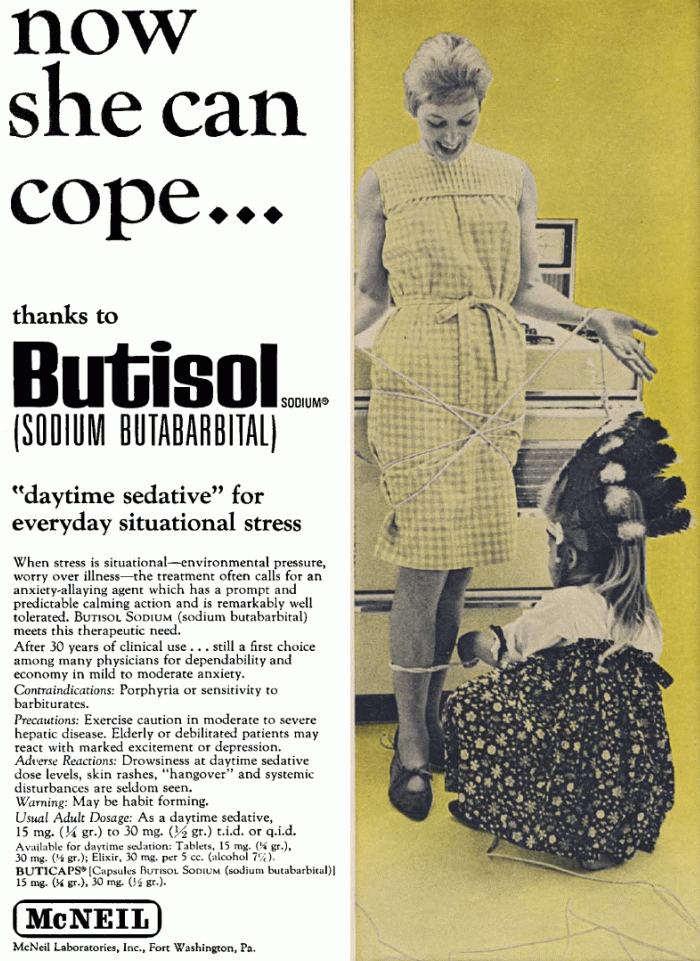
A rise in diagnosis does not automatically mean women are less mature.
It certainly does not prove feminism caused women’s distress.
And historically, women’s resistance has often been medicalized. The dissatisfied wife, the angry woman, the sexually autonomous woman, the woman who rejects motherhood, the woman who wants public life, the woman who refuses domestic confinement: Western culture has never lacked diagnostic-sounding language for women who disobey.
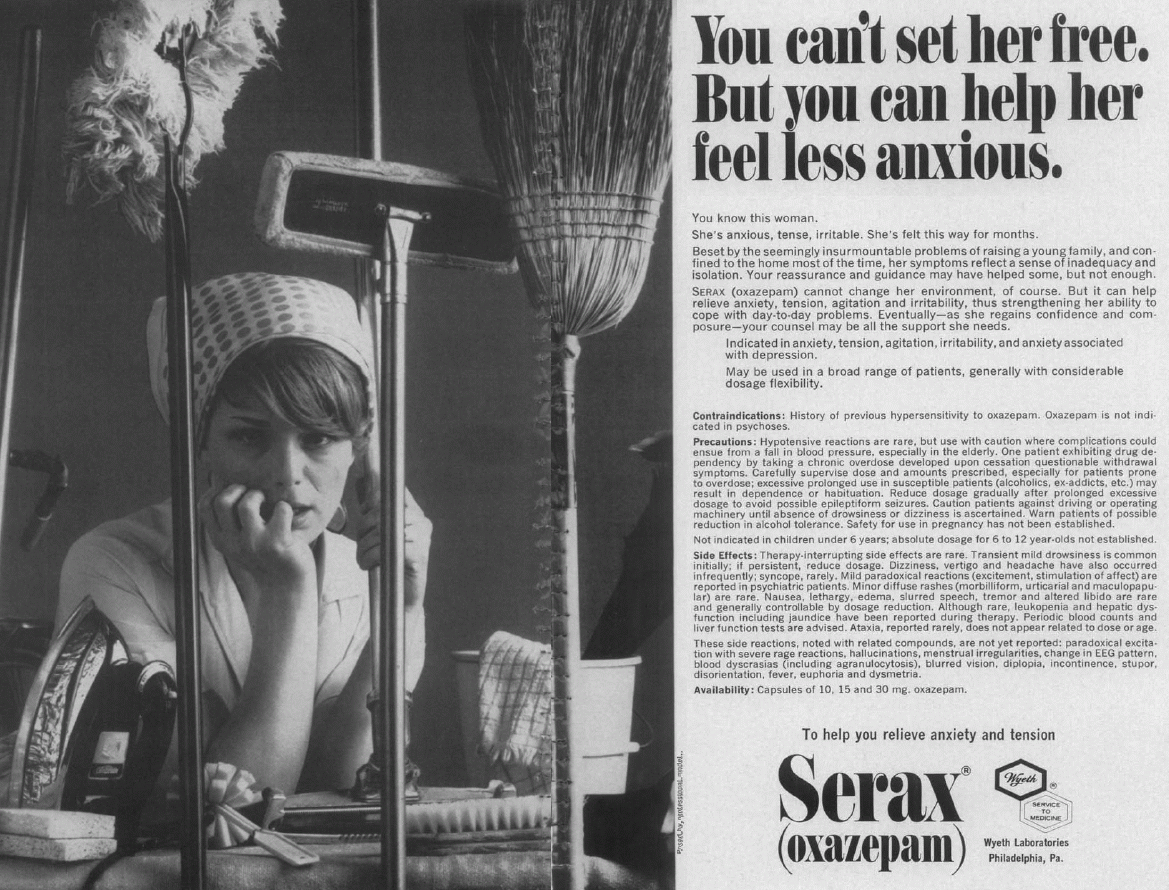
Hysteria. Frigidity. Neurosis. Selfishness. Narcissism. Too angry. Too educated. Too ambitious. Too online. Too aware that the dishwasher does not load itself by masculine providence.
The label changes.
The instruction remains: calm down and call it love.
Maybe women are unhappy because equality is unfinished
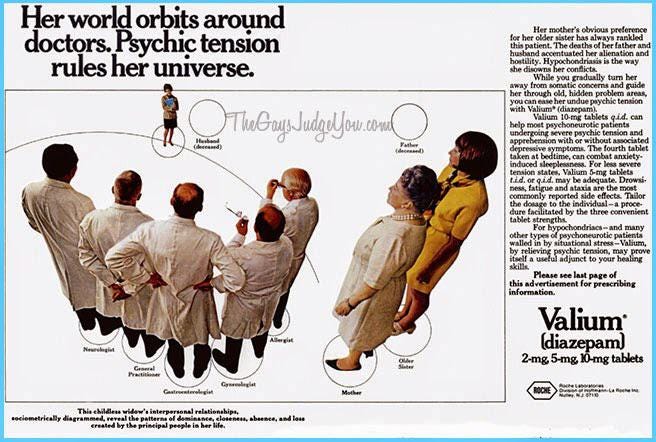
Here is the simpler explanation: women are not suffering from too much feminism. They are suffering from partial liberation inside institutions still designed around women’s sacrifice.
Women were told to enter the workforce, but the household did not transform at the same pace. Women were told to pursue education, but student debt, childcare costs, housing costs, and motherhood penalties remained. Women were told they could “have it all,” but “all” turned out to mean paid work, unpaid work, emotional work, reproductive risk, domestic management, political backlash, and a cultural industry waiting to diagnose their exhaustion as bad attitude.
Second-wave feminism did not emerge because women randomly decided to become resentful. It emerged amid concrete legal and social fights over equal pay, employment discrimination, contraception, abortion, education, public life, and workplace equality. The movement grew alongside legal milestones such as the Equal Pay Act of 1963, Title VII of the Civil Rights Act of 1964, and Griswold v. Connecticut in 1965.
Those were not imaginary grievances.
They were legal structures, employment structures, medical structures, domestic structures, and political structures. Feminism did not teach women to politicize ordinary life for sport. It recognized that “ordinary life” had been political all along. Marriage was political. Wages were political. Pregnancy was political. Housework was political. Sexual violence was political. Credit access was political. Childcare was political. The doctor’s office was political. The kitchen was political.
The fact that women experienced those things privately did not make them apolitical.
It made them easier to dismiss.
Empowered to do what? To be a person, actually.
Spier asks, “empowered to do what?”
The answer is embarrassingly easy.
Empowered to leave. Empowered to stay without coercion. Empowered to earn. Empowered to own property. Empowered to have credit. Empowered to study. Empowered to refuse motherhood. Empowered to choose motherhood with support. Empowered to name violence. Empowered to have friendships that do not orbit men. Empowered to be angry without being diagnosed as defective. Empowered to stop mistaking endurance for virtue. Empowered to have options.
That is the part anti-feminist arguments keep trying to make sound suspicious. They ask “empowered to do what?” as if feminism is a vague self-esteem seminar where women chant affirmations and forget how to pair-bond.
But empowerment, historically, is not a mood. It is material. It is legal. It is economic. It is bodily. It is political.
It is the difference between marrying because you want to and marrying because rent, pregnancy, reputation, or survival holds a gun to your future. It is the difference between motherhood as a chosen relationship and motherhood as compulsory destiny. It is the difference between staying because love is good and staying because leaving is impossible. It is the difference between “I am unhappy because I am bad at womanhood” and “I am unhappy because this arrangement is bullshit.”
That is why the language matters. Not because it creates the wound, but because it stops women from mistaking the wound for a personality flaw.
The cage was already there
The most irritating thing about “feminism made women unhappy” arguments is that they mistake naming for creating. Feminism did not invent women’s dissatisfaction with marriage. It named the unpaid labor inside it. It did not invent ambivalence about motherhood. It questioned why motherhood was treated as destiny rather than one possible human relationship. It did not invent divorce. It helped make leaving survivable. It did not invent women’s friendships. It gave those friendships political force. It did not invent anger. It gave anger a bibliography.
What Spier calls a grievance script, I would call historical literacy. What she calls distrust of adult life, I would call refusal to mistake patriarchal adjustment for mental health. What she calls empowerment’s psychological cost, I would call the bill for partial liberation inside systems that still expect women to serve.
If women are angry, perhaps the question is not who taught them grievance.
Perhaps the question is who benefited when they had no language for it.
Because the cage did not become a cage when feminism named the bars.
The bars were already there.
Feminism just stopped calling them decor.
Resources
Betsey Stevenson and Justin Wolfers, “The Paradox of Declining Female Happiness”
Chris M. Herbst, “‘Paradoxical’ Decline? Another Look at the Relative Reduction in Female Happiness”
Ilan H. Meyer, “Prejudice, Social Stress, and Mental Health in Lesbian, Gay, and Bisexual Populations”
Michael J. Rosenfeld, “Who Wants the Breakup? Gender and Breakup in Heterosexual Couples”
Stephanie Coontz, Marriage, a History
OECD, “Fertility Trends Across the OECD,” Society at a Glance 2024
Arlie Hochschild, The Second Shift
Pew Research Center, “In a Growing Share of U.S. Marriages, Husbands and Wives Earn About the Same”
Bureau of Labor Statistics, American Time Use Survey 2023 Results
History.com, “Phyllis Schlafly’s STOP ERA Campaign Against Women’s Equality”
I’m not sure what I expected when her bio says: My work has been published in The Federalist, Commentary Magazine, Evie Magazine, The American Spectator, lain Mcgilchrist’s “The Matter with Things” and Mad in America.
The greatest hits of alt-right anti-feminism all in one place.
The real question is how she still has a medical license.
I think she meant “If you want girls to approach marriage with ambivalence, what better way to do that than make them feel angry at the thought of being exploited?”
THIS IS THE MOST INCREDIBLE TAKEDOWN I HAVE EVER READ!!!
👏🏻👏🏻👏🏻
🥂
Professor Meredith, you are *that bitch* and I say that with all of the love in my heart 🥰
Thanks for your in-depth cogent takedown of Spier’s absurd essay. The idea that women were “happier” with fewer rights and that female friendship reduces the bonding that should rightfully belong to a man is so ridiculous it sounds like it’s from The Onion. I guess, according to Spier, we should diminish and decenter ourselves and stop spending so much time with our good besties and then all will be right with the world.