


The women’s rights movement didn’t begin in 1848.
Long before the Seneca Falls Convention, Black women were already speaking publicly about freedom, citizenship, labor, and political power in a nation that denied them all four. In this episode, we move beyond the tidy origin story and look at the women who came first—Maria W. Stewart, Sojourner Truth, and Frances Ellen Watkins Harper—and how their work reshapes what we think we know about the fight for women’s rights.
Because the question was never just whether women should vote.
It was who counted as a full political person in the first place.
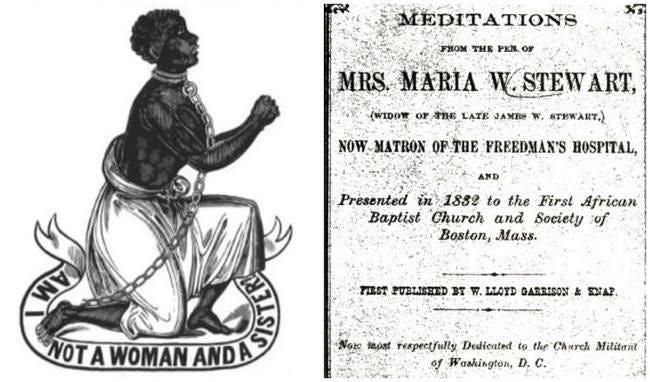
Core Primary Sources
Maria W. Stewart, Productions of Mrs. Maria W. Stewart (1835)
Sojourner Truth, Narrative of Sojourner Truth (1850)
Frances Ellen Watkins Harper, Speeches, Poems, and Essays
Anna Julia Cooper, A Voice from the South (1892)
Secondary Sources
Rosalyn Terborg-Penn, African American Women in the Struggle for the Vote, 1850–1920
Martha S. Jones, Vanguard: How Black Women Broke Barriers, Won the Vote, and Insisted on Equality for All
bell hooks, Ain’t I a Woman: Black Women and Feminism
Kimberlé Crenshaw, “Mapping the Margins” (1989)


